 Ultimate guide
Choosing Safe Toys for New Puppies: A Complete Guide
Quick Summary
Choosing safe toys for new puppies means picking toys the puppy cannot swallow, that match its age and chewing style, and that have a clearly stated material composition. Supervise every chew session and inspect toys often, retiring any that crack, fray, or lose a piece.
- Puppy teething peaks between 12 weeks and 6 months, so chewing becomes more forceful during that stage.
- Pick a toy the puppy can hold comfortably without the whole thing fitting inside the mouth or throat.
- Look for a label naming the base material and any added components such as squeakers or rope.
- Avoid frayed rope or loose strings, because strands can be swallowed and bunch in the intestine.
- Check toys for cracks, exposed stuffing, and loose squeakers before every play session.
Table of Contents
- Why Toy Safety Matters Most in the First Months
- An Age-by-Age Guide to Puppy Toys
- Choosing Toys by Size, Breed and Chewing Style
- Materials to Look For and Materials to Avoid
- Vet Recommended Puppy Chew Toys for Teething
- The Safest Puppy Toys and How to Keep Puppies Busy
- Your Puppy Toy Inspection and Replacement Checklist
- Frequently Asked Questions
Why Toy Safety Matters Most in the First Months
Choosing safe toys for new puppies is one of the most important decisions a new owner makes in the first weeks at home. Puppies explore the world with their mouths, and almost everything they touch goes straight in.
A puppy's teeth come in during the first several months, and the urge to chew peaks during that time.
Many vets and trainers advise supervising every chew session, especially early on. Start with a few well-made toys, learn how your puppy plays with each one, and retire anything that begins to fray or crack.
An Age-by-Age Guide to Puppy Toys
Puppies change fast, so the right toy at eight weeks may be wrong by six months. Think of toy choice in three rough stages.
Under 12 weeks: Puppies are still building coordination and their teeth are tender. Choose soft, lightweight toys with no small detachable parts.
12 weeks to 6 months: Teething peaks here, and chewing becomes more forceful. Shift toward firmer rubber and durable nylon that can handle sharp puppy teeth. Rotate toys so the puppy stays interested without getting bored of one item.
6 months and older: Adult teeth are in, and jaw strength increases quickly. Many owners find they need sturdier options at this stage than they did during teething. Check toys more often, since a toy that lasted months earlier may now be shredded in days.
Choosing Toys by Size, Breed and Chewing Style
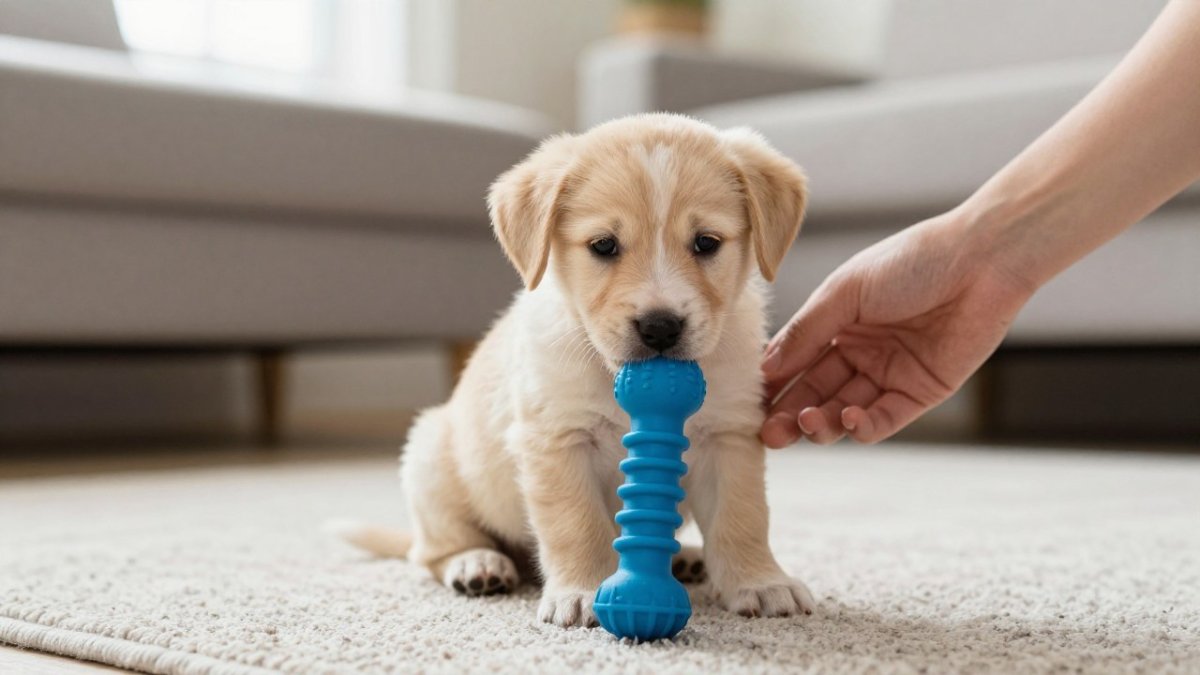
Size and chewing style matter as much as age. A toy that is too small invites swallowing. A toy that is too large can be hard to carry and may not fit comfortably in the mouth, which encourages rougher play.
Matching Toy Size and Shape to Your Puppy
Pick a toy the puppy can hold comfortably in its mouth without the whole thing disappearing. Avoid objects that are small enough to fit fully inside the mouth or throat, and avoid toys with narrow parts that could lodge. Breed size gives a starting point, but individual puppies vary, so judge each toy by how your puppy actually handles it.
Light Chewers Versus Hard Chewers
Some puppies mouth gently and lose interest quickly. Others chew with real force and will destroy soft toys in minutes. Watch how your puppy plays for a few days. A light chewer does well with plush and soft rubber. A hard chewer needs dense rubber or reinforced nylon, and it helps to supervise closely. Compare options in our durable dog toys for aggressive chewers to see which ones hold up to heavy use. Watch out: a hard chewer can bite off and swallow pieces of a toy it has been shredding for a while, so inspect toys often.
Materials to Look For and Materials to Avoid
Material determines how a toy holds up to chewing and what a puppy might swallow when it breaks. It also determines what a puppy is exposed to mouth-first, hour after hour. A simple, clearly stated material composition is a useful thing to look for when choosing toys.
Reading the Label Like a Safety Document
Start with the packaging or product page and look for a material composition statement. For more on puppy accessory safety, read safe dog accessories for puppies and what to buy. A useful label names the base material (for example, natural rubber, thermoplastic rubber, nylon, or polyester fabric) and identifies any added components such as squeakers, rope, or teether rings. If a manufacturer does not say what a toy is made of, treat that as a reason to choose something else.
A toy marketed as "non-toxic" without naming its materials tells you little, so a composition list is more useful.
Established Hazards Versus Unsupported Claims
Some material concerns are well established. Soft vinyl and some plastic toys can contain plasticizers, so an owner should read labels rather than assume. Painted or dyed surfaces of unknown origin are a reasonable thing to avoid, especially on toys a puppy will chew. Loose strings and unraveling rope are a known blockage risk because strands can be swallowed and bunch in the intestine.
Other claims are harder to verify. Statements that a toy is "chemical-free" or "all-natural" are marketing language, not regulated categories. A common pattern is that owners worry most about dyes and least about the failure mode that actually sends puppies to the clinic, swallowed pieces.
Materials That Tend to Hold Up
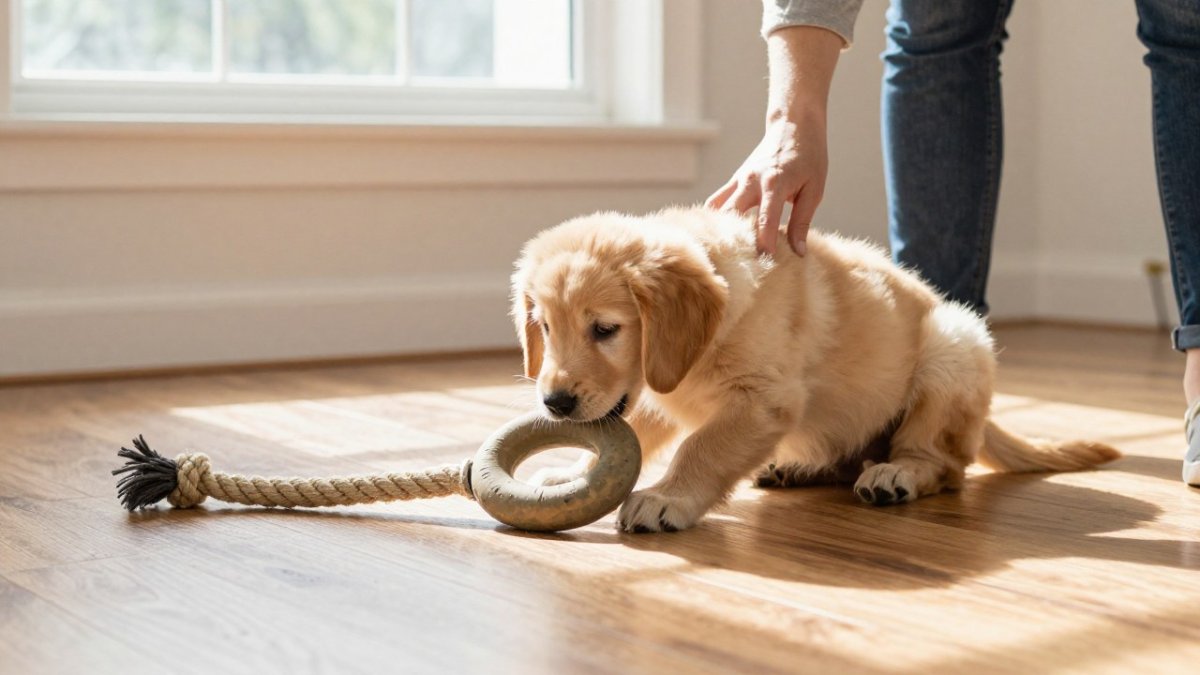
Durable nylon suits hard chewers but should be sized so it cannot be swallowed and inspected for sharp edges as it wears. Fabrics with tightly sewn seams and stuffing that is enclosed rather than loose reduce the chance of a puppy pulling out filling. Toys labeled for dogs or puppies, with a stated composition, are easier to evaluate than items with no material information.
Materials to Approach With Caution
Be cautious with toys that have soft stuffing exposed through thin fabric, squeakers that are not sealed in tightly, strings and ropes that can unravel, and painted or dyed surfaces of unknown origin. These are the toys most likely to fail in the two ways that matter: a piece comes off, or a strand is swallowed. When in doubt, choose the simpler toy with the clearer label.
Vet Recommended Puppy Chew Toys for Teething
Teething is uncomfortable, and a good chew toy gives relief while protecting your shoes and furniture. A soft plush teething toy with a squeaker and teether ring suits very young puppies. You can buy a carrot-shaped chew toy for supervised teething play right away.
Before any teething toy goes in your puppy's mouth, check that the squeaker is sealed and that the teether is firmly attached. Consult your veterinarian if your puppy seems to be in pain, refuses food, or has bleeding gums, since these can signal problems beyond normal teething.
The Safest Puppy Toys and How to Keep Puppies Busy
Toys do more than soothe teeth. They provide mental stimulation, which can reduce destructive behavior when a puppy is bored or left alone for a while. For a safe, squeaky plush option, you can shop the soft plush puppy toy with a teether ring.
Rotating toys every few days, rather than leaving everything out at once, can keep play interesting. A toy that disappears for a week feels new when it comes back. Keep a small selection in rotation and store the rest out of reach. For longer periods alone, choose a sturdy toy the puppy can work on, and remove any toy that has become a shredding project.
Your Puppy Toy Inspection and Replacement Checklist
Use this checklist each time you rotate toys or start a play session. The goal is to catch a failing toy before your puppy does.
- Toy is labeled for dogs or puppies, with a stated material composition
- No small pieces, eyes, or buttons that could detach
- Squeakers are sealed and cannot be pulled out
- Seams are tight and stuffing is not exposed
- No frayed rope, loose string, or thread ends
- No cracks, splits, or soft spots in rubber or plastic
- No sharp edges or rough spots where a toy has been chewed
- Toy is sized so the puppy cannot swallow it whole
- Puppy is supervised during chewing
What Each Check Is Actually Looking For
A crack or soft spot in rubber means the toy is close to breaking into a piece. Exposed stuffing means the puppy has already found the weak point and will keep working at it. A squeaker that moves when pressed is a squeaker that can come out. Frayed rope is the highest-risk failure on the list, because strands can be swallowed and bunch in the intestine rather than passing through.
When to Retire a Toy
Retire a toy when it fails any check, when a piece has come off, or when the toy has lost its shape. A reasonable rule is to replace chew toys on a schedule as well as on inspection, a toy that has survived weeks of daily chewing has absorbed damage you cannot see. Rotating several toys spreads wear and makes each inspection easier to judge.
If a Toy Is Damaged or Swallowed
If you find a chewed-off piece, first check whether it is accounted for. If a piece is missing and you did not see the puppy swallow it, assume it was swallowed and call your veterinarian for guidance.
Watch out: warning signs that warrant prompt veterinary contact include repeated vomiting, refusal to eat, drooling, abdominal tenderness, straining to defecate, lethargy, or a change in behavior after a toy was damaged.
If a toy is damaged but no piece is missing, remove it immediately and inspect the rest of the toy supply for the same failure. Puppies often repeat the behavior on a similar toy.
The checklist is easier to act on when you know what each failure means and what to do next.
| Warning sign | What it means | What to do |
|---|---|---|
| Cracks, splits or soft spots in rubber | Toy is close to breaking into a piece | Remove the toy now |
| Exposed stuffing | Puppy has found a weak point | Retire the toy |
| Squeaker that moves when pressed | Squeaker can come out | Remove the toy |
| Frayed rope or loose strings | Strands can be swallowed and bunch in the intestine | Remove the toy immediately |
| Missing piece, not seen swallowed | Piece may have been swallowed | Call your veterinarian |
| Repeated vomiting or refusal to eat | Possible obstruction | Contact a vet promptly |
| Toy shows shape loss after weeks of use | Hidden damage from daily chewing | Replace on schedule |
Frequently Asked Questions
What toys are safest for puppies?
The safest puppy toys are solid, one-piece items made from puppy-specific rubber or durable nylon that are too large to fit whole in a puppy's mouth. Avoid toys with small detachable parts, squeakers or stuffing that can be pulled out and swallowed. Choose toys sized for your puppy's current jaw and body, and supervise play, especially with new toys. Dog Products and More offers a curated selection of toys, and pricing varies by quantity and product, so check the website for current prices.
Which chew toys are suitable for puppies under 3 months?
Puppies under 3 months are teething and need soft, puppy-safe chew toys. Look for flexible rubber or soft nylon designed for young puppies, and avoid hard items that could injure developing teeth. Frozen wet washcloths or chilled rubber toys can soothe sore gums. Because every puppy is different, ask your veterinarian which chew options suit your puppy's breed and stage before you buy.
Are rope toys safe for puppies?
Rope toys can be safe for supervised play, but they need careful monitoring. Loose cotton fibers can be pulled free and swallowed, which may cause a blockage. Discard any rope toy once it begins to fray or unravel, and do not leave a puppy alone with one. Many owners find solid rubber toys a safer everyday choice.
How often should I replace a puppy's toys?
Inspect puppy toys every time you play and before you give them to your puppy. Replace any toy that has cracks, splits, missing pieces, exposed stuffing or loose seams right away. Even durable toys wear down over time, so plan to rotate in new options as your puppy grows and its chewing strength changes. If your puppy swallows part of a toy or seems unwell, contact your veterinarian promptly.
Can I leave my puppy alone with a chew toy?
It is best to supervise puppies with any toy, especially in the first several months. Unsupervised puppies can chew off and swallow small pieces, or get stuck in toys with holes or loops. If you need to step away, put the puppy in a safe, puppy-proofed space and remove toys that could become hazardous. Supervised, short play sessions with appropriate toys support both safety and healthy development.