 Ultimate guide
How to Choose a Memory Foam Dog Mat for Joint Comfort
Last Updated: November 1, 2026
Quick Summary
A memory foam dog mat is a supportive pad filled with viscoelastic foam that slowly contours to a dog's body and then rebounds. It spreads weight evenly, relieves pressure on joints, and suits older dogs and dogs with achy joints. Foam density determines how well it holds its shape over time.
- Pressure relief spreads the dog's weight across a wider surface, reducing strain on elbows, hips, and hocks.
- Low-density foam can bottom out within a few months, so density matters as much as the memory foam label.
- Dense foam is heavier and harder to wash as a whole unit, so check the cover for removal.
- Use a waterproof liner between cover and foam and wash the cover every two to four weeks.
- Replace the mat when a dip stays compressed or the dog consistently chooses another surface.
Table of Contents
- The Main Benefits of Memory Foam Dog Mats
- Memory Foam Dog Bed Pros and Cons
- Memory Foam Dog Bed for Senior Dogs and Joint Concerns
- Memory Foam vs. Raised Dog Bed: Which Suits Your Dog
- How to Clean a Memory Foam Dog Bed Without Ruining It
- Choosing the Right Foam Density, Thickness and Size for Your Dog
- Frequently Asked Questions
Memory foam dog mats are supportive pads filled with viscoelastic foam that slowly contours to a dog's body and then rebounds once the weight shifts.
Standard dog beds tend to use polyester fiber fill or thin foam, which compresses quickly under a heavy or restless dog.
The practical question is whether the foam is dense enough to do its job.
The Main Benefits of Memory Foam Dog Mats
The core benefits come down to pressure relief, cushioning, and support for the spine and limbs. Each one matters most for a different kind of dog, so it helps to know which applies to yours before you buy.
Pressure Relief and Cushioning
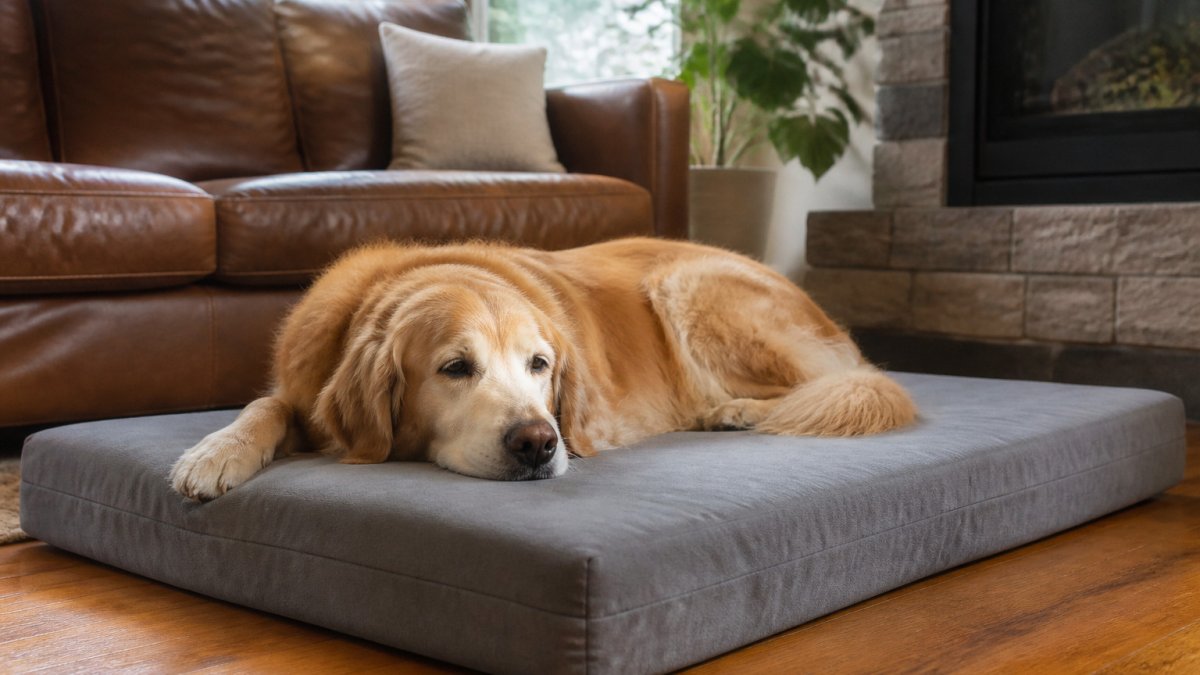
Pressure relief is the benefit most owners notice first. A dog that lies on its elbows, hips, and hocks for long periods can develop calluses and discomfort at those points.
Cushioning also helps dogs that struggle to settle on hard floors. The foam absorbs the impact of lying down, which is useful for dogs getting up and down several times a day.
Spinal Alignment and Stability
Good alignment keeps the spine in a neutral position while the dog rests. Memory foam helps by conforming to the body's curves, so the head, neck, and hips sit at a more natural angle rather than being propped up by a flat, unyielding surface.
Stability is the other half of this benefit. A thicker, well-made mat resists sliding and bunching, which matters for dogs that circle before lying down or that get on and off the bed often.
Memory Foam Dog Bed Pros and Cons
Memory foam beds are a strong choice for many dogs, but they are not the right answer for every household. If you want a foam-cushioned alternative, browse this pet sofa with a plush foam cushion.
Pros
- Contours to the body and spreads weight evenly, which suits joint-sensitive dogs
- Holds its shape longer than polyester fill when the foam is dense
- Stays firm enough to support a dog getting up and down
Cons
- Low-density foam compresses and loses support within months
- Dense foam is heavier and harder to move or wash as a whole unit
- Can trap heat, which may be uncomfortable for dogs that run warm
A common mistake is buying the largest, plushest mat available. A dog that sprawls or runs warm may prefer a thinner, firmer surface. Match the foam to the dog's habits, not just the marketing.
Memory Foam Dog Bed for Senior Dogs and Joint Concerns
Older dogs and dogs with arthritis or hip problems are where memory foam most often earns its place. For a plush, orthopedic-filled lounger that supports both pets and people, see this washable faux fur lounger.
For senior dogs, choose a mat with a low entry point or a gentle edge so the dog does not have to step high to get on.
Foam alone does not replace veterinary care. If your dog shows persistent limping, reluctance to rise, or visible pain, talk to your veterinarian about the underlying cause.
Memory Foam vs. Raised Dog Bed: Which Suits Your Dog
Memory foam and raised beds solve different problems. If you are considering a raised option, see this breathable raised Oxford pet bed.
Choose memory foam if your dog needs pressure relief and joint support, particularly on hard floors.
Some owners combine the two, placing a thin memory foam pad on top of a raised frame. That approach gives cushioning with better airflow, though it adds cost and cleaning steps.
How to Clean a Memory Foam Dog Bed Without Ruining It
Cleaning is where many memory foam beds get damaged. Heat, harsh detergents, and wringing can break down the foam structure and shorten its life. The good news is that a simple routine, plus a moisture barrier, keeps most mats fresh for years.
Separate the cover from the core
Start by checking the label for the cover and the foam separately. Remove the cover and wash it on a gentle cycle with mild detergent. Spot clean the foam core with a damp cloth and a small amount of mild soap, then let it air dry completely away from direct sun. Do not put foam in a dryer or run it through a washing machine, and avoid bleach, which can yellow and degrade the material.
Waterproofing and moisture control
Waterproof or water-resistant liners help with accidents, drool, and wet paws. A liner between the cover and the foam protects the core and makes routine cleaning faster.
For dogs with incontinence, a washable waterproof liner paired with a spare cover is the practical setup: one cover on the bed, one in the wash. This keeps the foam core dry and out of the laundry cycle entirely.
Odor, hair, and allergen control
- Hair: a rubber glove, a lint roller, or a vacuum with a upholstery attachment lifts embedded hair from the cover between washes. Wash covers every couple of weeks for heavy shedders.
- Odor: air the foam core outdoors in shade on a dry day rather than masking odor with sprays. Baking soda sprinkled on the cover before vacuuming can help with mild odors.
- Allergens: regular cover washing in hot water (check the label first) and a breathable liner reduce dander and dust buildup. If a dog has allergies, a removable, washable cover is worth prioritizing over a fixed cover.
When to replace the foam
Foam does not last forever. Signs it is time to replace the mat include:
- A visible dip or handprint that stays compressed after the dog gets up.
- The dog consistently choosing the floor or another surface over the mat.
- The foam feeling crumbly or shedding material at the edges.
Replacing a worn mat is often the more practical choice than living with the discomfort a bottomed-out surface can cause.
Care routine at a glance
| Task | Frequency |
|---|---|
| Vacuum or brush cover | Weekly |
| Wash cover | Every 2-4 weeks (more for heavy shedders or incontinence) |
| Spot clean foam core | As needed |
| Air foam core in shade | Every few months or after any dampness |
| Inspect for compression | Monthly |
A consistent routine keeps the foam doing its job and protects the investment you made in your dog's comfort.
Choosing the Right Foam Density, Thickness and Size for Your Dog
Foam density, thickness, and size determine how well a mat performs, and they are easy to get wrong when shopping by photos alone. For a closer look at matching bed size to your dog's comfort, see sizing for comfort. The goal is to match the foam to your dog's weight, sleeping position, and mobility, not to buy the thickest or plushest mat on the page.
Density: the specification that predicts lifespan
Density is measured in pounds per cubic foot (lb/ft³) and describes how much foam material is packed into a given volume. It is the single best predictor of how long a mat will hold its shape.
As a general starting point, many owners and retailers use these ranges:
- Small dogs (under about 25 lb): a medium-density foam in the 2.5-3.5 lb/ft³ range is usually adequate, especially if the dog is a light, careful sleeper.
- Medium dogs (about 25-60 lb): look toward the 3.5-4.5 lb/ft³ range so the foam does not compress to the floor under the dog's hips and elbows.
- Large and giant dogs (over about 60 lb): denser foam, roughly 4.5 lb/ft³ and up, is the safer bet, because a heavy dog concentrates load on a small contact area.
These are starting ranges, not hard rules. A lean, active dog may do fine on slightly lighter foam, while a dog that flops down hard or stays in one spot for hours benefits from the denser end.
Thickness: cushioning versus entry height
Thickness affects how much pressure the mat absorbs and how easy it is for the dog to get on and off.
- Thin mats (roughly 1-2 inches): suit dogs that prefer a firmer feel, dogs that run warm, and dogs that need a low profile to step onto. They offer less pressure relief for joint-sensitive dogs.
- Mid-thickness mats (roughly 3-4 inches): the common middle ground for senior dogs and dogs with mild joint concerns, enough cushioning to matter, still manageable to step onto.
- Thick mats (5 inches and up): maximum pressure absorption for heavy dogs and dogs with significant mobility limits, but the added height can be a barrier for a stiff dog unless the mat has a gentle, sloped edge.
A useful test: press your palm firmly into the center of the mat and hold for a few seconds. A mat that springs back quickly and does not leave a deep handprint is more likely to hold up; one that stays compressed is telling you it will bottom out under a dog.
Size: measure the dog, not the floor space
Measure your dog while it is lying in its usual sleeping position, from nose to base of tail, then add a few inches so it can stretch fully. A mat that is too small forces curling, which works against the spinal support you are paying for. A mat that is too large can slide, take up more room than you have, and be harder to keep in place.
Also match the mat to the dog's sleep style:
- Curler: a slightly smaller, cozier mat with raised edges may feel more secure.
- Sprawler: a larger, flatter mat gives room to stretch out without hanging off the edge.
- Side-sleeper with long legs: prioritize length and a firm base so the dog's elbows and hips are not on the floor.
Construction details worth checking
- A removable, washable cover with a waterproof liner between cover and foam protects the core and extends the mat's life.
- A non-slip base matters on hardwood and tile, especially for dogs that circle before lying down or get on and off often.
- A low or sloped entry edge helps senior dogs and dogs with mobility limits get on without stepping high.
For help choosing the right density and size, reach out to Dog Products and More before you buy.
Frequently Asked Questions
Are memory foam dog mats good for older dogs?
Memory foam dog mats are often a good fit for older dogs because the foam conforms to the body and spreads weight across the joints, which can ease pressure on hips, elbows and the spine. Senior dogs who struggle to get up from hard floors may find a supportive mat more comfortable. Choose a firm, dense foam core and a thickness of at least 3 inches so the dog does not bottom out. Memory foam is not a treatment for arthritis, so talk with your veterinarian about any joint condition before changing your dog's bedding.
Can memory foam help dogs with joint discomfort?
Memory foam can help make resting more comfortable for dogs with joint discomfort by reducing pressure points and cushioning bony areas. The benefit comes from comfort and pressure relief rather than medical correction. Look for a mat with enough density to keep its shape under your dog's weight. Pair the mat with a vet-recommended plan for managing joint pain, since bedding alone will not address the underlying cause.
How do you clean a memory foam dog mat?
Spot clean the mat with a mild pet-safe detergent and lukewarm water, then blot dry with a towel. Avoid soaking the foam, wringing it out or putting it in a dryer, since heat and agitation can break down the foam structure. Air dry the mat fully in a shaded, well-ventilated spot before your dog uses it again. Many owners add a removable, washable cover to protect the foam and make routine cleaning easier.