 blog
Safe Dog Accessories for Puppies: What to Buy and Why
Last Updated: November 8, 2026
Quick Summary
Safe dog accessories for puppies include an adjustable nylon or soft fabric collar, a lightweight 4 to 6 foot leash, a well-fitted harness, chew-safe toys too large to swallow, and a washable bed. Puppies outgrow gear quickly, so check fit and condition regularly during the first year.
- Choose nylon or soft fabric collars and avoid heavy metal chains.
- Use 4 to 6 foot leashes and avoid retractable leashes for young puppies.
- Fit a collar so two fingers slide under it comfortably.
- Measure girth and back every two to three weeks; puppies can outgrow harnesses quickly.
- Choose toys too large to swallow and remove any that crack or come apart.
Table of Contents
- Why Puppy Safety Differs From Adult Dog Safety
- Puppy Collar and Leash: Fit, Materials and Growth
- Puppy Harness: When It Beats a Collar
- Safe Puppy Toys: Size, Materials and Supervision
- Beds, Bowls and Resting Spaces That Suit a Growing Puppy
- Puppy Grooming Tools and Routine Care
- Start Your Puppy's Gear Kit With Dog Products and More
- Frequently Asked Questions
Why Puppy Safety Differs From Adult Dog Safety
Puppies are not small adult dogs. Their bones, teeth and temperament are still developing, so an accessory that is perfectly safe for an adult can cause real problems for a young dog. Finding safe dog accessories for puppies means choosing gear built around that growth stage. When you shop for safe dog accessories for puppies, the first question to ask is not "Is this good quality?" but "Is this right for a dog that is still growing and still learning what it can chew?"
Puppies also chew more, explore more and outgrow gear faster than adults. A collar that fit well last month may be too tight this month. A toy that was fine for a teething puppy may break into pieces once the puppy's jaws get stronger. Expect to check your puppy's gear regularly rather than buying once and forgetting it.
This guide from Dog Products and More walks through the core categories: collars and leashes, harnesses, toys, resting spaces and grooming tools. For each one, we explain what to look for and what to avoid. We recommend checking fit and condition every few weeks during the first year.
Puppy Collar and Leash: Fit, Materials and Growth
A puppy collar should be lightweight, adjustable and made from a material that will not irritate sensitive skin. You can explore ID tags and collar accessories, including reflective and LED add-ons for evening walks. Nylon and soft fabric collars are common choices. Avoid heavy metal chains, which can be uncomfortable and are easy for a puppy to snag.
Choose a collar that can be loosened as your puppy grows. Many owners buy an adjustable collar and replace it every few months because the puppy's neck changes so quickly. Quick-release buckles are useful, but make sure the buckle is sturdy enough that it will not pop open during a walk.
Leashes for puppies should be light, typically 4 to 6 feet long, so the puppy does not get tangled or pulled off balance. Retractable leashes are a poor choice for young puppies because they encourage pulling and can cause neck or leg injuries if the cord snaps back.
Checking Collar Fit as Your Puppy Grows
A simple rule works well: you should be able to slide two fingers under the collar comfortably. If you can only fit one finger, it is too tight. If you can fit three or more, it is too loose and the puppy may slip out.
Check the fit weekly during the growth phase. Look for rubbing, redness or fur loss around the neck, which are signs the collar needs adjusting or replacing. Remove the collar for a short time each day if your puppy tolerates it, and never leave a collar on an unsupervised puppy that is chewing, since a collar can catch on furniture or crates.
Here is a quick reference for the collar and leash choices covered above.
| Item | Recommended | Avoid |
|---|---|---|
| Collar material | Nylon or soft fabric | Heavy metal chains |
| Leash length | 4 to 6 feet | Retractable leashes |
| Collar fit check | Two fingers fit under | One finger or three-plus fingers |
| Fit check frequency | Weekly during growth | Buy once and forget |
Puppy Harness: When It Beats a Collar
A well-fitted harness spreads pressure across the chest and shoulders instead of the neck. That matters for puppies, whose trachea and neck structures are still developing and who are still learning not to lunge at the end of a leash. A harness is often a better fit than a collar for puppies that pull, cough or gag on a collar.
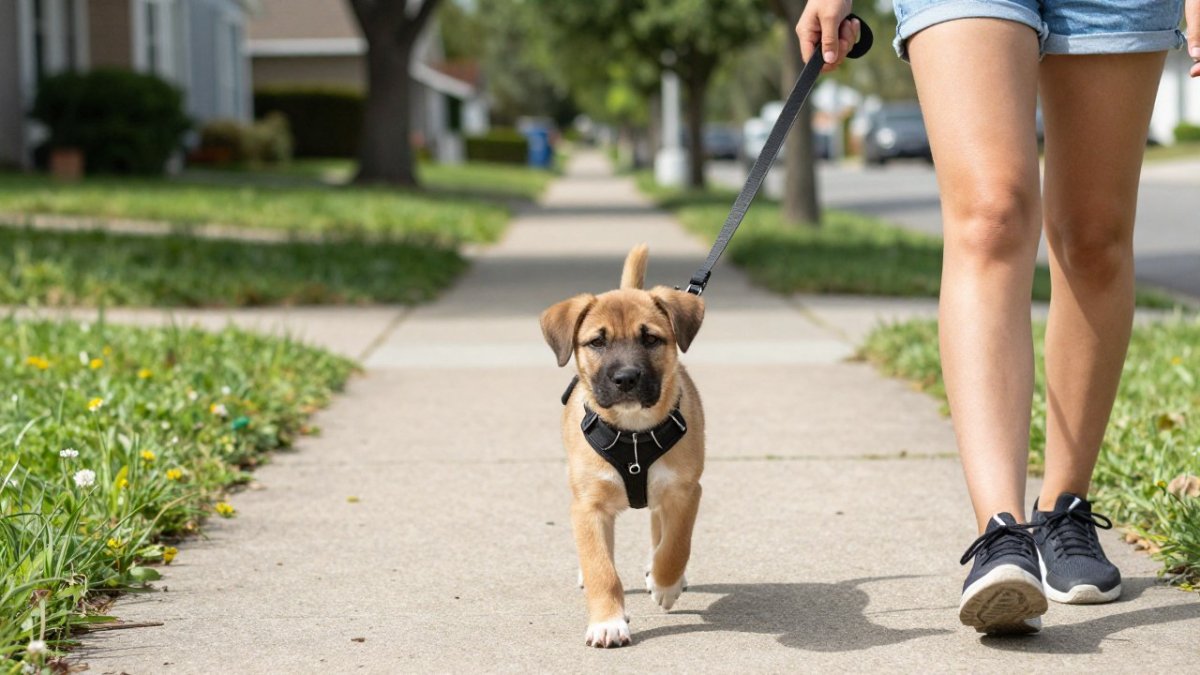
Look for a step-in or vest-style harness with soft, padded straps and separate adjustment points at the chest and girth. Browse the breathable step-in no-pull harness vests to compare sizes and fits for a small puppy. Breathable mesh helps in warm weather, and reflective trim is worth having if you walk at dawn or dusk. You can also browse reflective harness options for commuter and walking use. Hardware matters too: a sturdy D-ring that is sewn into reinforced webbing, plus side-release buckles that click firmly, will outlast thin plastic clips that can pop under a sudden lunge.
How to Measure a Puppy for a Harness
Use a soft tape measure and take two readings: the widest part of the chest just behind the front legs (the girth) and the length from the base of the neck to the base of the tail (the back). Write both down in inches and re-check them every two to three weeks during the first year. Puppies can grow quickly, so a harness that fit at eight weeks may be uncomfortably tight by twelve.
Size charts vary between brands, so trust the tape measure over the size label. When a puppy is between sizes, size up only if the harness has enough adjustment to stay snug, a loose harness can let a puppy back out of it on a walk.
Fitting and Growth Checks
A correctly fitted harness lets you slide two fingers under each strap without pinching, and the chest strap should sit behind the shoulder blades, not across the throat. Watch for chafing, redness or fur loss under the front legs, which usually means the girth is too tight or the straps are rubbing. Remove the harness for rest periods and never leave it on an unsupervised puppy that is crated or chewing, since straps can catch on crate bars or furniture.
Plan to re-measure monthly through the first year and replace the harness when the adjustment range runs out rather than stretching it to fit.
Safe Puppy Toys: Size, Materials and Supervision
Puppies explore the world with their mouths, which makes toy safety a serious concern. Choose toys that are too large to swallow and made from non-toxic, durable materials. For teething support, see these interactive latex chew toys designed for dental health. Check that chew toys are sized for your dog and not just the packaging.
Even safe toys need supervision. If you want soft, non-toxic options, browse latex rubber squeaky balls that are safe for small and medium dogs. Remove any toy that has cracked, softened or started to come apart, and never leave a puppy alone with stuffing toys or small pieces that can be swallowed.
A common mistake is buying toys that are too hard for a teething puppy, which can damage developing teeth. Another is buying toys that are too small, which can become a choking hazard. Match the toy to the puppy's size and chewing style.
Beds, Bowls and Resting Spaces That Suit a Growing Puppy
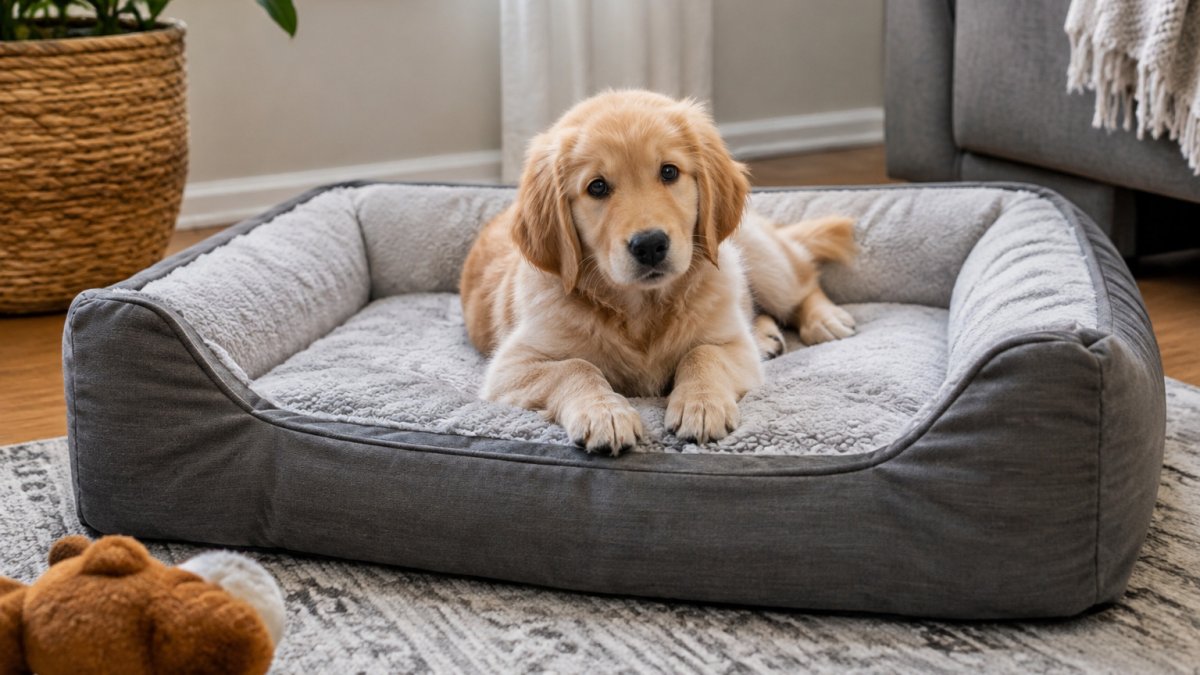
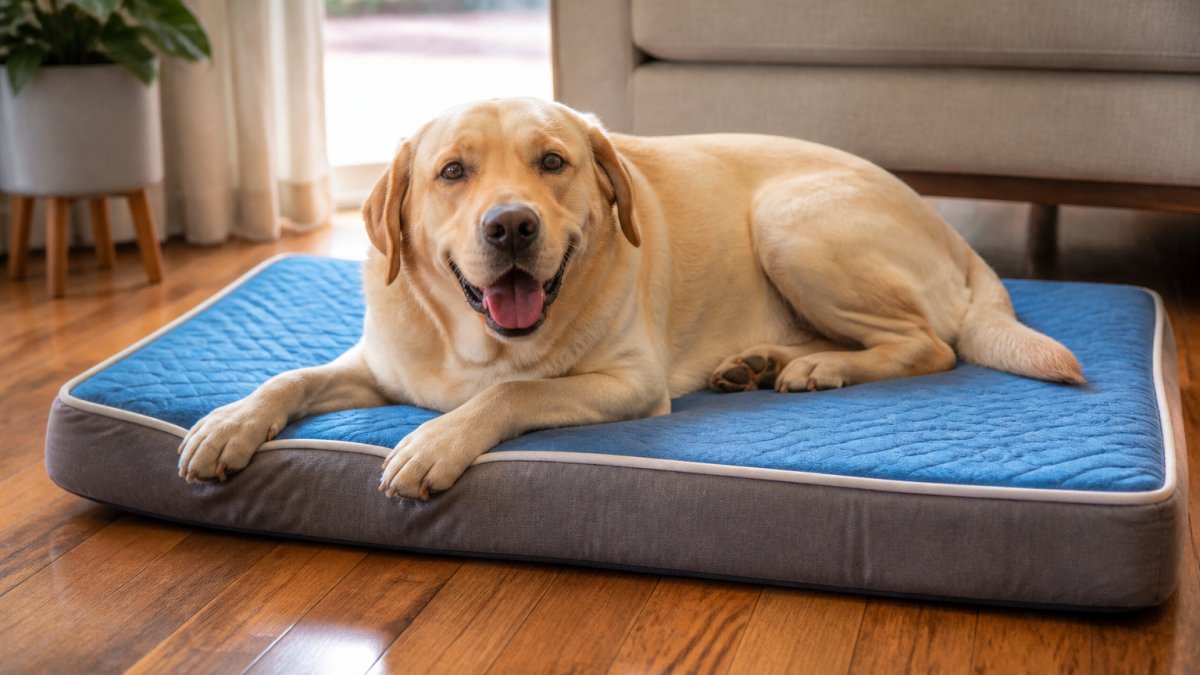
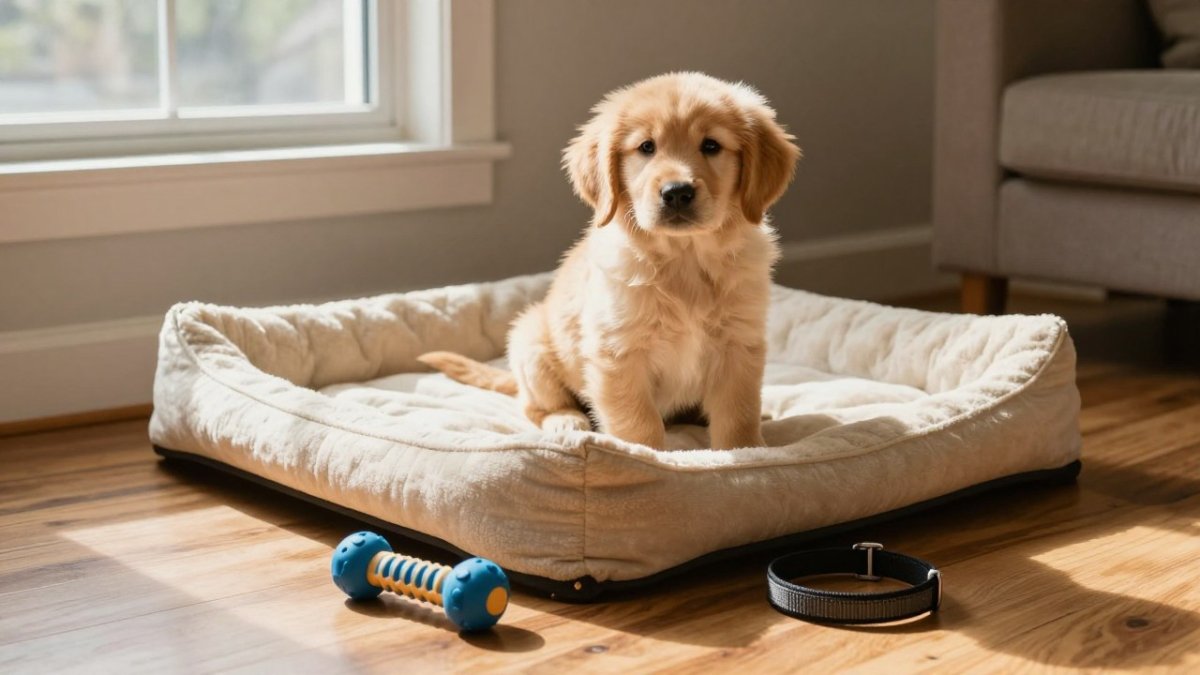
Puppies sleep a lot, so the resting space is not a minor accessory. Choose a bed sized so the puppy can stretch out fully when grown, but add a folded blanket in the meantime so a small puppy is not lost in a large bed.
Look for beds with no loose stuffing that a determined chewer can pull out and swallow.
Bowl Materials, Height and Feeding Safety
Avoid bowls that tip easily, and set them on a non-slip mat so they do not slide during meals.
Raised bowls are sometimes marketed for puppies, but most veterinarians advise against elevated feeders for young dogs unless a specific medical reason applies, because the posture can increase the risk of bloat. Keep bowls on the floor and at a height the puppy can reach without stretching.
Supervision and Chew Hazards
Watch out: beds, blankets and plush bolsters are common sources of swallowed stuffing and fabric, which can cause intestinal blockages. Supervise a puppy with any soft bedding until you know its chewing habits, and remove torn items immediately rather than waiting for them to fall apart. Crate pads and beds should fit the crate snugly with no gaps where a puppy can wedge a paw or chew the edge.
Wash food and water bowls regularly, and check bowls for chips or cracks that can cut a puppy's tongue. Replace any bowl that has cracked, and keep water available at all times, especially during house-training.
Puppy Grooming Tools and Routine Care
Early grooming builds good habits. Start with a soft slicker brush or rubber curry brush and short, gentle sessions. Puppy skin is thin, so avoid harsh tools and always check for burrs or tangles before brushing. Use a dog-specific shampoo if you bathe your puppy, and rinse thoroughly.
Nail clippers designed for puppies make trimming safer, and a styptic powder is worth keeping on hand in case of a quick cut. Brush teeth gradually with a puppy-safe toothbrush and toothpaste. Keep sessions short and rewarding so your puppy associates grooming with something pleasant.
Start Your Puppy's Gear Kit With Dog Products and More
Start with the basics: an adjustable puppy collar, a lightweight leash, a fitted harness, two or three chew-safe toys, a washable bed and steady bowls. Add grooming tools as your puppy's coat and routine develop. Pricing depends on quantity, delivery and what you choose, so check the current pricing on the Dog Products and More website before you order.
Build your kit around fit, safety and regular replacement, not around buying the most expensive items. At Dog Products and More, we curate our range with puppies in mind, so you can start with gear that suits a young dog and upgrade as your puppy grows.
Frequently Asked Questions
What accessories does a new puppy need?
Most new puppies need a lightweight collar or harness, a short leash, an ID tag, two bowls, a crate or bed sized for adult height, a few safe chew toys, and a soft brush. Buy collars and harnesses in the smallest adjustable size that still fits, then replace them as the puppy grows. Start with the basics rather than buying everything at once, since puppies outgrow sizing quickly and needs vary by breed and size.
What kind of collar is safest for a puppy?
A lightweight, flat nylon or cotton collar with a quick-release buckle is generally considered safest for puppies. Breakaway collars can reduce the risk of choking if a puppy gets snagged. Check that you can fit two fingers under the collar, and inspect it weekly for wear, stitching problems, or loose hardware. Avoid heavy metal chain collars, which are uncomfortable and can damage a puppy's developing neck.
Should puppies wear collars or harnesses?
Puppies can wear either, but many owners use a harness for walks because it distributes pressure across the chest and shoulders rather than the neck. A collar is useful for holding ID tags and a license. Pulling on a collar during leash training can strain a young puppy's neck, so a well-fitted harness is often the better choice for daily walks while learning.
How often should I check whether my puppy's collar still fits?
Check the fit every one to two weeks during the first year, since puppies can grow quickly. Slide two fingers under a collar or harness strap to confirm there is room but no slipping. Look for rubbing, hair loss, or redness around the neck, armpits, or chest, which signal the fit needs adjusting or a new size.