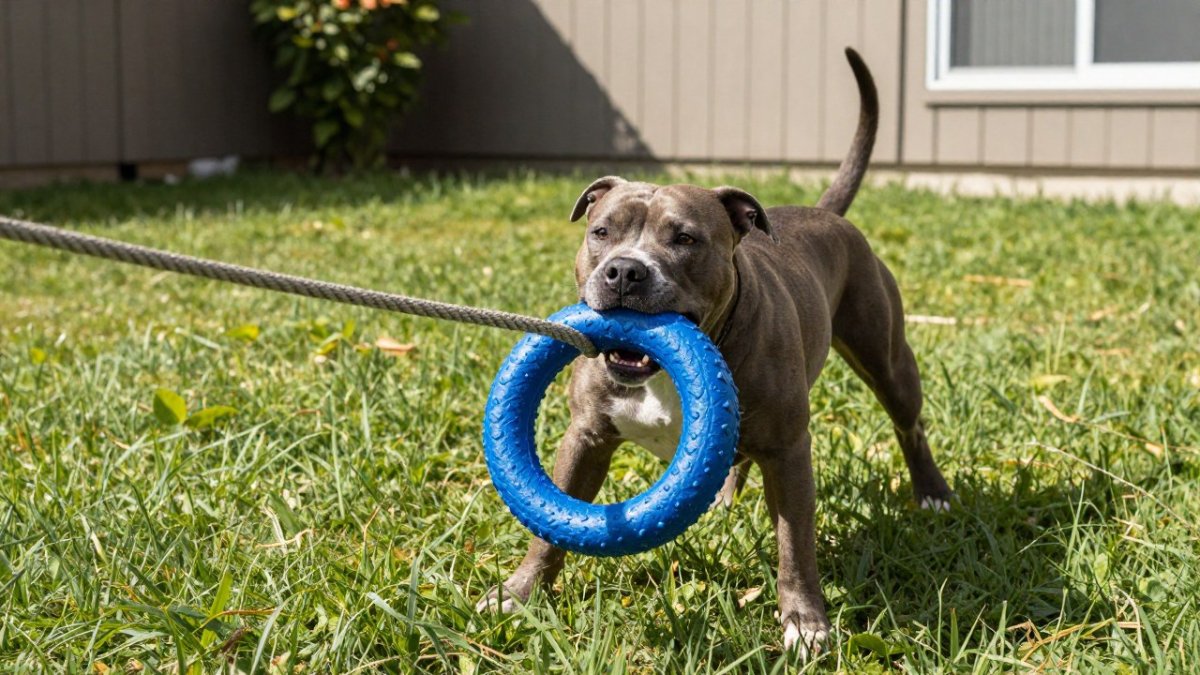
 Listicle
Durable Dog Toys for Aggressive Chewers: Top Picks Tested
Quick Summary
Durable dog toys for aggressive chewers are typically thick-walled nylon or extra-firm rubber in a single molded piece, sized so the dog cannot swallow them whole. Match the toy to the dog's chewing style and inspect it after every session.
- Power chewers usually do best with thick-walled nylon or extra-firm rubber in one molded piece.
- Persistent gnawers often do well with rubber that flexes, which is gentler on their teeth.
- Avoid hollow toys with thin walls and glued seams for dogs that shred and swallow pieces.
- Remove any toy at the first crack, loose part, or piece small enough to swallow.
- No dog toy is truly indestructible, and many chew warranties exclude damage from chewing.
Table of Contents
- How We Evaluated These Durable Dog Toys
- Quick Comparison: Durable Dog Toys for Aggressive Chewers
- Top Picks: Durable Dog Toys for Aggressive Chewers Reviewed
- Dog Toys for Large Dogs and Aggressive Chewers
- Dog Toys for Aggressive Chewers Small Breed Owners
- Indestructible Dog Toys, Lifetime Guarantees and Safety Limits
- Choosing Your Next Durable Chew Toy at Dog Products and More
- Frequently Asked Questions
How We Evaluated These Durable Dog Toys
Last Updated: November 17, 2026
Aggressive chewers can destroy toys quickly, so durability is a key thing to evaluate. At Dog Products and More, we look at how a toy holds up under sustained, heavy chewing, not just how it looks on a shelf. Most roundups stop at the word "tough" and move on. We think the more useful question is: tough for which dog, for how long, and at what risk? That is the framework below.
The four criteria we score
Every toy in this guide is assessed against four groups: material, construction, safety, and value.
- Material. We look at whether the toy is made from a genuinely hard-wearing material such as nylon or extra-firm rubber, and whether the manufacturer states the material specifically rather than using a vague "tough plastic" label. Nylon is harder and holds up to steady gnawing; rubber flexes and tends to suit dogs that chew in bursts. Neither is universally better, and a toy that claims both usually means a rubber shell over a nylon core.
- Construction. We check for seams, molded joints, hollow cavities, and thin walls, since these are where a determined chewer starts. A one-piece molded toy with no glued seams generally outlasts a toy assembled from parts, even when both use the same material.
- Safety. We look at whether the shape discourages swallowing large pieces, whether the toy is sized so a dog cannot fit it whole into its mouth, and whether the manufacturer makes clear, specific safety claims. Vague marketing terms like "indestructible" are not treated as proof of anything.
- Value. We weigh the upfront price against how long the toy is likely to last for a given chewing style, not just the sticker price. A $25 toy that survives three months can be cheaper per month than a $12 toy that is destroyed in a week.
Our testing method, stated plainly
We do not claim to have run a controlled laboratory chew test on every toy. Instead, we apply a repeatable inspection routine that any owner can copy, and we report what we find rather than what the packaging promises:
- Define the test dog. Each toy is matched to a dog size band (under 15 lb, 15-40 lb, 40-80 lb, over 80 lb) and a chewing style (power chewer, persistent gnawer, or shredder/swallower). A toy that passes for a 30-lb gnawer is not automatically safe for an 80-lb power chewer.
- Set a test window. We observe the toy across multiple supervised sessions rather than a single five-minute try. Most failures show up after the toy has been chewed repeatedly, not on the first day.
- Inspect at fixed checkpoints. After each session we check for cracks, thinning walls, loose pieces, missing chunks, and any area small enough to swallow. We note the first checkpoint at which damage appears.
- Apply a failure threshold. A toy fails our evaluation if it develops a piece small enough to swallow, a crack that opens under hand pressure, or a hole that lets the dog tear out filling. A toy that only shows surface scuffing passes.
- Record the outcome. We log pass, fail, or "passed but with a wear warning" so the recommendation reflects real behavior, not a marketing claim.
What we will not do
We will not call any toy indestructible, because no toy is. We will not rank a toy highly on the strength of a warranty alone, since most chew warranties cover manufacturing defects and exclude damage from chewing. And where a price or specification was not verified, we say so rather than guess.
Watch out: a toy that passes our inspection routine for one dog can still fail for a stronger chewer, so treat every recommendation as a starting point and supervise the first several sessions with any new toy.
Quick Comparison: Durable Dog Toys for Aggressive Chewers
Durable toys generally fall into a few families: nylon chew bones, natural or extra-tough rubber toys, ball and ring formats, and curated collections built around tough construction. The table below summarizes what the supplied research shows for each option. Where a price or specification was not verified, we say so rather than guess.
| Toy | Material | Format | Starting Price | Best For |
|---|---|---|---|---|
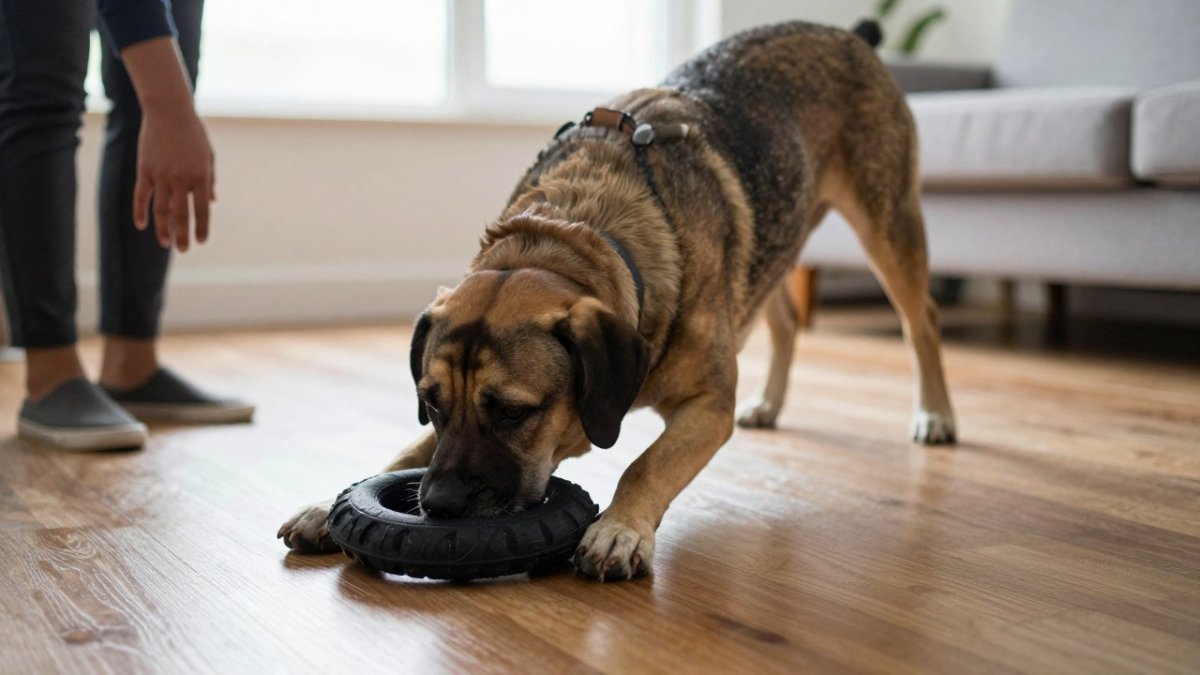
| KONG Extreme Tires | Extra-tough rubber | Tire | Not verified | Dogs who enjoy a rubber chew |
| BULLYMAKE Nylon and Rubber Toys | Nylon or rubber | Mixed | Not verified | Owners wanting two material options |
| Goughnuts | Durable chew | Chew toy | Not verified | Dogs with strong chewing habits |
| Petstages Dogwood | Not verified | Chew toy | Not verified | Named option from tough-toy roundups |
| Chuckit! Ultra Ball | Not verified | Ball | Not verified | Heavy chewers who prefer a ball |
| West Paw Zogoflex Hurley | Not verified | Chew toy | Not verified | Named option from tough-toy roundups |
| Tuffy's Ultimate Ring | Not verified | Ring | Not verified | Heavy chewers who prefer a ring |
| Caitec Tough Toys | Rubber and bone styles | Collection | Collection listed up to $28.99 | Comparing rubber and bone formats |
| DogTuff Tuff Tested Chew Toys | Curated chew toys | Collection | Collection listed up to $68.95 | Energetic and aggressive chewers |
Prices shown are the highest price listed for a collection, not the price of an individual toy. Check the current price on each manufacturer's site before you buy.
Top Picks: Durable Dog Toys for Aggressive Chewers Reviewed
Best for: owners of medium to large dogs who want a nylon chew with a built-in treat pocket. Skip if: your dog swallows chew pieces, since any nylon toy can splinter or break under extreme force.
Dog Toys for Large Dogs and Aggressive Chewers
Large dogs and aggressive chewers put more force on a toy, so size and firmness matter as much as material. Browse natural rubber indestructible toys sized for medium and large dogs. A toy that is too small can be swallowed or cause choking, while a toy that is too large may be hard for a dog to grip and can end up abandoned. The goal is a toy the dog can hold comfortably but cannot fit whole into its mouth.
Match the toy to the chewing style, not just the breed
"Aggressive chewer" is a broad label, and two dogs that both destroy toys can need different products. A useful way to sort them:
- Power chewers bite down hard and crack or split toys quickly. They usually do best with thick-walled nylon or extra-firm rubber in a single molded piece, sized at the upper end of their weight band.
- Persistent gnawers work on a toy for long stretches and wear it down gradually. They tend to do well with rubber that flexes, because a slightly yielding surface is less likely to crack teeth during long sessions.
- Shredders and swallowers tear off pieces rather than wearing a toy down. For these dogs, avoid hollow toys with thin walls and any toy with glued seams, and choose a solid shape with no small protrusions. This is the group where supervision matters most.
Firmness: the trade-off nobody explains
Harder is not automatically safer. A very hard nylon toy resists a power chewer, but it also transfers more force to the teeth, and a dog that gnaws for hours on an unyielding surface is at higher risk of worn or cracked teeth. A softer rubber toy is gentler on teeth but gives way sooner. A practical middle ground is a toy firm enough that you cannot easily dent it with a thumbnail but not so hard that it feels like a rock.
Sizing for large dogs
Use the manufacturer's weight band as a starting point, then check the actual dimensions. A toy should be long or wide enough that the dog cannot close its mouth around the whole thing and swallow it.
Ring and ball formats let a dog chew from different angles, which can spread wear across the toy instead of concentrating it on one spot. That can extend usable life, but it also means you need to inspect the whole surface, not just the part the dog favors.
What wear actually looks like
Inspect any toy regularly for cracks, loose pieces, thinning areas, and missing chunks. Specific signs to remove a toy immediately:
- A crack that opens when you press it with your thumb.
- A hole that lets the dog pull out filling or stuffing.
- Any chunk missing that you cannot account for, since it may have been swallowed.
- A worn area thin enough to see light through.
Watch out: a large dog can swallow a piece faster than you expect, so check the toy after every session rather than once a week, and remove it at the first sign of damage rather than waiting for it to fail completely.
Dog Toys for Aggressive Chewers Small Breed Owners
Small breeds with strong chewing habits face a different problem. A toy that is safe for a large dog may be too big to hold, while a small toy can be swallowed whole.
Many of the nylon chew bones in this guide come in smaller sizes, so check the manufacturer's size chart before buying. Supervise small dogs closely with any hard chew, since small airways are more easily blocked.
Indestructible Dog Toys, Lifetime Guarantees and Safety Limits
No dog toy is truly indestructible. Marketing terms such as "indestructible" and "lifetime guarantee" describe the manufacturer's intent or warranty terms, not a guarantee that your dog cannot damage the toy. Read warranty terms carefully, since many cover manufacturing defects only and exclude damage from chewing.
The main safety risks with tough toys are tooth damage, choking, and swallowing pieces. Very hard toys can crack teeth, and worn or broken toys can splinter. A useful rule is to remove any toy once it has cracks, loose parts, or pieces small enough to swallow.
Choosing Your Next Durable Chew Toy at Dog Products and More
Start with your dog's chewing style. A dog that shreds everything may need a nylon chew, while a dog that gnaws steadily may do well with rubber. Match the toy size to your dog, then check the material and construction against the risks described above.
At Dog Products and More, you can browse our curated selection of toys and chew products. You can browse the full category of chew toys to compare options side by side and find one that fits your dog's size and habits.
Frequently Asked Questions
What is the toughest dog toy for aggressive chewers?
Extra-tough rubber toys, such as tire-shaped and ring-shaped chew toys, are among the most commonly recommended options for aggressive chewers. Materials and construction vary by brand, so check the material description and size before buying. Supervise your dog during first use, and retire any toy that cracks, splits or develops loose pieces. No toy is truly indestructible for every dog, so match the toy to your dog's chewing strength rather than assuming the toughest label fits.
Are any dog toys truly indestructible?
No dog toy is truly indestructible. Even tough rubber and nylon toys can be damaged by powerful chewers over time. Terms like indestructible and lifetime guarantee describe marketing or warranty terms, not a guarantee that your dog cannot break the toy. Check the warranty terms, inspect toys regularly and remove any toy that becomes small enough to swallow or develops sharp edges.
When should I replace a damaged dog chew toy?
Replace a chew toy as soon as it cracks, splits, develops sharp edges, or breaks into pieces small enough to swallow. Check toys after every play session with a heavy chewer. Pieces that break off can cause choking, intestinal blockage or tooth damage, so a toy that is no longer intact should be thrown away rather than repaired.
How do I choose a durable chew toy for my dog's size?
Choose a toy that is too large to fit fully in your dog's mouth and sized to match the dog's body and jaw strength. Large, powerful chewers need thicker, denser toys, while small breeds need toys that are sized for their mouths but still tough enough for their chewing style. Supervise chewing sessions, especially with new toys.