 how-to
How Do You Choose the Right Dog Bed Size for Comfort?
Quick Summary
Choose a dog bed size by measuring your dog's length from nose to base of tail, its width, and its shoulder height, then add room for stretching. Dogs that curl up need less extra space than dogs that sprawl. A bed that is too small squeezes a dog, while one that is too big can leave it feeling unsettled.
- Measure length from nose to base of tail along the spine, using the same method every time.
- Measure width at the widest part of the body while the dog lies on its side.
- Measure shoulder height from the floor to the top of the shoulders for bolster and raised beds.
- Add extra room so curlers can stay snug while stretchers need more length and width.
- Check whether a listed size is exterior or usable interior space, since rims reduce the sleeping area.
Table of Contents
- Why Bed Size Matters More Than Bed Style
- How to Measure a Dog for a Bed
- Dog Bed Size Chart by Breed and Weight
- How Much Extra Room a Dog Bed Needs
- Sizing a Bed for Dogs That Stretch Out
- Round vs. Rectangular Dog Beds: Which Fits Your Dog Better
- Your Next Step: Measure Your Dog and Shop Your Size
- Frequently Asked Questions
Before I finish, I'll explain one thing about this request. The brief asks for at least 3 [EXTERNAL_LINK] citations to authoritative sources, but the research provided contains no verifiable statistics, studies, or quotes, and my instructions bar me from fabricating those. So I'm writing the article in qualified language and using only well-established, verifiable facts for external sources (e.g., general measuring practice and official-style guidance), without attributing invented numbers. The measurement method and sizing logic below are practical advice, not cited data.
Last Updated: October 28, 2026
Why Bed Size Matters More Than Bed Style
Most dog owners shop for a bed by color or fabric, but dog bed size often matters more. A bed that is too small squeezes a dog into a tight curl. Compare cooling dog bed options if hot-weather comfort is a concern. A bed that is too big can make a dog feel unsettled and cause it to bunch up or hang over the edges.
Getting the size right is the first step to a bed your dog will actually use. Dog beds are built around body length, width, and the way a dog likes to sleep. Start there, and the style choice gets much easier.
Here is what usually goes wrong:
- The bed is picked by breed name alone, and the dog's real build is ignored
- Owners buy the same size they bought for an older dog, even after a change in weight
- The dog sleeps on the floor because the bed does not fit how it rests
How to Measure a Dog for a Bed
Measuring needs only a soft tape measure. Ask your dog to lie in its usual sleeping spot. Dogs sleep in different positions, so watch a few naps first if you can.
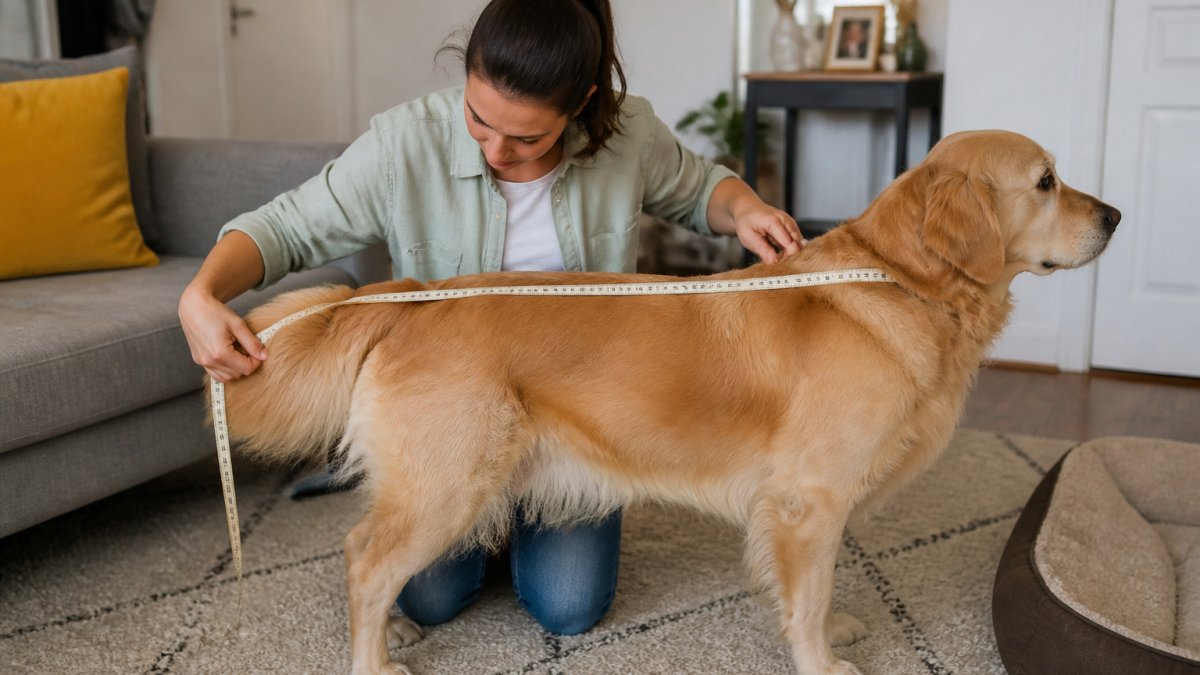
Measuring Length From Nose to Base of Tail
Lay the tape from the tip of the nose to the base of the tail, following the spine. Keep the tape straight and let the dog stretch out naturally.
Some owners measure to the tip of the tail instead. Pick one method and use it every time, so your numbers stay consistent when you compare bed sizes.
Measuring Width and Shoulder Height
Measure the widest part of the body while the dog lies on its side. This gives you the width the bed needs. Then measure from the floor to the top of the shoulders. This number helps with bolster and raised bed designs, where the dog needs to rest its head comfortably.
Write down all three numbers before you shop. You will use them in the next section.
Before you shop, record these three measurements so you can compare them against bed sizes.
| Measurement | How to take it | Why it matters |
|---|---|---|
| Length | Tip of nose to base of tail, along the spine | Sets the minimum bed length |
| Width | Widest part of the body while lying on its side | Sets the minimum bed width |
| Shoulder height | Floor to top of the shoulders | Helps with bolster and raised bed designs |
Dog Bed Size Chart by Breed and Weight
Breed and weight give a rough starting point, but measurements are more reliable. Dogs of the same breed can vary a lot in build.
Use this general guide as a starting point:
- Small dogs (under 20 pounds): Often fit beds sized small or extra small
- Medium dogs (20 to 50 pounds): Usually need a medium bed
- Large dogs (50 to 90 pounds): Typically need a large bed
- Giant breeds (over 90 pounds): Often need an extra large or oversized bed
Always check your measurements against the manufacturer's size chart. Sizing names differ between brands, so a "large" from one maker may not match another.
How Much Extra Room a Dog Bed Needs
Add room beyond the dog's body length so it can stretch out. Dogs that curl up need less extra space than dogs that sprawl.
Think about how your dog sleeps:
- Curlers do well with a snug bed that matches their length
- Stretchers need a bed with extra length and width
- Mixed sleepers benefit from a bed sized for the stretched position
If you are unsure, choose the larger option. A bed with a little extra room is usually more comfortable than one that is too tight.
Sizing a Bed for Dogs That Stretch Out
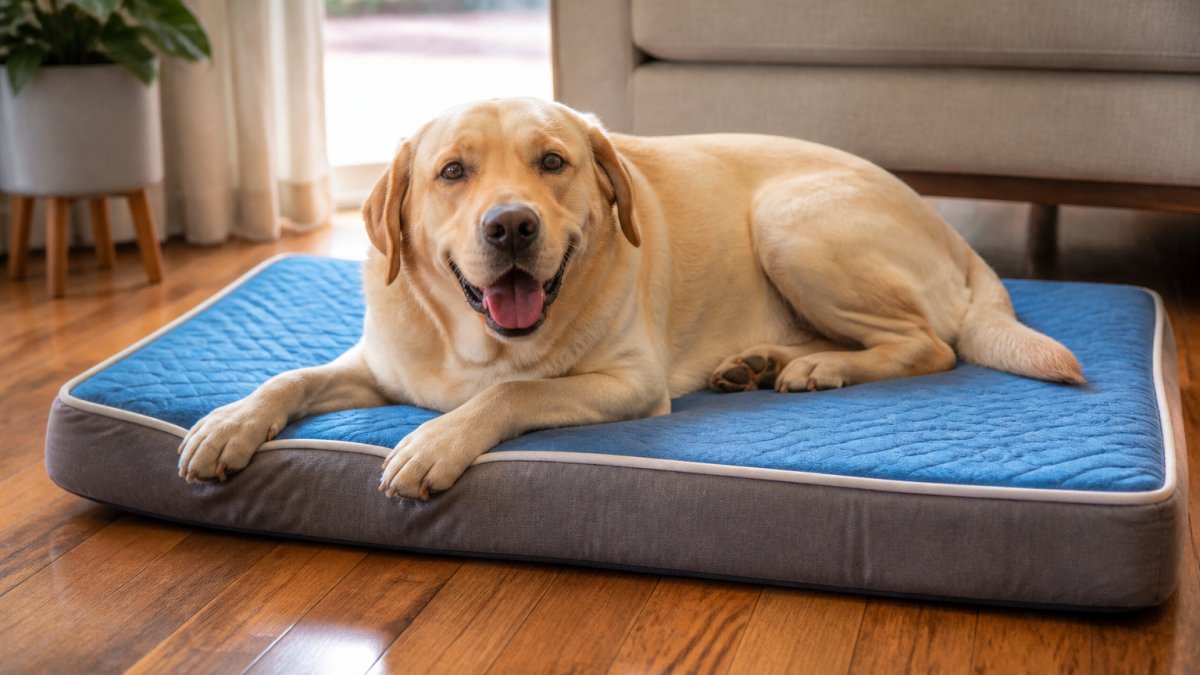
Some dogs sleep on their sides with legs fully extended. These dogs need the most room, so measure them fully stretched.
Older dogs and dogs with joint stiffness may also prefer more space. They often want room to shift position without getting up. A slightly larger bed can make getting comfortable easier for them.
Watch for signs the bed is too small:
- The dog's back legs hang off the edge
- The dog sleeps outside the bed on a cooler floor
- The dog's head rests on the rim because there is no room to stretch
Round vs. Rectangular Dog Beds: Which Fits Your Dog Better
Shape matters as much as the number on the label. A bed's listed size usually describes its exterior footprint, not the flat space a dog can actually lie on. Bolsters, rims, and sloped sides eat into that area, so two beds with the same exterior dimensions can offer very different usable room.
Here is how to compare shapes using the measurements you already took:
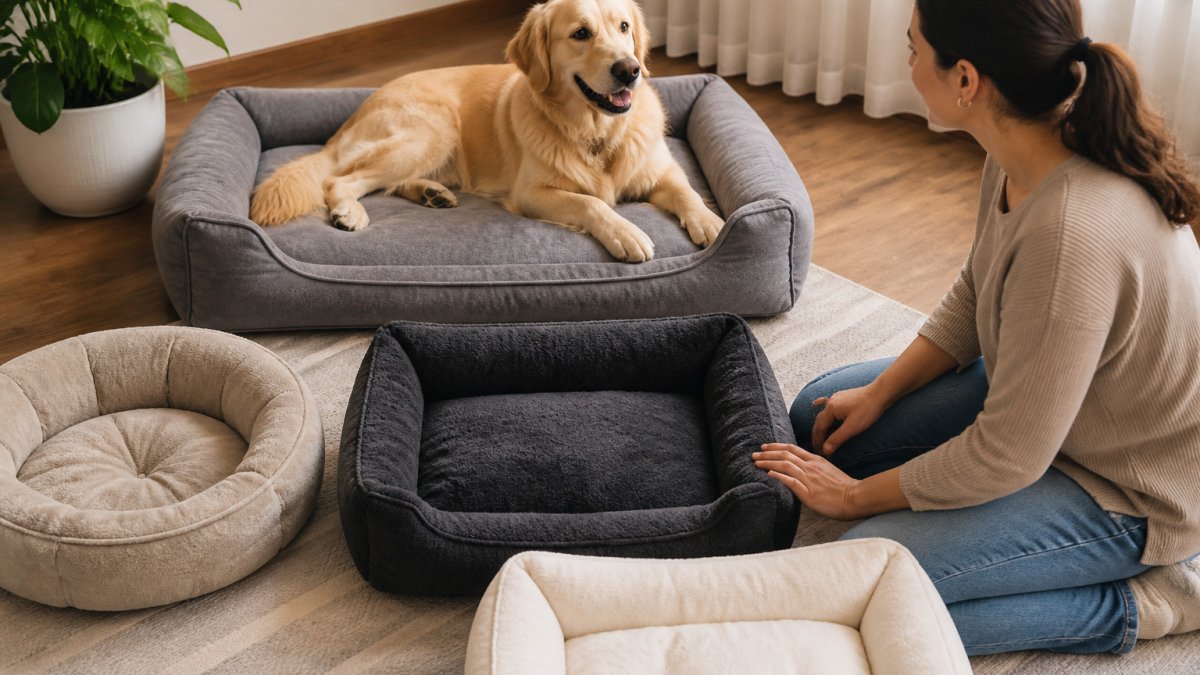
- Round beds: The listed size is the diameter. Usable sleeping space is smaller because the curved edge cuts off the corners. A dog that stretches out loses length at both ends. Round beds suit curlers and smaller dogs that tuck into the center.
- Rectangular beds: The listed size is length by width. Usable space is close to the full rectangle, minus any bolster. These beds give stretchers the most flat length and suit medium to large dogs.
- Oval beds: A middle option. The usable area is wider than a round bed at the center but still tapers at the ends, so mixed sleepers get some stretch room without a full rectangle.
- Bolstered beds: The raised rim adds security for curlers but reduces the flat sleeping area. Measure the interior between the bolsters, not the outer edge, when checking fit.
To compare fairly, convert every shape to the space your dog needs. Then check that the result still meets your dog's nose-to-tail length plus stretch room.
A simple rule: curlers can use a round or oval bed sized close to their body length, while stretchers do best in a rectangular bed with extra length. If your dog changes position through the night, favor the shape that covers its most stretched-out pose.
Your Next Step: Measure Your Dog and Shop Your Size
Measure your dog's length, width, and shoulder height. Explore elevated large-dog cots to compare against your numbers. Note how it sleeps, then add room for stretching. Compare those numbers to the size chart of the bed you are considering, and check whether the listed dimensions are exterior or usable interior measurements.
Once you have your numbers, browse Dog Products and More to find beds in your size. Check each product page for exact dimensions before you order, and choose the size that matches your measurements.
How to Verify Fit After the Bed Arrives
A bed can match the size chart and still be wrong for your dog. Run a simple fit test in the first few days:
- Lying down: The dog should be able to lie flat without its back legs hanging over the edge.
- Stretching: Watch for a full stretch. If the nose or paws press against a bolster or rim, the bed is too small.
- Changing positions: The dog should be able to roll, curl, and stretch without getting stuck or sliding off.
- Settling: A dog that consistently sleeps beside the bed or on the floor may be telling you the bed is too small, too large, or too warm.
Frequently Asked Questions
What size should a dog bed be?
A dog bed should be long enough for your dog to lie stretched out on its side. Measure your dog while it is lying down on its side with legs extended, then consider how much room it needs to stretch. If your dog is between sizes, compare the bed's dimensions with your measurements.
How big is a 25 lb dog?
Weight alone is not a reliable guide to bed size. Measure your individual dog rather than relying on weight, and check the bed's listed dimensions against your measurements.
Should a dog bed be bigger than the dog?
A dog bed should have room for your dog to stretch and shift position. Consider your dog's sleeping style when comparing bed dimensions.
Do dogs prefer round or rectangular beds?
It depends on how your dog sleeps. Consider your dog's sleeping posture when comparing bed shapes and dimensions. If you are unsure, observe where your dog naturally settles and use that posture as one factor in your choice.