 comparison
Natural Puppy Shampoo Alternatives for Sensitive Skin
Table of Contents
- Why Puppies With Sensitive Skin Need Different Bathing Approaches
- Puppy Shampoo Substitutes That Work for Sensitive Skin
- Washing a Puppy Without Shampoo: Water-Only and No-Rinse Options
- Oatmeal Shampoo for Puppies: Safety and Application
- How Often to Bathe a Puppy With Sensitive Skin
- Patch Testing and Recognizing Allergic Reactions
- When to Skip Home Remedies and See a Veterinarian
- Frequently Asked Questions
Last Updated: October 11, 2026
Why Puppies With Sensitive Skin Need Different Bathing Approaches
Puppies with sensitive skin are vulnerable to irritation from harsh chemicals and fragrances in standard dog shampoos because their skin barrier is still developing.
A puppy's thinner, more permeable skin allows ingredients to penetrate easily, so any irritant causes a reaction. Excessive scratching, red patches, or flaking after a bath often indicates shampoo sensitivity rather than a skin condition.
Many pet parents search for puppy shampoo alternatives because commercial products don't work or worsen sensitivity. Several natural and gentle options exist that clean without causing irritation.
Puppy Shampoo Substitutes That Work for Sensitive Skin
Several alternatives deliver gentle cleaning without harsh chemicals, but safety varies by puppy age and skin condition. A substitute suitable for a 16-week-old with mild dryness may be inappropriate for an 8-week-old with severe dermatitis.
Baby Shampoo as a Temporary Alternative
Baby shampoo is gentler than most dog shampoos because it uses minimal fragrance and fewer harsh surfactants.
Baby shampoo is temporary only. Human products don't account for a dog's more acidic skin pH (6.2-7.4 vs. human 4.5-5.5), and extended use disrupts the skin barrier.
Age guidance: Avoid baby shampoo for puppies under 12 weeks; the pH mismatch can cause irritation.
How to use it: Dilute baby shampoo (1:3 with water), apply to wet fur, rinse completely, and limit to once monthly.
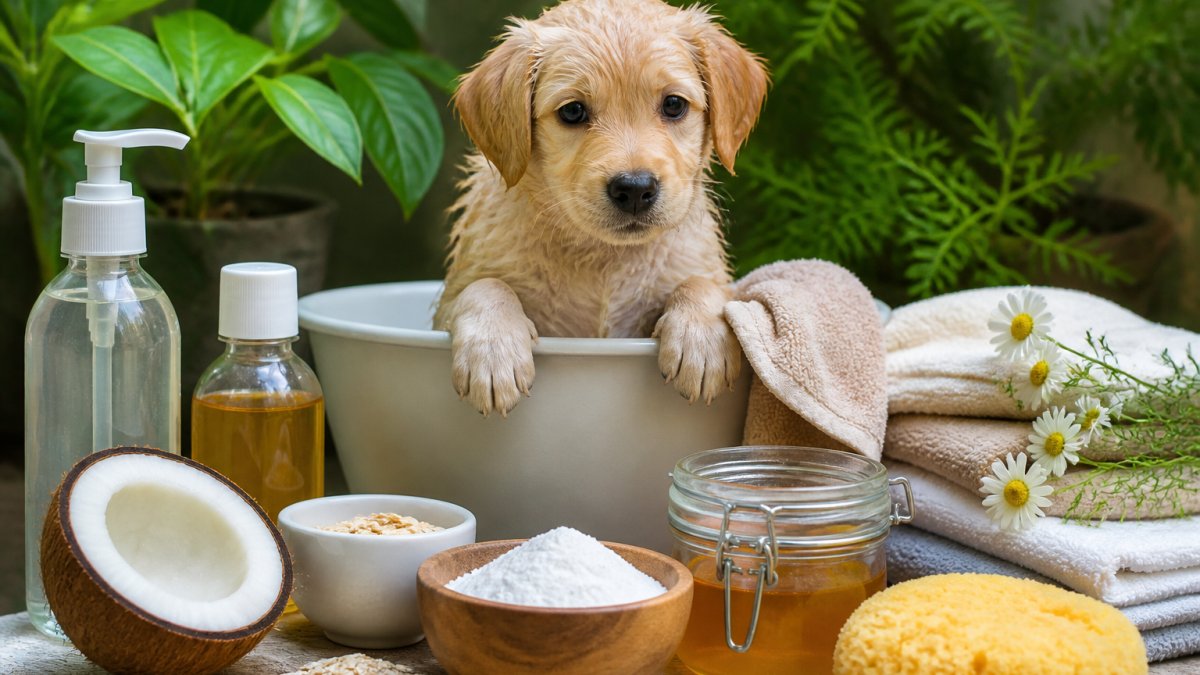
Oatmeal and Aloe Vera for Soothing Irritation
Oatmeal soothes itchy, inflamed skin, while aloe vera provides moisture and reduces redness. Both are safe for puppies of all ages when used topically and rinsed thoroughly.
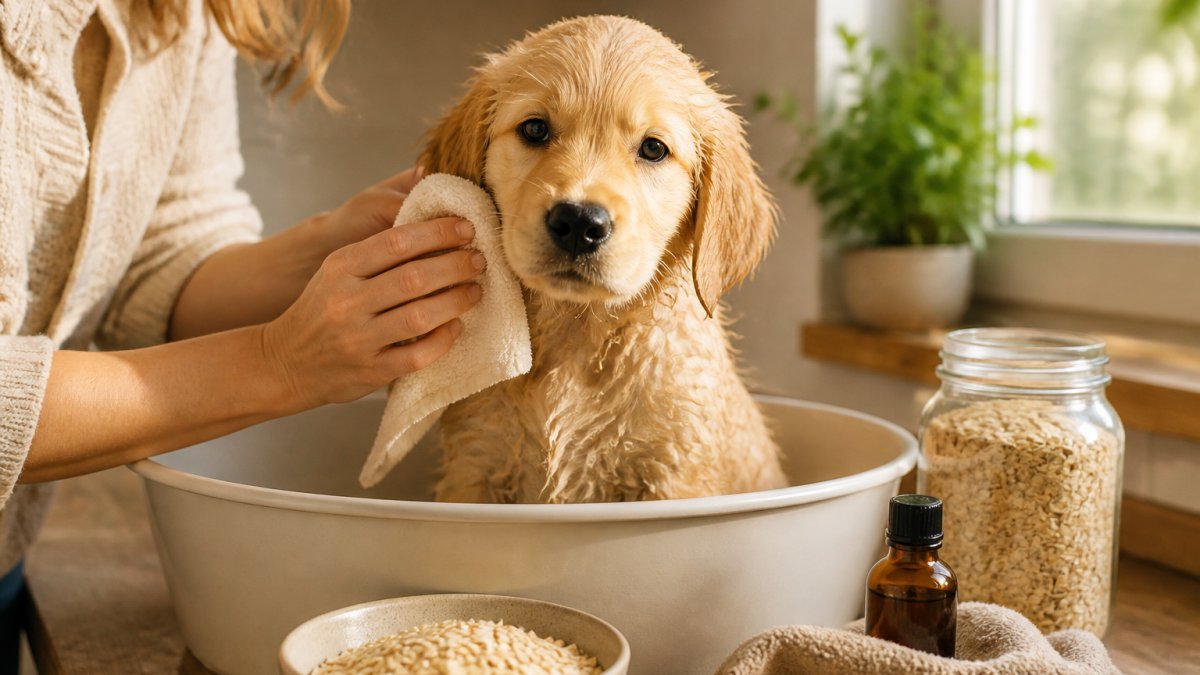
Grind plain oatmeal into powder, mix with warm water to create a paste, apply gently, and let sit 5-10 minutes before rinsing. Alternatively, steep oatmeal in cheesecloth in bathwater.
Use pure aloe gel without additives, alcohol, or dyes. Apply directly to irritated areas after bathing. Avoid alcohol-based products. Monitor for digestive upset if your puppy licks it; discontinue if vomiting or diarrhea develops.
Baking Soda and Water Solutions
Baking soda is a mild abrasive that removes dirt and odors without chemicals.
Mix three parts baking soda with one part water, apply to damp fur, let sit 5 minutes, and rinse thoroughly. Follow with a light moisturizer if skin feels tight.
Do not use baking soda if your puppy has open sores, severe skin irritation, or is under 10 weeks old, as it may cause stinging and further compromise an immature skin barrier.
Vinegar and Water Mixtures
Apple cider vinegar has mild antimicrobial and anti-inflammatory properties and can balance skin pH. However, its strong smell may stress younger puppies, so reserve it for puppies 12 weeks or older with mild itching.
Use vinegar as a final rinse only. Mix one part raw, unfiltered apple cider vinegar with four parts water and pour over the coat after shampooing. Never apply undiluted vinegar, and avoid if your puppy has open sores or severe irritation.
Cornstarch for Dry Cleaning and Odor Control
Cornstarch absorbs oils and odors without water, making it ideal for puppies that dislike baths or need a quick refresh. It's particularly useful for puppies under 8 weeks, when frequent water baths can chill them or stress their developing immune system.
Sprinkle cornstarch onto dry fur, work it through with your fingers or a soft brush, and brush it out. It freshens the coat and reduces odor between baths. Avoid inhaling powder and keep away from eyes. Discontinue if itching or redness develops.
Quick Reference: Alternatives by Puppy Age and Skin Condition
| Alternative | Best For | Puppy Age | Skin Condition | Application Time | Frequency |
|---|---|---|---|---|---|
| Baby shampoo | Emergency cleanups | 12+ weeks | Mild sensitivity | 10 minutes | Once monthly max |
| Oatmeal & aloe | Itchy, inflamed skin | All ages | Moderate to severe sensitivity | 15 minutes | Weekly or as needed |
| Baking soda paste | Quick cleaning | 10+ weeks | Mild sensitivity, oily coat | 10 minutes | Bi-weekly |
| Vinegar rinse | pH balancing, mild itch | 12+ weeks | Mild sensitivity | 5 minutes | After other baths |
| Cornstarch | Dry refresh, stress-free clean | All ages | All sensitivity levels | 5 minutes | Weekly or as needed |
Washing a Puppy Without Shampoo: Water-Only and No-Rinse Options
Water-only baths and no-rinse options protect the skin barrier while removing surface dirt and odors. For puppies with severely compromised or reactive skin, these methods are often safer than any cleanser.
Water-Only Baths: When and How
A water-only bath involves rinsing with lukewarm water and gently working through the coat with hands or a soft cloth. It removes loose dirt, debris, and surface bacteria without cleanser. It's ideal for puppies under 12 weeks or those with severely compromised skin, active dermatitis, or recent allergic reactions.
Water alone doesn't disrupt skin pH or strip protective oils, making it the safest option for puppies with damaged or inflamed skin barriers. Water-only baths can be repeated more frequently without risk of over-washing.
How to perform a water-only bath:
- Use lukewarm water (85-90°F); avoid water that's too hot or cold.
- Wet the coat thoroughly from neck to tail.
- Gently work water through with hands or a soft washcloth; don't scrub vigorously.
- Pay attention to paws, belly, and behind ears.
- Rinse completely until water runs clear.
- Gently squeeze excess water and dry with a soft towel; avoid heat dryers.
No-Rinse and Dry-Cleaning Options
No-rinse options include dry shampoos and waterless wipes. These absorb oils and odors without water exposure, making them ideal for puppies stressed by water, with open sores, or recovering from skin infections.
Dry shampoos: Cornstarch and oatmeal powder work as dry shampoos. Brush through the coat and remove with a soft brush. They extend intervals between full baths and reduce cumulative water exposure.
Waterless wipes: Look for wipes without alcohol, fragrance, or harsh preservatives. Use them to spot-clean between full baths, but don't use on open sores or severely irritated skin.
Dry bathing technique:
- Ensure the coat is completely dry.
- Sprinkle powder lightly onto sections of the coat.
- Work through with fingers or a soft brush.
- Let sit 2-3 minutes to absorb oils and odors.
- Brush thoroughly to remove all powder; residual powder can trap moisture.
Comparison: Water-Only vs. No-Rinse for Sensitive Skin
| Method | Best For | Removes Dirt | Removes Odor | Water Exposure | Drying Time | Frequency |
|---|---|---|---|---|---|---|
| Water-only bath | Mild to moderate dirt, all ages | Yes, effectively | Partially | Moderate | 15-30 min | Weekly or as needed |
| Dry shampoo (powder) | Light dirt, odor refresh | Partially | Yes | None | 5 min | 2-3 times weekly |
| Waterless wipes | Spot cleaning, paws, face | Minimal | Minimal | None | Immediate | Daily as needed |
When to Choose Each Method
Use water-only baths when:
- Your puppy is visibly dirty but has no active skin irritation.
- Your puppy is under 12 weeks old and has sensitive skin.
- Your puppy has recently had an allergic reaction or is recovering from dermatitis.
- You want to bathe your puppy more frequently without risking over-washing.
Use dry shampoos when:
- Your puppy needs odor control but is not visibly dirty.
- Your puppy is extremely stressed by water.
- You want to extend the interval between full baths.
- Your puppy has open sores or active skin infection (consult a vet first).
Use waterless wipes when:
- Your puppy has muddy paws after outdoor play.
- You need a quick cleanup without a full bath.
- Your puppy is too young or stressed for any water exposure.
- You're on the go and don't have access to a bathing area.
Evidence-Based Guidance: Minimizing Water Exposure for Young Puppies
Puppies under 8 weeks have immature skin barriers and developing immune systems. Frequent water baths can increase the risk of hypothermia, stress, and infection. Research suggests puppies with sensitive skin benefit from minimal bathing (no more than once monthly) until 12 weeks, with water-only or dry methods preferred.
If your puppy under 8 weeks is visibly dirty, prioritize spot-cleaning with waterless wipes or dry shampoo. Reserve full water baths for puppies 8 weeks and older, and only when necessary.
Oatmeal Shampoo for Puppies: Safety and Application
Oatmeal shampoo formulated for dogs is safer than homemade versions because it's pH-balanced for canine skin. Products like 4-Legger Unscented Aloe Dog Shampoo combine oatmeal with aloe and other gentle ingredients for sensitive skin.
Select unscented or fragrance-free oatmeal shampoo; even "natural" fragrances can trigger reactions. Avoid harsh sulfates like sodium lauryl sulfate, which strip natural oils.
Wet your puppy thoroughly, apply shampoo, massage gently for 2-3 minutes, and rinse completely with lukewarm water. Incomplete rinsing leaves irritating residue.
How Often to Bathe a Puppy With Sensitive Skin
Bathing frequency matters as much as product choice. Over-bathing strips natural oils and damages the skin barrier.
Puppies with normal skin need bathing once monthly. Those with sensitive skin need bathing every 4-8 weeks or only when visibly dirty. Between baths, use dry cleaning methods like cornstarch or waterless wipes.
Puppies under 12 weeks benefit from minimal water exposure. If bathing is necessary, keep it brief and use only water or very dilute, gentle cleansers.
Patch Testing and Recognizing Allergic Reactions
Before using any new shampoo or alternative on your puppy's entire body, perform a patch test to identify potential reactions.
Apply a small amount to an inconspicuous area like the inside of a back leg.
Mild reactions include redness, itching, and small bumps. Moderate reactions involve swelling, hives, or localized hair loss. Severe reactions, facial swelling, difficulty breathing, or anaphylaxis, require immediate veterinary attention.
If your puppy shows any reaction, rinse immediately with cool water and contact your veterinarian. Keep a record of triggering products for future reference.
When to Skip Home Remedies and See a Veterinarian
See a veterinarian if skin issues persist despite gentle alternatives, if itching is severe or accompanied by hair loss, if you notice signs of infection like pustules or oozing, or if symptoms develop after a specific product. These signs suggest underlying conditions requiring diagnosis and treatment.
A vet can perform skin scrapings, fungal cultures, or allergy testing to identify the root cause and recommend prescription shampoos or medications if needed.
Puppies with sensitive skin deserve bathing solutions that clean without irritation. Dog Products and More provides a curated selection of beds, grooming tools, toys, and essential accessories, ensuring convenient access to reliable products that enhance the lives of your canine companions. Shop Now and discover affordable, reliable solutions for gentle puppy care.
Frequently Asked Questions
What can I substitute for puppy shampoo if my puppy has sensitive skin?
Safe puppy shampoo substitutes include baby shampoo (diluted), oatmeal and aloe vera solutions, baking soda and water mixtures, and vinegar rinses. Water alone works for light cleaning. Each option suits different situations: baby shampoo for quick baths, oatmeal for soothing irritation, baking soda for dry cleaning, and vinegar for odor control. Always patch test first and rinse thoroughly to prevent skin irritation.
Can I use baby shampoo on a puppy with sensitive skin?
Yes, baby shampoo can work as a temporary alternative for puppies with sensitive skin because it's formulated to be gentler than adult shampoos. However, it's not ideal long-term since it's designed for human scalps, not canine skin. Dilute baby shampoo with water (1 part shampoo to 3 parts water) to reduce irritation risk. Always rinse thoroughly and monitor for any adverse reactions.
Is oatmeal safe for a puppy's itchy skin?
Oatmeal is safe and soothing for puppies with itchy skin when applied correctly. Colloidal oatmeal (finely ground) works best because it dissolves in water and coats the skin. Mix it with water to create a paste or add to bathwater. Oatmeal helps calm irritation and moisturizes dry skin. Never use instant oatmeal with added sugars or flavorings. Patch test a small area first to confirm your puppy doesn't react negatively.
How often should I bathe a puppy with sensitive skin?
Puppies with sensitive skin should be bathed only when necessary, typically every 4-6 weeks unless they're visibly dirty or have a skin condition requiring frequent treatment. Over-bathing strips natural oils from the skin barrier, worsening sensitivity and irritation. Between baths, use dry shampoo or cornstarch for odor control. Always consult your veterinarian about the right bathing schedule for your individual puppy's skin condition.
What ingredients should I avoid in puppy shampoo for sensitive skin?
Avoid shampoos with artificial fragrances, sulfates, parabens, and harsh chemicals that irritate sensitive skin. Skip products with dyes, perfumes, and alcohol. Look for fragrance-free, hypoallergenic formulas with natural ingredients like oatmeal, aloe vera, and chamomile. Always read labels carefully and choose unscented options. If your puppy shows persistent itching, flaking, or redness despite using gentle products, consult your veterinarian to rule out underlying conditions.