 ultimate-guide
Is Crate Training Worth It for Puppies
Table of Contents
- What Crate Training Actually Does for Puppies
- The Real Benefits of Crate Training
- Best Crate Size for Puppies
- How Long Can a Puppy Be in a Crate
- Puppy Crate Training Mistakes to Avoid
- Signs Your Puppy Is Struggling in the Crate
- Is Crate Training Worth the Effort
- Frequently Asked Questions
Last Updated: September 30, 2026
What Crate Training Actually Does for Puppies
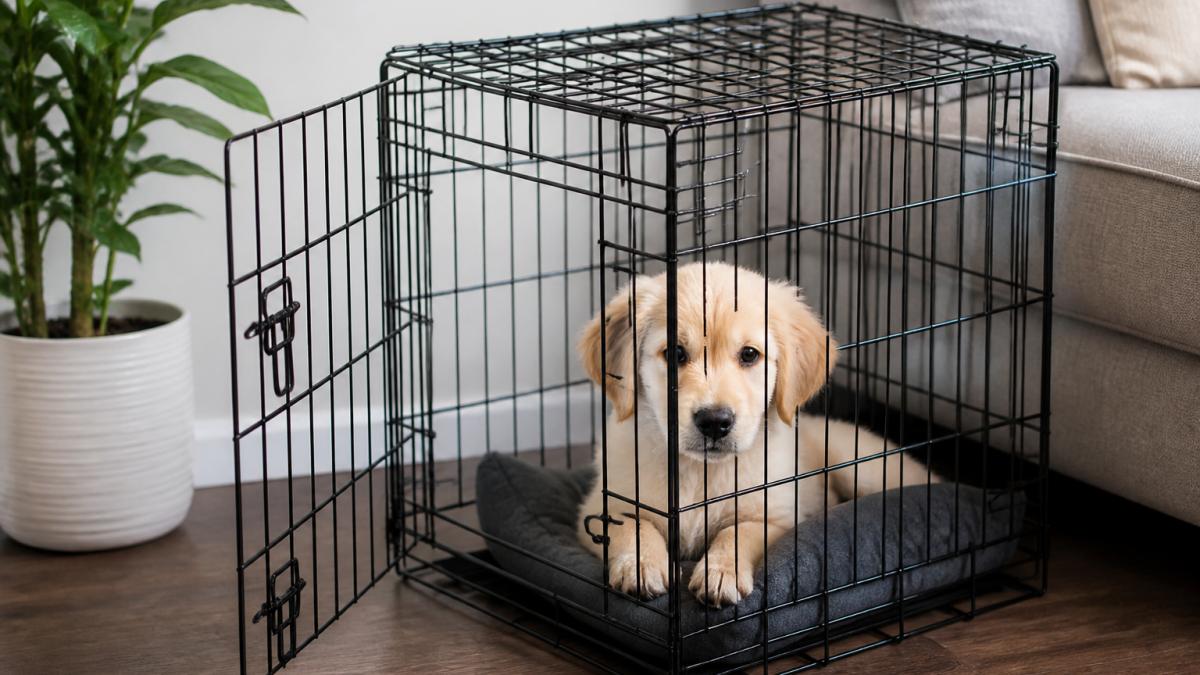
Crate training is a management tool that teaches puppies to view a confined space as their safe space rather than a punishment. When done correctly, it leverages the puppy's natural denning instinct, creating a den-like environment where they feel secure and protected. This approach addresses multiple challenges simultaneously: housebreaking, preventing destructive chewing, managing separation anxiety, and establishing behavioral boundaries.
Whether is crate training worth it for puppies depends on implementation. A crate becomes punishment when forced or overused, but proper introduction through positive reinforcement makes puppies seek it out naturally.
The Real Benefits of Crate Training
The primary benefit is accelerated housebreaking. Puppies naturally avoid soiling their sleeping area, making the crate an effective tool for teaching bladder control and reducing housebreaking timelines significantly.
Crate training also prevents destructive chewing during critical developmental phases by providing safe confinement that protects both home and puppy from hazards.
Stress reduction is another key benefit. A crate with familiar bedding and positive associations becomes a refuge during veterinary visits, travel, or transitions. Early crate exposure reduces anxiety-related behaviors later in life.
Best Crate Size for Puppies
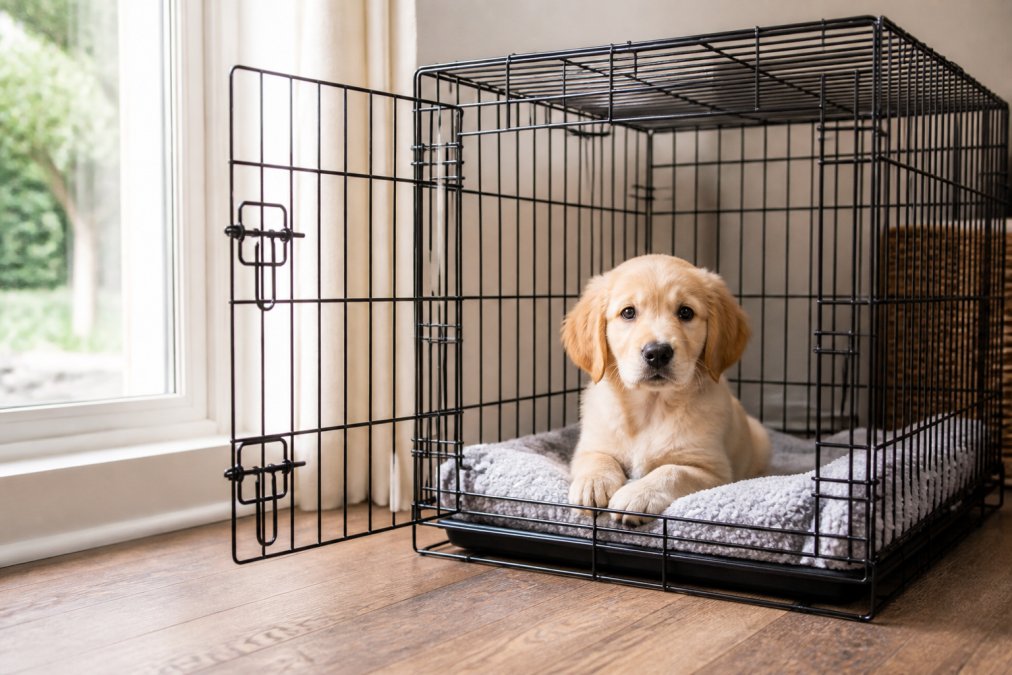
The crate should be large enough for the puppy to stand, turn around, and lie down comfortably, but not so large they can eliminate in one corner and sleep in another. Oversized crates defeat the housebreaking purpose.
For growing puppies, consider your dog's expected adult size. Dividers are available for most wire crates, allowing you to adjust the interior space as your puppy grows. This approach is more cost-effective than purchasing multiple crates and maintains the appropriately-sized denning space throughout development.
Wire crates offer visibility and airflow for daytime use; plastic crates provide a den-like environment for nighttime or travel. Soft-sided crates aren't ideal for young puppies, as they can chew through the fabric.
How Long Can a Puppy Be in a Crate
Crate duration depends on age, bladder development, and whether it's daytime or nighttime use. Conflating the two often leads to excessive daytime crating, which damages effectiveness.
Daytime Crate Duration by Age
Young puppies (8-12 weeks) should not spend more than 2-3 hours in a crate during waking hours. A practical guideline: one hour per month of age, plus one additional hour. A 12-week-old can manage 3-4 hours; a 16-week-old, 4-5 hours.
This assumes a recent bathroom break and immediate relief afterward. Puppies need multiple daily play sessions, socialization, and exercise outside the crate. A realistic schedule alternates 2-hour crate periods with 30-minute outdoor breaks and supervised free time.
Nighttime Crate Duration
Puppies can hold their bladder longer while sleeping. By 12 weeks, most can manage 6-8 hours overnight, though toy breeds may need breaks every 4-6 hours and larger breeds may manage 8 hours by 16 weeks.
Place the crate next to your bed initially so the puppy feels your presence and can signal bathroom needs. This reduces separation anxiety. As the puppy demonstrates reliable bladder control (typically by 4-5 months), gradually move the crate away over 2-3 weeks.
The Critical Mistake: Excessive Daytime Confinement
Many owners assume that because a puppy can hold their bladder for a certain duration, they should be confined for that long. This is a fundamental error. Puppies confined for 8+ hours regularly during the day develop crate aversion, anxiety, and behavioral problems. They may regress in housebreaking, become destructive outside the crate, or develop separation anxiety that persists into adulthood. The crate is a management tool, not a storage solution.
Adjusting Duration for Individual Puppies
Smaller breeds, anxious temperaments, and puppies with medical conditions may need shorter confinement periods. Conversely, calm, larger-breed puppies may tolerate longer durations earlier. Watch your puppy's behavior: if they're panting, whining persistently, or showing signs of distress before the typical duration window, reduce the time. If they're sleeping calmly and show no anxiety when released, you're likely in the right range.
The goal is to use the crate as a tool that supports your puppy's natural rhythms, not to maximize confinement time. As your puppy matures and develops bladder control and behavioral reliability, daytime crate durations naturally decrease because the puppy needs less management and can be trusted with more freedom.
Puppy Crate Training Mistakes to Avoid
The most common mistake is using the crate as punishment. Never force a puppy into the crate or use it as a consequence for misbehavior. This creates crate aversion, making the tool counterproductive. The crate should always be associated with positive experiences, treats, toys, praise, and calm time.
Another critical error is inconsistent training. Crate training requires everyone in the household to follow the same protocol. If one person uses the crate correctly while another leaves the door open or ignores the puppy's whining, progress stalls. Consistency in timing, positive reinforcement, and boundary-setting is essential.
Introducing the crate too quickly causes stress. Puppies need gradual desensitization. Start with the door open, let them explore at their own pace, and reward them for entering voluntarily. Rushing this process creates anxiety that can persist into adulthood.
Many owners also fail to pair crate time with adequate exercise. A puppy confined to a crate without sufficient daily activity becomes frustrated and develops behavioral issues. Puppies need 5-minute play sessions multiple times daily, plus structured socialization. Crate training works best when combined with an active, engaging lifestyle outside the crate.
Finally, some owners ignore signs of genuine distress, confusing normal puppy whining with separation anxiety. It's important to distinguish between protest behavior (which should be ignored) and signs of true anxiety or physical need (which require intervention).
Signs Your Puppy Is Struggling in the Crate
Differentiating between normal adjustment behavior and genuine crate anxiety is essential. Brief whining when first confined is typical and usually subsides within minutes. However, persistent panic, excessive drooling, destructive behavior directed at the crate, or refusal to enter the crate indicates a problem.
Physical signs of stress include panting, trembling, loss of appetite, or excessive barking. Some puppies develop crate aversion so severe they avoid the space entirely, even when the door is open. This signals that the introduction process moved too quickly or that something frightening happened inside the crate.
Behavioral regression, housebreaking accidents, destructive chewing outside the crate, or increased anxiety in general, can indicate that crate time is excessive or the puppy is experiencing stress. Pay attention to your puppy's body language: ears back, tail tucked, and avoidance behavior all suggest discomfort.
If your puppy shows these signs, slow down the process. Spend more time with the door open, use higher-value treats, and reduce confinement duration. According to the American Kennel Club's puppy training guidance, patience during this phase prevents long-term behavioral issues.
Is Crate Training Worth the Effort
Whether crate training is worth it depends on your lifestyle, living situation, training commitment, and long-term goals for your dog. For apartment dwellers managing noise concerns, owners who work outside the home, or anyone prioritizing housebreaking speed, crate training delivers measurable value. The initial time investment, typically 2-4 weeks of consistent training, pays dividends across years of dog ownership.
The Real Value Proposition
The alternative to crate training is constant supervision, which is exhausting and impractical for most households.
The Transition Question: When to Graduate From the Crate
- Consistently hold their bladder for 6+ hours without accidents
- Demonstrate reliable impulse control around forbidden items (no chewing furniture, electrical cords, or household objects)
- Show no signs of separation anxiety or destructive behavior when unsupervised for 2-3 hours
- Respond reliably to basic commands (sit, stay, come) even when distracted
Graduated Transition Protocol
Weeks 1-2: Leave the crate door open during the day. Allow your puppy to enter and exit freely. Continue using the crate for nighttime sleep and brief daytime confinement periods (1-2 hours) when you cannot supervise.
When Crate Training Isn't the Right Fit
The Bottom Line
Frequently Asked Questions
What are the main benefits of crate training a puppy?
Crate training provides a safe space for your puppy, speeds up housebreaking by using their natural denning instinct, prevents destructive chewing when you cannot supervise, and simplifies travel and veterinary visits. It also reduces separation anxiety over time when introduced correctly. The confinement teaches bladder control and gives puppies a secure retreat where they feel protected.
How long can a puppy be in a crate during the day?
A general rule: puppies can hold their bladder for one hour per month of age, plus one. A 2-month-old puppy can manage 3 hours; a 4-month-old, 5 hours. Daytime crating should rarely exceed 4-6 hours for young puppies. Overnight, puppies may need bathroom breaks every 2-3 hours initially. Always pair crating with a consistent puppy schedule that includes potty breaks, play, and training sessions.
What are the most common puppy crate training mistakes?
Common mistakes include using the crate as punishment, crating too long without breaks, introducing the crate too quickly without desensitization, and ignoring signs of crate anxiety or stress. Other errors: inconsistent routines, skipping positive reinforcement, and failing to puppy-proof the crate itself. Many owners also crate puppies before they're ready behaviorally, causing aversion instead of acceptance.
Is crate training cruel?
No, when done correctly. Puppies have a natural denning instinct and view crates as safe spaces, not prisons. The key is gradual introduction, positive reinforcement, and never using the crate as punishment. Cruel practices involve force, excessive time, or ignoring distress signals. Humane crate training respects your puppy's comfort level and builds confidence through reward-based training and consistent management.
Crate training requires commitment, but the payoff extends far beyond the puppy phase. A puppy trained to view the crate as a safe space develops better stress management, faster housebreaking, and fewer behavioral problems. Dog Products and More provides the high-quality crates, bedding, and training accessories you need to implement this approach successfully. Shop our puppy collection today and start building the foundation for a well-adjusted adult dog.