 ultimate-guide
How to Groom a Dog at Home: A Step-by-Step Guide
Table of Contents
- Preparation and Workspace Setup
- Essential Tools and Equipment for Home Grooming
- Best Dog Grooming Tools for Beginners
- Brushing and Coat Maintenance for Different Coat Types
- How to De-Shed a Dog at Home
- Dog Bathing Tips for Sensitive Skin
- How to Trim Dog Nails Safely and Other Finishing Details
- Handling Anxiety and Common Grooming Challenges
- Frequently Asked Questions
Last Updated: September 27, 2026
Preparation and Workspace Setup
Setting up a proper grooming space at home is the foundation for safe, effective grooming sessions. Before you bring your dog anywhere near clippers or brushes, you need a clean, well-lit area where your dog feels secure and you have full control of the process.
Choose a space with good natural or bright artificial lighting so you can see exactly what you're doing. A grooming table or sturdy elevated surface works best, it saves your back and gives your dog less room to move around unpredictably. If you don't have a grooming table, a sturdy kitchen table covered with a non-slip mat works in a pinch. The key is elevation and stability.
Temperature matters more than most people realize. Dogs overheat quickly during grooming, especially during bathing and drying. Keep your grooming space cool and well-ventilated. Have towels within arm's reach, water nearby for drinking breaks, and never leave your dog unattended on a grooming surface.
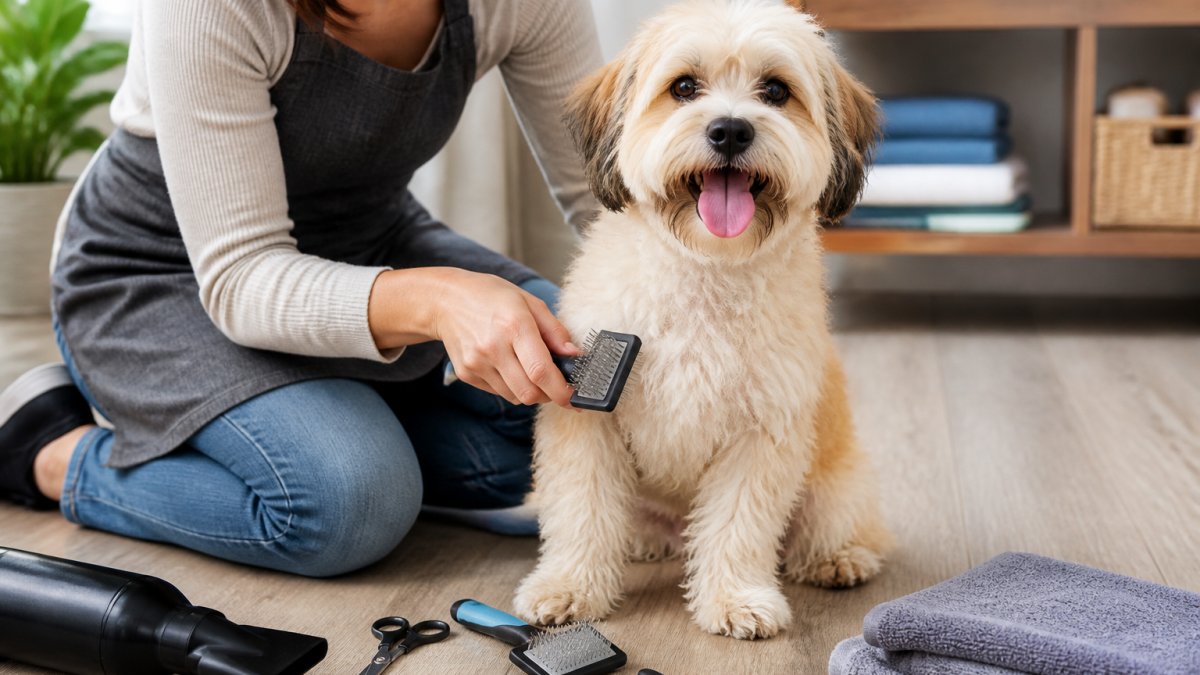
Gather all your tools and products before you start. Running around mid-session looking for the slicker brush or nail clippers stresses your dog and breaks your momentum. Lay everything out in the order you'll use it. This also helps you spot missing items before you've already got a wet dog on the table.
Essential Tools and Equipment for Home Grooming
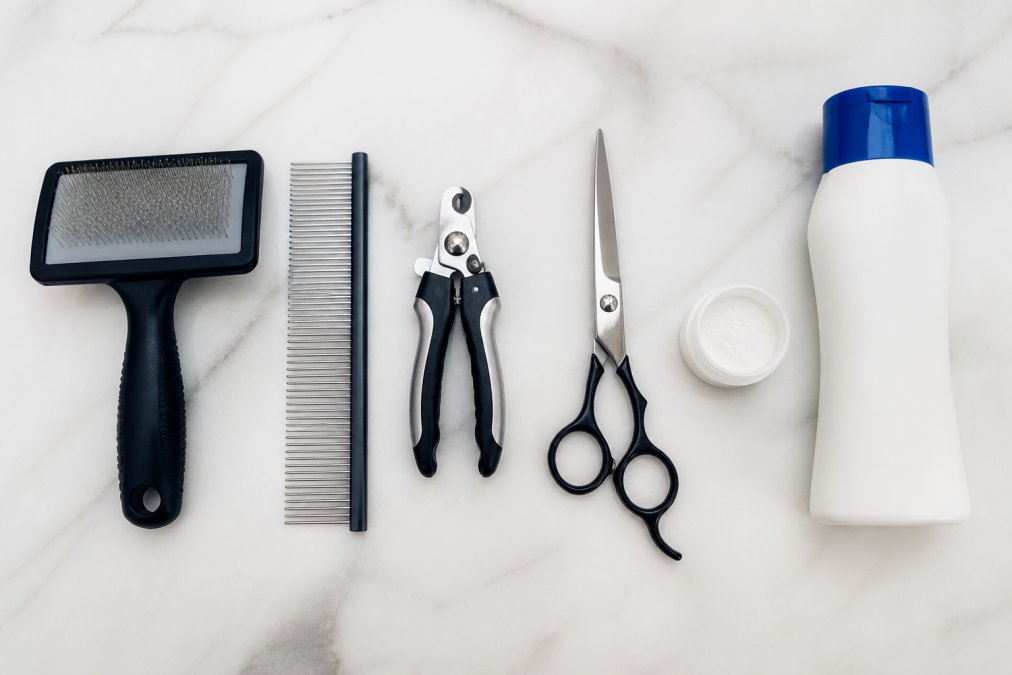
You don't need an overwhelming collection of tools to groom a dog at home effectively. A focused set of quality basics beats having twenty tools you barely understand. Start with the essentials and expand only as your dog's needs demand.
A slicker brush removes mats and loose undercoat efficiently. A metal comb works through tangles and detects mats you might have missed. Dog-specific nail clippers come in two styles, scissor-style and guillotine-style, and both work well depending on your comfort level. Styptic powder stops bleeding immediately if you accidentally cut into the quick during nail trimming.
Dog shampoo formulated for your dog's coat type prevents skin irritation. Never use human shampoo, the pH balance is wrong for dogs. For dogs with sensitive skin, look for pH-balanced formulas designed specifically for that concern.
Grooming shears handle finishing work and sanitary trims. These are different from regular scissors, they're sharper and designed to cut dog hair cleanly without pulling. A grooming dryer speeds up drying time significantly, though a regular towel works if you're patient.
Best Dog Grooming Tools for Beginners
If you're new to grooming a dog at home, choosing the right tools makes the difference between a smooth session and a frustrating one. Beginners often buy the wrong tools and then assume they can't groom their dog themselves.
For brush selection, match the tool to your dog's coat type. Dogs with double coats, like Labs or Golden Retrievers, need a slicker brush and undercoat rake to handle shedding. Single-coated dogs like Poodles need a slicker brush and metal comb for detangling. Wire-coated dogs like Terriers benefit from a slicker brush and stripping knife. Getting this wrong means you'll spend twice as long brushing and miss mats entirely.
Scissor-style nail clippers feel more natural if you've never trimmed nails before. They work like regular scissors and give you better control than guillotine clippers. However, guillotine clippers are faster once you master them. Start with scissor-style and upgrade later if you want.
For shampoo, buy a small bottle first. Test it on a small area to see how your dog's skin reacts. Switching shampoos suddenly can cause itching and irritation. Once you find a formula your dog tolerates well, stick with it.
Dog Products and More offers a curated selection of brushes, clippers, and grooming essentials designed for home use. Our tools are selected for durability and ease of use, so you can focus on your dog rather than fighting with equipment.
Brushing and Coat Maintenance for Different Coat Types
Brushing technique depends entirely on your dog's coat structure. A method that works beautifully on one coat type can actually damage another. Understanding your dog's coat type is the first step to doing this correctly.
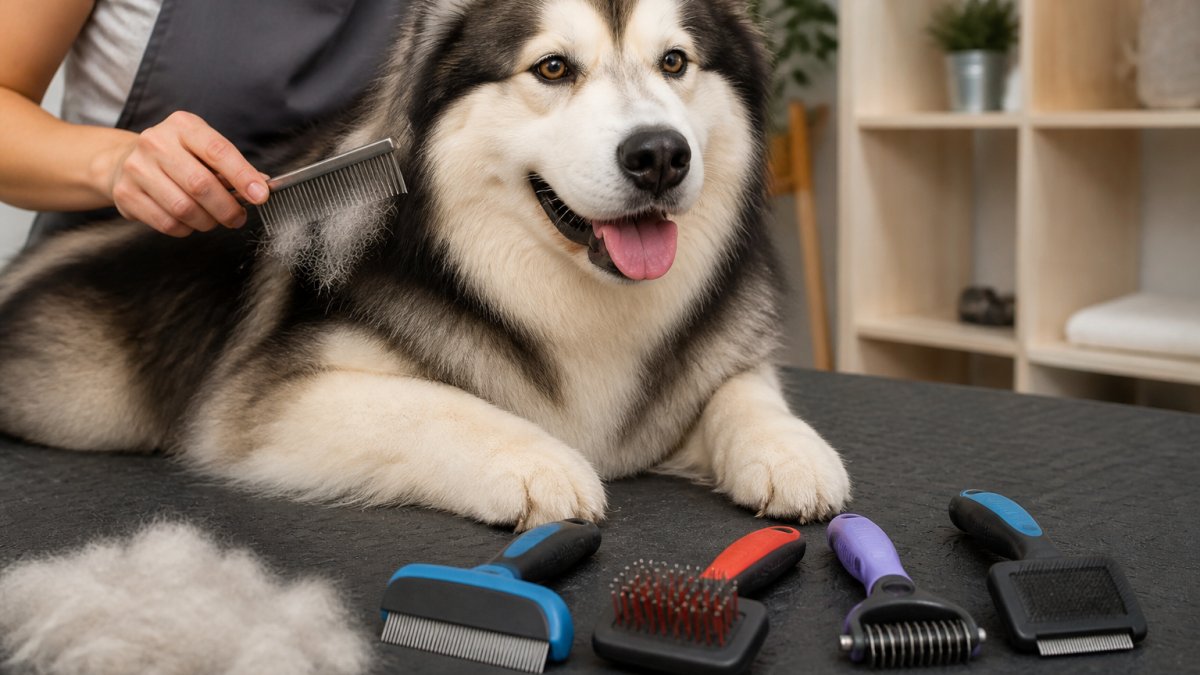
Double-coated dogs have a dense undercoat beneath longer guard hairs. Brushing should reach that undercoat, not just the surface. Use a slicker brush in the direction of hair growth, then follow with an undercoat rake to remove loose undercoat without damaging the guard hairs. This prevents matting and reduces shedding dramatically. Most double-coated dogs need this level of brushing 2-3 times per week during shedding season.
Single-coated dogs like Poodles and Doodles need detangling work more than deshedding. Use a slicker brush and metal comb to work through tangles before they become mats. Pay special attention to areas prone to matting: behind ears, under armpits, and the rear end. These dogs typically need brushing 3-4 times per week to prevent matting.
Wire-coated dogs like Terriers need a different approach entirely. A slicker brush can damage the wire coat. Instead, use a stripping knife or specialized wire coat brush that removes dead hair without breaking live hair. This maintains the coat's texture and appearance.
How to De-Shed a Dog at Home
Deshedding removes loose undercoat before it ends up on your furniture. This is not the same as regular brushing. Deshedding is a specific technique using specialized tools that pull out loose hair from the base of the coat.
An undercoat rake or deshedding tool like a FURminator works by reaching into the coat and pulling out loose undercoat without damaging guard hairs. Use short, gentle strokes in the direction of hair growth. Don't press hard, let the tool do the work. Work section by section across the entire body, paying special attention to areas where undercoat accumulates: the hindquarters, chest, and neck.
Timing matters. Deshed during shedding season when your dog's coat is actively releasing hair. Spring and fall are peak shedding times for most dogs. Deshedding in winter when your dog isn't actively shedding removes less hair and feels pointless.
The process can take 30-60 minutes depending on your dog's size and coat density. Many dogs find it relaxing once they get used to it. Some dogs get anxious about the sensation, so start with short sessions and build up gradually.
Dog Bathing Tips for Sensitive Skin
Bathing a dog at home requires patience and the right products. For dogs with sensitive skin, the wrong shampoo or technique can trigger itching and irritation that lasts for weeks.
Use warm water, not hot. Hot water strips natural oils from the skin and causes irritation. Lukewarm water is more comfortable and gentler on sensitive skin. Wet the coat thoroughly before applying shampoo so the shampoo distributes evenly and doesn't concentrate on any one area.
Apply shampoo and work it into a lather, but don't scrub aggressively. Gentle massage with your fingertips is enough. Leave the shampoo on for 5-10 minutes so it can do its job, this contact time matters more than scrubbing force. Rinse thoroughly.
How to Trim Dog Nails Safely and Other Finishing Details
Nail trimming intimidates most new groomers because one mistake causes bleeding. The fear is understandable but manageable with the right technique and tools. Keep styptic powder within reach before you start.
Handling Anxiety and Common Grooming Challenges
Some dogs panic during grooming. Handling anxiety requires patience, desensitization, and sometimes professional help. Forcing a terrified dog through a grooming session damages trust and makes future sessions harder.
Frequently Asked Questions
What supplies do I need to groom my dog at home?
Start with a slicker brush or comb suited to your dog's coat type, nail clippers or a nail grinder, styptic powder to stop bleeding if you nick the nail, dog shampoo formulated for your dog's skin type, towels, and a grooming table or non-slip mat. For de-shedding, add a deshedding tool or undercoat rake. A grooming loop helps secure your dog during the process. Dog Products and More carries all these essentials in one convenient location.
How often should I groom my dog at home?
Grooming frequency depends on your dog's coat type and breed. Dogs with double coats or long hair need brushing 2-3 times weekly to prevent matting and manage shedding cycles. Short-haired dogs may need brushing weekly. Nail trimming is typically needed every 3-4 weeks, and bathing ranges from monthly to every 6-8 weeks depending on activity level and skin health. Establish a routine that keeps your dog's coat healthy and reduces shedding around your home.
How do I keep my dog calm during grooming?
Start with desensitization by letting your dog see and touch grooming tools without using them. Use positive reinforcement like treats and praise during short grooming sessions. Keep the environment quiet and calm, and establish a consistent grooming schedule so your dog knows what to expect. If your dog shows anxiety, take breaks and never force the process. Handling techniques matter, be gentle and confident. Some dogs respond well to calming music or a comfortable grooming loop setup that keeps them secure but not stressed.
What's the safest way to trim dog nails at home?
Start by identifying the quick (the pink part inside the nail that contains blood vessels). Trim only the white or clear portion of the nail at a 45-degree angle. Use sharp, properly maintained clippers or a nail grinder designed for dogs. Keep styptic powder nearby to stop bleeding if you accidentally cut the quick. For dogs with dark nails where the quick is hard to see, trim small amounts gradually. If you're uncertain, trim less rather than more. A nail grinder offers more control for anxious dogs and reduces the risk of splitting.