 listicle
Best Grooming Tools for Thick Fur: 2026 Review
Table of Contents
- Quick Comparison: Top Grooming Tools for Thick Fur
- What Makes a Grooming Tool Effective for Dense Coats
- Best Undercoat Rake for Dogs: Top Picks for Double Coats
- Slicker Brushes and Pin Brushes: Daily Maintenance Tools
- How to Groom a Double-Coated Dog: Step-by-Step Technique
- How to Remove Mats from Thick Dog Fur Without Causing Pain
- Tool Maintenance and Ergonomics: Keeping Your Grooming Kit in Shape
- Conclusion: Building Your Grooming Toolkit
- Frequently Asked Questions
Last Updated: October 4, 2026
Quick Comparison: Top Grooming Tools for Thick Fur
Finding the best grooming tools for thick fur starts with matching the tool to your dog's coat type. A double coat needs different handling than a curly or long single coat, and using the wrong brush can cause real discomfort.
Here is a quick comparison of tools for dense, thick coats:
| Tool | Type | Best For | Key Feature |
|---|---|---|---|
| FURminator Grooming Rake | Undercoat rake | Double coats, matting | Rotating teeth |
| Maxpower Planet Grooming Rake | Undercoat rake | Stubborn mats | Dual-sided head |
| Saccison Slicker Brush | Slicker brush | Daily maintenance | Self-cleaning |
| BioSilk Detangling Pin Brush | Pin brush | Sensitive skin | Rounded pin tips |
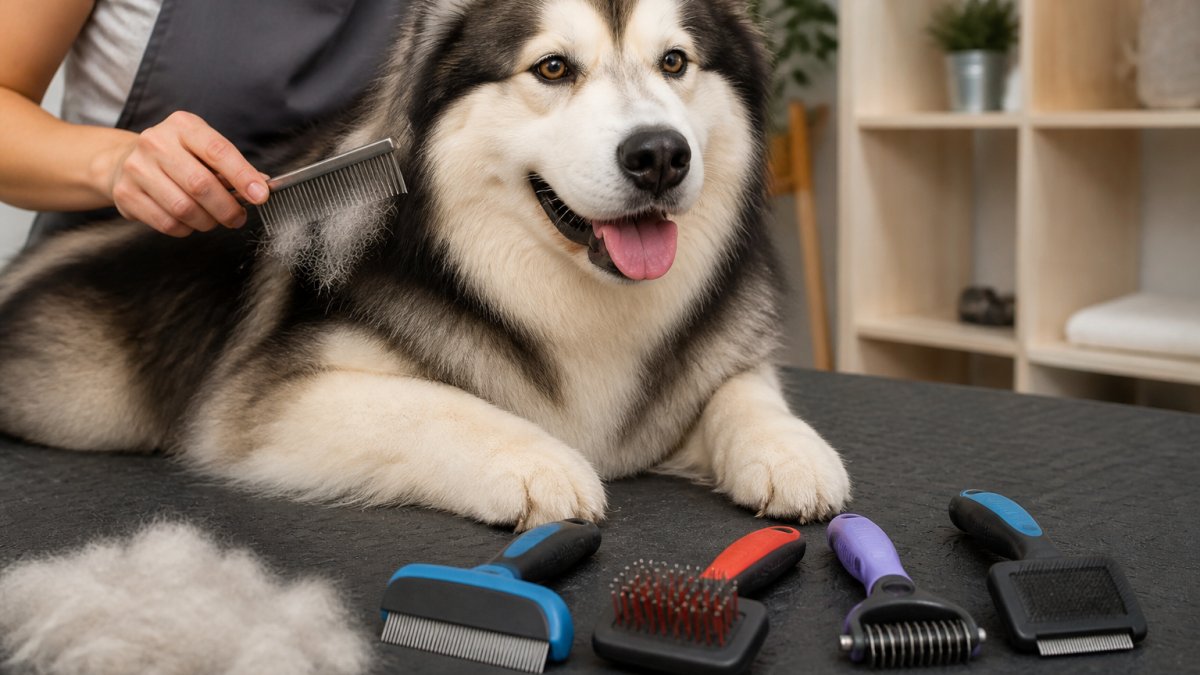
| Pet Magasin Grooming Comb | Metal comb | Finishing work | Dual-width teeth |
Below, we explain how each tool fits into a complete grooming routine for thick-coated dogs.
What Makes a Grooming Tool Effective for Dense Coats
An effective grooming tool for dense coats reaches the undercoat without scratching the skin.
The most common mistake is choosing a tool by looks instead of coat type.
Three factors decide whether a tool actually works on thick fur:
- Pin or tooth length: Must reach through the topcoat to the undercoat
- Tip shape: Rounded tips prevent brush burn and skin irritation
- Handle ergonomics: A comfortable grip matters when sessions run long
A double coat consists of a soft, dense undercoat and a longer, coarser topcoat. Tools must address both layers, which is why a single brush rarely covers everything.
Best Undercoat Rake for Dogs: Top Picks for Double Coats
The best undercoat rake for dogs with double coats combines rotating or rounded teeth with a handle you can grip for extended sessions. Two models stand out for different reasons.
FURminator Grooming Rake: Rotating Teeth for Deep Detangling
The FURminator Grooming Rake uses a single row of rotating metal teeth that glide through dense fur. The rotating design minimizes pulling, which matters when you hit a tangle near the skin.
The main limitation: it is not suitable for short-haired breeds. The teeth need length to work, and on a short coat they simply scrape the surface.

Maxpower Planet Grooming Rake: Dual-Sided Versatility
Maxpower Planet's rake offers two sides for different grooming needs, which makes it a practical choice if you want one tool for both detangling and loosening dead hair.
Where it falls short: the dual-sided head requires careful handling near sensitive areas like the belly and armpits. The teeth are effective, but you need a light touch.
Slicker Brushes and Pin Brushes: Daily Maintenance Tools
Daily maintenance calls for gentler tools than a rake. Slicker brushes and pin brushes handle surface debris, loose fur, and light tangles without the deeper action of an undercoat rake.
Saccison Slicker Brush: Self-Cleaning Convenience
The Saccison Slicker Brush uses fine wire bristles for deep grooming and includes a self-cleaning mechanism that retracts the bristles so collected fur drops away. That saves time and keeps the tool hygienic between sessions.
One caution: the bristles are sharp if you press too hard. Use light, even strokes rather than digging into the coat.

BioSilk Detangling Pin Brush: Gentle on Sensitive Skin
BioSilk's pin brush has rounded pin tips that make it a safe choice for dogs with sensitive skin. The ergonomic grip helps during longer brushing sessions, and the materials are eco-friendly. It is best for daily brushing to prevent tangles in long, thick coats.
The trade-off is clear: this brush will not remove deep undercoat. Pair it with a rake for shedding season.

How to Groom a Double-Coated Dog: Step-by-Step Technique
Grooming a double-coated dog is not a matter of running a brush over the back a few times. It is a layered process: you loosen dead undercoat first, then clear it, then smooth the topcoat. Skip a layer and you leave impacted fur against the skin, which is where mats and hot spots start.
Here is the full sequence, with the technique details most guides leave out.
Step 1: Pre-check with a metal comb
Before you pick up a rake, run a metal comb through the coat in one-inch sections. The comb is your diagnostic tool: if it snags, there is a mat or an impacted patch, and you need to deal with that area before brushing the rest. Working a rake over an unnoticed mat drives it tighter against the skin.
Step 2: Loosen the undercoat with a rake
Use an undercoat rake in the direction of hair growth, not against it. Against-the-grain strokes feel more productive because they pull more fur, but they also scrape the skin and cause the irritation owners mistake for "shedding season itch."
Keep the rake teeth parallel to the skin, not angled into it. You want the teeth to travel through the coat, not dig at the surface.
Step 3: Line brushing, the technique that actually reaches the skin
This is the step almost no listicle explains, and it is the one that separates a coat that looks groomed from a coat that actually is.
Line brushing means you part the coat in horizontal rows, the way you would part hair to braid it, and brush one row at a time down to the skin. Here is the sequence:
- Lay your dog on its side, or have it stand and work one flank at a time.
- Use your free hand to push the topcoat back, exposing a strip of skin about an inch wide.
- Brush that exposed strip with your slicker or rake, working from the skin outward.
- Release the next inch of coat and repeat, moving down the body in rows.
- Switch sides and repeat.
Line brushing is slower than surface brushing, but it is the only way to find mats forming at the skin before they tighten. It also lets you see redness, flakes, or hot spots you would otherwise brush right over.
Step 4: Clear loose fur with a slicker brush
After raking, a slicker brush lifts the loosened undercoat out of the topcoat. Use short, light strokes and let the bristles do the work. Pressing a slicker into the coat is the most common cause of "brush burn", the red, tender skin that shows up a day after a hard grooming session.
If your dog flinches or tries to sit down, that is pressure feedback, not stubbornness. Ease off.
Step 5: Finish with a pin brush and comb check
A pin brush with rounded tips smooths the topcoat and catches stragglers. Finish by running the metal comb through the coat again, if it glides, you are done. If it snags, go back to that section with the rake.
Session length and pacing
A full line-brushing session on a thick double coat can run 20 to 40 minutes. Split it across two or three shorter sessions if your dog gets restless.
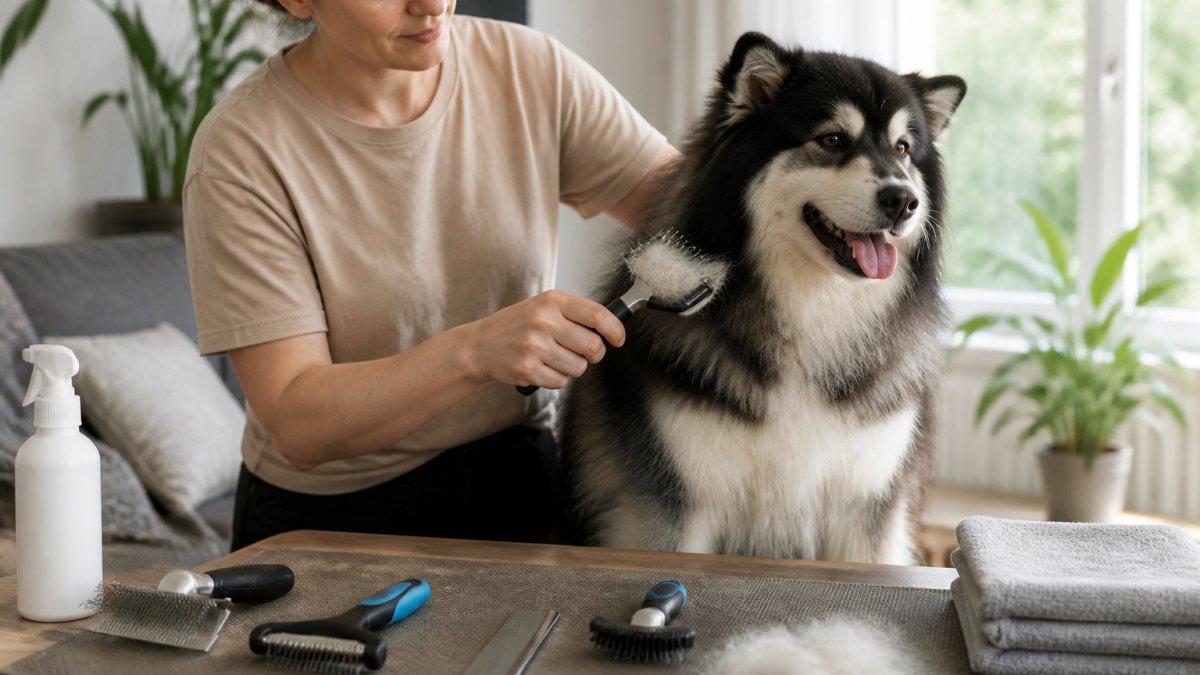
How to Remove Mats from Thick Dog Fur Without Causing Pain
Removing mats from thick fur requires patience and the right sequence. Never pull a mat out with a brush. Instead, break it apart gradually:
- Separate the mat with your fingers before touching it with a tool
- Use a dual-sided rake to work at the edges, not the center
- Apply light pressure and stop if your dog flinches
Tool Maintenance and Ergonomics: Keeping Your Grooming Kit in Shape
Two things get ignored in most grooming guides: what happens to your tools between sessions, and what happens to your hands during them. Both matter more with thick fur than with any other coat type, because thick-coat sessions are longer and require more pressure per stroke.
Cleaning your tools (and how often)
Fur-packed tools stop working. A slicker brush with a mat of fur wedged between the bristles cannot grab new hair, and a rake with impacted undercoat between its teeth drags instead of glides.
A practical schedule:
- After every session: Pull collected fur out of the bristles or teeth with your fingers or a comb. This takes under a minute and is the single highest-value maintenance habit.
- Weekly: Wash metal-toothed tools (rakes, combs) in warm water with a drop of mild dish soap. Rinse and dry immediately, even stainless steel can spot if left wet.
- Monthly: Wash slicker and pin brushes. Fur and skin oils build up at the base of the bristles where you cannot see them, and that buildup is what makes a brush start to smell.
Dry everything thoroughly before storing. A rake stored damp in a closed drawer is how rust starts, even on "rust-resistant" stainless.
Ergonomics for the person holding the brush
This is the part almost no guide covers, and it is the reason a lot of owners quietly stop grooming their thick-coated dogs.
What actually helps:
- Handle diameter: A handle that is too thin forces your fingers to pinch; too thick and you lose control. Look for a handle that lets your fingers wrap with a small gap between your fingertips and palm.
- Non-slip grip: Rubberized or textured handles reduce the grip force needed to keep the tool from twisting. Less grip force means less forearm fatigue.
- Handle length: Longer handles let you reach the back and hindquarters without leaning over the dog, which spares your lower back as much as your hand.
If you have a condition that makes gripping painful, a lightweight rake with a padded handle will do more for your grooming routine than any premium brush. The best tool is the one you can actually hold for 20 minutes.
Storage
Store tools teeth-up or bristles-up in an open container so air circulates. Do not toss a rake into a drawer with other metal tools, teeth bend, and a bent tooth scratches skin. A simple cup or a wall-mounted holder keeps teeth intact and within reach.
Conclusion: Building Your Grooming Toolkit
A complete kit for thick fur includes an undercoat rake, a slicker brush, a pin brush, and a metal comb.
At Dog Products and More, we carry a curated selection of grooming tools, beds, toys, and accessories for dog owners who want reliable products without the guesswork.
Shop now with Dog Products and More and build a grooming routine your dog will tolerate, maybe even enjoy.
Frequently Asked Questions
What is the difference between an undercoat rake and a slicker brush?
An undercoat rake has metal teeth that reach through the topcoat to remove loose dead hair from the dense underlayer. A slicker brush has fine wire bristles that smooth the surface, remove debris, and detangle light mats. For thick double coats, you need both: the rake for deep deshedding and the slicker for finishing and daily maintenance.
How often should you groom a dog with a double coat?
Most double-coated breeds need brushing two to three times per week to prevent mats and manage shedding. During shedding season in spring and fall, daily sessions with an undercoat rake are ideal. Regular grooming distributes natural oils, keeps the coat healthy, and reduces the amount of loose fur around your home.
Can you over-brush a dog with thick fur?
Yes, over-brushing or using too much pressure can cause skin irritation, brush burn, and even bald spots. Limit sessions to 15-20 minutes and watch for redness or your dog pulling away. Tools with rounded pin tips reduce the risk of scratching sensitive skin during frequent grooming.
What type of clipper is best for thick dog fur?
For thick or double coats, use clippers with a powerful motor and a #10 blade for sanitary areas or a #7F blade for body work. Avoid shaving double-coated breeds unless medically necessary, as it can damage coat regrowth. Most thick-coated dogs do better with rake-and-brush deshedding than with clippers for routine maintenance.
How do you remove mats from thick dog fur without causing pain?
Start by applying a detangling spray or cornstarch to loosen the mat. Use a dual-sided rake to work from the outer edge inward, holding the base of the mat to prevent pulling skin. Never cut mats with scissors near the skin. For tight mats, a professional groomer can safely remove them.