 blog
blog
Cost-Effective Shopping for New Dog Adopters
Table of Contents
- Building Your New Dog Adoption Checklist
- How to Save Money on Pet Food and Accessories
- Online vs. In-Store Pricing: Where to Find Cost-Effective Shopping
- Understanding Adoption Fees and What They Include
- Price-Per-Use Analysis: Getting the Most From Essential Gear
- Safety Verification for Budget Retailers and Reliable Sourcing
- Second-Hand Sourcing for Non-Consumables
- Conclusion: Your One-Stop Shop for Cost-Effective Pet Supplies
- Frequently Asked Questions
Last Updated: October 2, 2026
Building Your New Dog Adoption Checklist
Cost-effective shopping for new dog adopters starts with knowing exactly what to buy before you buy it. At Dog Products and More, we've watched too many new owners overspend on gear their dog never touches. The fix is a tight, prioritized checklist.
A pet essentials checklist is a ranked list of the supplies a dog needs in its first month, organized by necessity rather than by what looks cute in a product photo. It separates must-haves from nice-to-haves so your budget goes where it matters.
Most new owners spend heavily on toys and outfits, then scramble for a crate and leash. Flip that order: shelter staff and foster volunteers recommend having the basics in place before pickup day, because the first 72 hours set the tone for settling in.

Essential Items for New Puppy Owners
The essential items for new puppy owners fall into four categories: containment, feeding, walking, and health. Everything else is optional in week one.
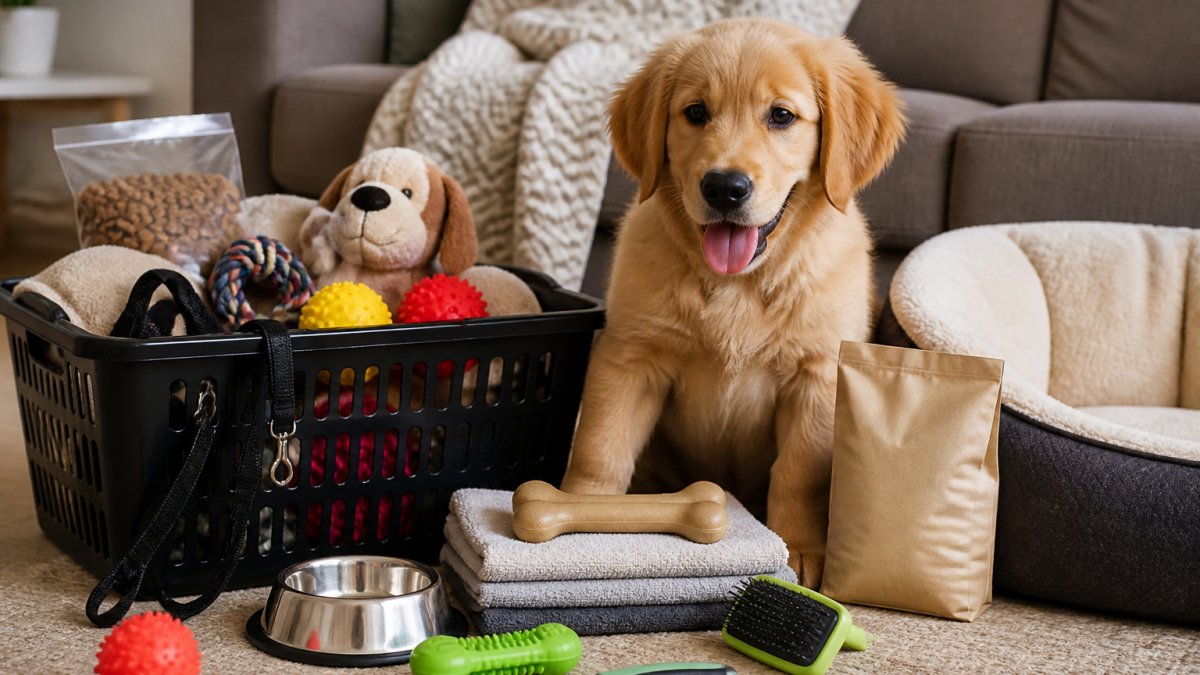
Containment covers a crate or pen, a bed, and puppy pads if you're mid-house-training. Feeding means bowls, a measured scoop, and the same food the shelter or foster used. Walking needs a collar with ID tags, a four-to-six foot leash, and waste bags. Health covers a vet visit, flea and tick prevention, and a grooming brush.
A common mistake is buying a crate your puppy will outgrow in three months. Size for the adult dog and block off the extra space with a divider.
How to Save Money on Pet Food and Accessories
Saving money on pet food comes down to three levers: buying the right package size, timing purchases around sales, and choosing durable goods over disposable ones. Accessories follow the same logic, plus one rule: buy once for the adult size.
Food is the biggest recurring cost, so it deserves the most attention. Larger bags usually cost less per pound, but only if your dog finishes the bag before it goes stale. For a small breed, a mid-size bag bought more often beats a giant bag that sits open for months.
For accessories, the budget-friendly move is to skip the seasonal aisle. A leash is a leash: paying more gets you better hardware and stitching, not a different function, so put your money into the clasp and stitching rather than the color.
Budget-Friendly Shopping Strategies for Recurring Expenses
Recurring costs are where budgets quietly break. Food, treats, waste bags, and flea prevention never stop, so small savings compound.
- Subscribe and save: Recurring delivery on consumables typically costs less per unit than one-off buys and removes the risk of running out.
- Buy in bulk for shelf-stable items: Waste bags, refills, and non-perishable treats store well.
- Track price per unit, not price per bag: A cheaper bag that weighs less is often the more expensive choice.
- Use loyalty programs: Points and member pricing add up over a year of repeat orders.
- Watch for discount codes: A retailer's email list often unlocks a first-order discount code.
Online vs. In-Store Pricing: Where to Find Cost-Effective Shopping
Online retailers usually win on price for consumables and bulky goods, while brick-and-mortar stores win on immediacy. The gap comes from overhead: a physical store pays rent and staff, and that cost shows up in the shelf price.
Where online pulls ahead is selection and comparison.
The Total-Cost Math That Actually Decides It
Sticker price is the wrong number to compare. What matters is delivered cost per unit, which has four moving parts:
- Item price, the shelf or listing price.
- Shipping, free above a retailer's threshold, otherwise a flat or weight-based fee.
- Tax, applies online in most states now, so it rarely separates the two channels.
- Your time and fuel, a store run is not free if it costs a 20-minute drive each way.
Price-Per-Unit Comparison, Done Right
Retailers deliberately make unit pricing hard to compare. A 30-pound bag and a 40-pound bag aren't the same product at different sizes if the formulas differ, but for the same formula, divide price by pounds. Do the same for waste bags (price per bag, not per roll), treats (price per ounce), and flea prevention (price per dose, not per box).
Autoship and Subscription Pricing
Subscription pricing on consumables is usually the lowest per-unit price a retailer offers, because the retailer trades a small discount for predictable revenue. The trade-off: you're locked into a cadence, so if your dog's food intake changes, growth spurt, weight loss, a new formula, you can end up with a backlog.
When In-Store Still Wins
Online does not win everything. In-store wins when:
- You need the item today (a leash chewed through the night before a walk).
- You want to try a harness or crate for fit before committing.
- The online price plus shipping is within a dollar or two of the shelf price.
- You're buying a single low-cost item that doesn't clear a free-shipping threshold.
The cost-effective answer is rarely 'always online' or 'always in store.' Batch consumables online to clear free shipping, buy fit-sensitive gear in person, and keep a short list of items you'll only buy locally because the shipping math never works.
| Factor | Online Retail | In-Store Retail |
|---|---|---|
| Unit price on consumables | Usually lower | Usually higher |
| Selection and sizes | Broad | Limited to shelf space |
| Shipping cost | Applies, unless threshold met | None |
| Speed | One to several days | Immediate |
| Price comparison | Instant across sizes | Manual |
| Best for | Batched consumables, bulky goods | Fit-sensitive gear, urgent single items |
Understanding Adoption Fees and What They Include
Adoption fees are not the same as the cost of a dog. The fee reimburses the rescue or shelter for money it already spent on that animal, and what's bundled in varies widely by organization, region, and even individual dog.
Most adoption fees include some combination of:
- Spay or neuter surgery
- Age-appropriate vaccinations (often distemper/parvo and rabies)
- A microchip, sometimes with registration paid
- A basic wellness exam by the shelter's vet
- Deworming and initial flea/tick treatment
- A starter bag of the food the dog was eating
Why the Same Fee Buys Different Things
Two organizations can charge a fee in the same range and deliver very different value. A municipal shelter often prices lower because it's subsidized by tax dollars and donations, but may hand you a dog with only rabies and a spay certificate. A private breed rescue often prices higher because it already paid for heartworm treatment, dental work, or a multi-week foster stay, costs that would otherwise land on you at your first vet visit.
How to Compare Fees Across Organizations
When choosing between two rescues, compare each fee against its services, not against each other in isolation:
- List the services the fee includes.
- Estimate what each would cost at a general-practice vet near you (call and ask, most will quote a spay/neuter and a vaccine series over the phone).
- Subtract that total from the fee.
Price-Per-Use Analysis: Getting the Most From Essential Gear
Price-per-use is the single most useful number in pet budgeting, and almost no buying guide mentions it. A cheap item you replace three times costs more than a quality item you buy once.
- Spend up on: crates, exercise pens, leashes, grooming clippers, beds for heavy chewers
- Spend down on: waste bags, treats, tennis balls, plush toys, food bowls
Safety Verification for Budget Retailers and Reliable Sourcing
Reliable sourcing also means checking return policies before you order. A retailer with a clear return window and a real customer service channel is worth a slightly higher price than one with no reachable support.
Second-Hand Sourcing for Non-Consumables
Second-hand is the most underused savings channel in pet ownership, and it's safe for anything not ingested or worn against broken skin. Crates, gates, pens, bowls, and hard toys all clean up well.
Conclusion: Your One-Stop Shop for Cost-Effective Pet Supplies
Building a dog budget that holds up takes more than hunting for the lowest sticker price. It takes a checklist, a price-per-use mindset, and a retailer you can trust to ship what you ordered, when you need it.
Frequently Asked Questions
What are the absolute must-have supplies for a new rescue dog?
Start with a sturdy crate, a comfortable bed, food and water bowls, a collar with ID tag, a 6-foot leash, and a starter bag of the food the shelter was using. Add grooming tools like a brush and nail clippers, plus a few durable chew toys. These essential items for new puppy owners and rescue dogs cover safety, feeding, and comfort without overspending.
How can I save money on high-quality pet supplies as a new owner?
Focus on cost-effective shopping by comparing unit prices online, signing up for loyalty programs, and using subscription deliveries for food and treats. Buy durable goods like crates and beds second-hand from verified sellers. For consumables, look for discount codes and wholesale pricing on a one-stop online shop to reduce shipping costs and recurring expenses.
Is it cheaper to buy pet supplies online?
Online retailers often offer lower prices because they have fewer overhead costs than brick-and-mortar stores. You can easily compare prices, find discount codes, and avoid impulse buys. Plus, subscription savings and free shipping thresholds make online shopping more cost-effective for recurring items like pet food and accessories, especially for new dog adopters.