 blog
blog
Best Durable Chew Toys for Teething Puppies
Table of Contents
- Quick Comparison: Best Durable Chew Toys for Teething Puppies
- Puppy Teething Timeline: What to Expect Month by Month
- Safe Materials for Puppy Chew Toys: What Passes the Test
- Best Chew Toys for Aggressive Puppy Chewers
- Interactive and Puzzle Chew Toys for Mental Enrichment
- DIY Frozen Treats and Natural Chew Alternatives
- Safety Rules for Supervised Chewing and Toy Replacement
- Conclusion: Choosing the Right Chew Toy for Your Puppy
- Frequently Asked Questions
Last Updated: September 26, 2026
Quick Comparison: Best Durable Chew Toys for Teething Puppies
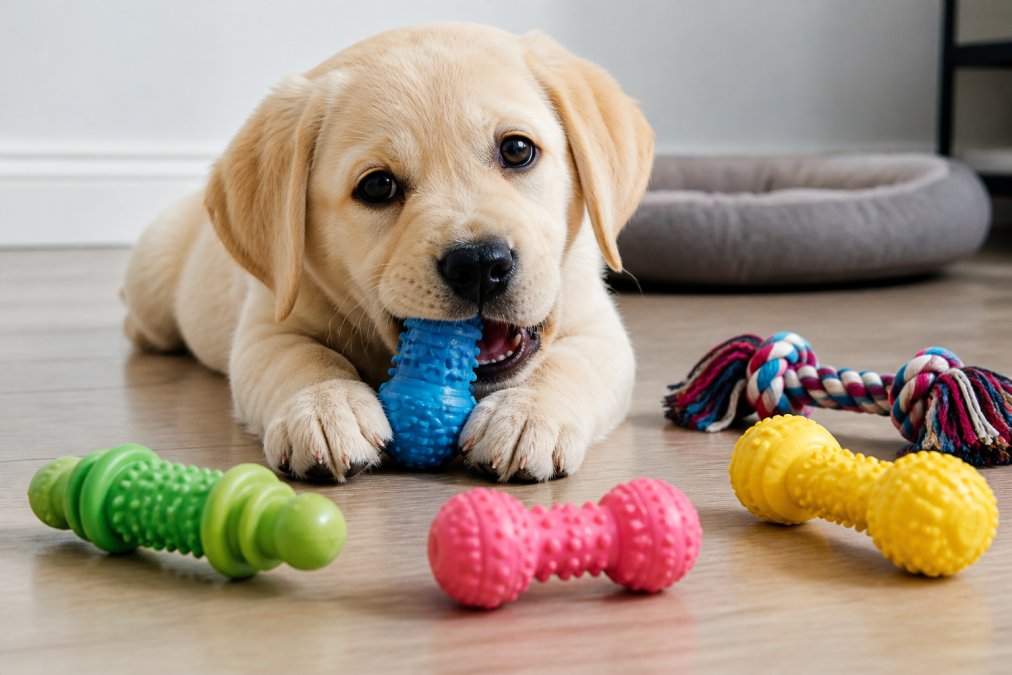
Teething puppies chew to relieve sore gums, and the wrong toy can crack teeth or become a choking hazard. This guide from Dog Products and More breaks down the safest, most durable chew toys for teething puppies by material, chew intensity, and developmental stage, so you can match a toy to your dog's jaw strength instead of guessing.
Here's the short version before the details:
| Toy Type | Best For | Chew Intensity | Key Safety Note |
|---|---|---|---|
| Natural rubber chew | Most puppies, 8-16 weeks | Soft-to-medium | Must flex, not crack |
| Wishbone-shaped chew | Aggressive chewers | Medium-to-firm | No small ends to swallow |
| Puzzle feeder toy | Bored, high-energy puppies | Interactive | Supervised only |
| Frozen rope toy | Gum massage | Soft | Replace once frayed |
| DIY frozen treat | Teething relief | Soft | Never leave unattended |
Puppy Teething Timeline: What to Expect Month by Month
Puppies usually cut their full set of 28 baby teeth by 8 weeks, then start losing them around 12 to 16 weeks as adult teeth push through. The heaviest chewing happens between 4 and 6 months, when sore gums drive constant gnawing.
Here's the rough puppy teething timeline:
- 0-8 weeks: Baby teeth emerge. Chewing is light.
- 8-12 weeks: First loose teeth. Nipping and mouthing increase.
- 12-16 weeks: Peak discomfort. Destruction peaks here.
- 4-6 months: Adult teeth erupt. The most intense chewing window.
- 6-8 months: Most adult teeth are in. Chewing settles.
Safe Materials for Puppy Chew Toys: What Passes the Test
A puppy-safe chew toy is made from a material that gives slightly under a fingernail, has no small detachable parts, and can't be swallowed in pieces. Natural rubber, food-grade silicone, and firm-but-flexible nylon blends pass this test.
- The nail test. Press your thumbnail in. It should leave a slight dent.
- The flex test. Bend it. It should give, not snap.
- The parts test. Squeeze it. No squeakers, caps, or pieces should pop loose.
Best Chew Toys for Aggressive Puppy Chewers
For an aggressive chewer, durability matters more than texture, but "durable" is not the same as "hard." A toy that survives a power chewer by being rigid is the wrong toy for a puppy whose adult teeth are still mineralizing. The goal is a toy that resists puncturing while still flexing under jaw pressure.
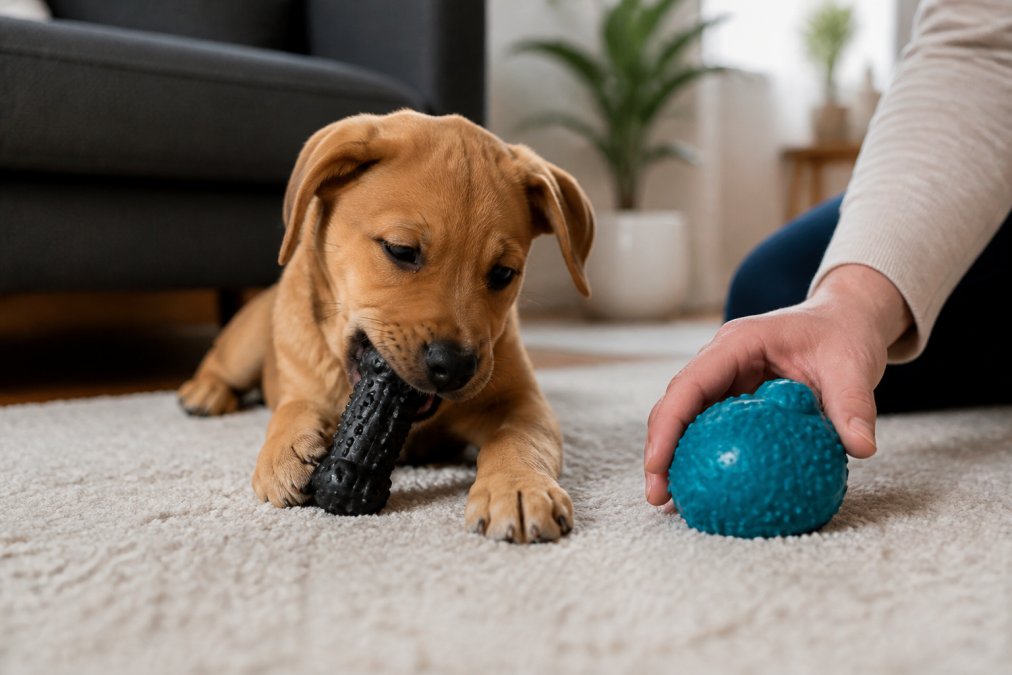
What separates a durable puppy chew from a hard one
The best chew toys for aggressive puppy chewers tend to share a few traits:
- Thick walls. Thin rubber tears at the seams within days. Look for walls you cannot pinch flat between two fingers.
- One-piece construction. No glued joints, inserts, or press-fit caps that a determined jaw can work loose.
- Right size. Too small invites swallowing; too large is ignored. A common rule of thumb is a toy at least as long as your puppy's muzzle.
- Nubs and ridges. These add gum massage while the dog chews and give the jaw something to work against.
- A hollow core you control. A cavity you can stuff and freeze is useful; a cavity that collapses under biting is a pinch hazard.
Match the material to the jaw, not the label
Chew intensity varies by breed and body type, and this is where most guides stay generic. A toy that lasts months for a toy breed may last a week for a retriever or a terrier. Rough tiers most trainers and veterinary technicians use:
- Toy and companion breeds (under ~20 lb): soft-to-medium natural rubber, food-grade silicone, and thin rope. Jaw pressure is low; the risk is swallowing small pieces, not destroying thick rubber.
- Medium breeds (roughly 20-60 lb): medium natural rubber with a solid core, thicker rope, and firm-but-flexible nylon blends. This is the widest category and where most "durable" toys are actually rated.
- Large and working breeds (over ~60 lb): thick natural rubber, wishbone or ring shapes with no thin ends, and reinforced rope. Expect shorter replacement cycles even from quality toys.
- Flat-faced and small-mouthed breeds: shorter, wider toys the dog can actually get behind its molars. Long thin toys are hard for these dogs to hold and are more likely to be chewed at the tip, where they fail first.
Material safety: what to avoid, not just what to buy
Durability is only half the decision. A toy that lasts but leaches is a worse choice than one that wears out safely. When you check a label or product page, look for:
- BPA-free and phthalate-free claims on any plastic or vinyl component. These are the two additive families most commonly flagged in pet chews.
- Food-grade or medical-grade silicone rather than industrial silicone, which can contain fillers.
- Natural rubber rather than unspecified "rubber," which may be a blend with harder synthetic content.
- No added lead or heavy-metal colorants, most reputable manufacturers now state this, and its absence is a yellow flag.
- Third-party testing marks where available. A manufacturer that publishes material test results is easier to trust than one that only uses the word "non-toxic."
A common mistake is buying "indestructible" toys rated for adult power chewers. Those materials are often too hard for puppy teeth and can cause fractures that require veterinary care. If a toy does not flex under your thumbnail, it is not a puppy toy, regardless of what the package says.
The three tests before you buy
- The nail test. Press your thumbnail in. It should leave a slight dent.
- The flex test. Bend it. It should give, not snap.
- The parts test. Squeeze it. No squeakers, caps, or pieces should pop loose.
Run all three in the store or immediately on delivery. A toy that passes the nail and flex tests but fails the parts test is still a choking risk.
Interactive and Puzzle Chew Toys for Mental Enrichment
Interactive and puzzle chew toys combine teething relief with behavioral enrichment. They hold treats, force problem-solving, and keep a bored puppy engaged far longer than a plain rubber bone.
DIY Frozen Treats and Natural Chew Alternatives
Frozen treats are the cheapest teething relief you can make at home, and they are the one category where you control every ingredient. Most guides stop at "fill a toy with peanut butter and freeze it." That advice is incomplete and occasionally unsafe. Here is a method that actually works.
The basic frozen-stuffable method
- Choose a hollow, freezer-safe toy with a wide opening. Rinse it and let it dry.
- Plug the small end with a smear of plain yogurt or mashed banana so liquid does not run out.
- Fill the cavity with your chosen mixture, leaving about a quarter-inch of headroom, liquid expands as it freezes.
- Freeze upright for at least 4 hours, or overnight for a dense fill.
- Hand it over frozen, on a towel or easy-to-clean surface. Expect a puddle as it thaws.
Puppy-safe fill ingredients
- Plain, unsweetened yogurt. No added sugar, no artificial sweeteners.
- Mashed banana. Ripe, no peel.
- Unsalted broth. Chicken, beef, or vegetable, check the label for onion or garlic, which are toxic to dogs.
- Plain cooked pumpkin (not pie filling).
- Unsweetened applesauce.
- Plain cooked chicken or turkey, shredded fine enough that it will not lodge in the toy.
Ingredients to keep out
- Xylitol and other sugar alcohols. Highly toxic to dogs even in small amounts.
- Chocolate, grapes, raisins, macadamia nuts, and onions. All well-documented hazards.
- Salty or seasoned table scraps. High sodium is a real risk for small puppies.
- Dairy in large amounts for puppies with sensitive stomachs. A spoonful of yogurt is usually fine; a full cup is not.
Freeze a batch of three or four stuffed toys at once and rotate them. A frozen toy that has thawed and been refrozen repeatedly gets mushy and grows bacteria faster than a fresh one.
Natural chew alternatives worth trying
- Frozen carrot. Firm, edible, and gentle on gums. Best for puppies past the earliest teething stage; very young puppies may not have the jaw strength to work it down.
- Frozen rope toy. Soak it in plain water or unsalted broth, wring it out, and freeze. The texture massages gums as it thaws. Replace once frayed.
- Ice cube in a washcloth. Twist the cloth, soak it, and freeze for a soft chew. Never leave a puppy alone with a loose washcloth, it can be swallowed.
- Frozen cucumber spears. Low-calorie, firm, and easy to hold. Peel for very small puppies.
How frozen treats fit the teething timeline
Frozen relief is most useful during the peak-discomfort window, roughly 4 to 6 months, when sore gums drive constant gnawing. Before that, around 8 to 12 weeks, puppies mostly need soft textures and short sessions. After 6 months, as adult teeth settle, frozen treats become an occasional treat rather than a daily tool, and the durable chew toys take over the job of building adult chewing habits.
Frozen treats work best as a supplement, not a replacement. They soothe sore gums but do not build the chewing habits a durable toy teaches. Use them for relief; use durable toys for training.
Safety Rules for Supervised Chewing and Toy Replacement
Supervised chewing is non-negotiable. Even the best durable chew toys for teething puppies can fail, and a swallowed fragment is a choking hazard or a blockage risk.
Follow these rules:
- Inspect before every use. Toss anything cracked, torn, or missing pieces.
- Replace on a cycle. Rubber toys typically last a few weeks to a few months, depending on chew intensity.
- Match size to jaw. A toy should be too big to swallow whole.
- Remove worn toys immediately. Don't wait for a full breakdown.
Conclusion: Choosing the Right Chew Toy for Your Puppy
Matching a chew toy to your puppy's stage and jaw strength takes the guesswork out of teething. The wrong material wastes money and risks injury; the right one soothes gums and protects your furniture.
Frequently Asked Questions
What is the best thing for teething puppies to chew on?
The best options are durable rubber toys with soft-to-medium firmness, especially those with nubs and ridges that massage sore gums. Natural rubber toys made from non-toxic materials work well for most puppies. Rope toys and frozen treats also provide teething relief. Avoid hard nylon or antler chews until adult teeth come in, as they can crack puppy teeth. Always supervise chewing and replace toys that show deep cracks or missing pieces.
At what age do puppies stop teething?
Puppies typically begin teething around 3 to 4 weeks and continue until about 6 to 8 months. The most intense chewing period happens between 4 and 6 months when adult teeth push through. By 8 months, most puppies have a full set of adult teeth and the urge to chew decreases. However, some puppies continue chewing for comfort or boredom well into their first year, so durable toys remain useful.
Are nylon chew toys safe for teething puppies?
Nylon chew toys are generally too hard for puppies under 6 months. Puppy teeth are softer and more prone to cracking or breaking on hard surfaces. A broken puppy tooth can require veterinary extraction and may affect how adult teeth come in. If you want to offer nylon, wait until adult teeth are fully in and choose softer nylon formulas. For teething relief, stick with rubber, silicone, or fabric toys that have some give.
Should I freeze teething toys for my puppy?
Yes, freezing chew toys is one of the most effective ways to soothe sore gums. Soak a rope toy or rubber toy in water or low-sodium broth, then freeze it for a few hours. The cold numbs the gums and the texture gives your puppy something satisfying to gnaw. Always supervise frozen toy use and let the toy soften slightly before giving it back if it becomes too hard. Never freeze toys that could splinter.