 blog
Puppy Harness vs Collar for Leash Training
Table of Contents
- Harness vs Collar: Key Differences for Puppies
- Safety Considerations: Neck Pressure and Injury Risk
- Best Harness for Puppy Leash Training
- Best Collar for Puppy Training
- Puppy Harness Fit and Sizing as Your Dog Grows
- How to Leash Train a Puppy with Either Setup
- Breed and Health Considerations
- Transitioning Between Harness and Collar
- Frequently Asked Questions
Last Updated: October 17, 2026
Harness vs Collar: Key Differences for Puppies
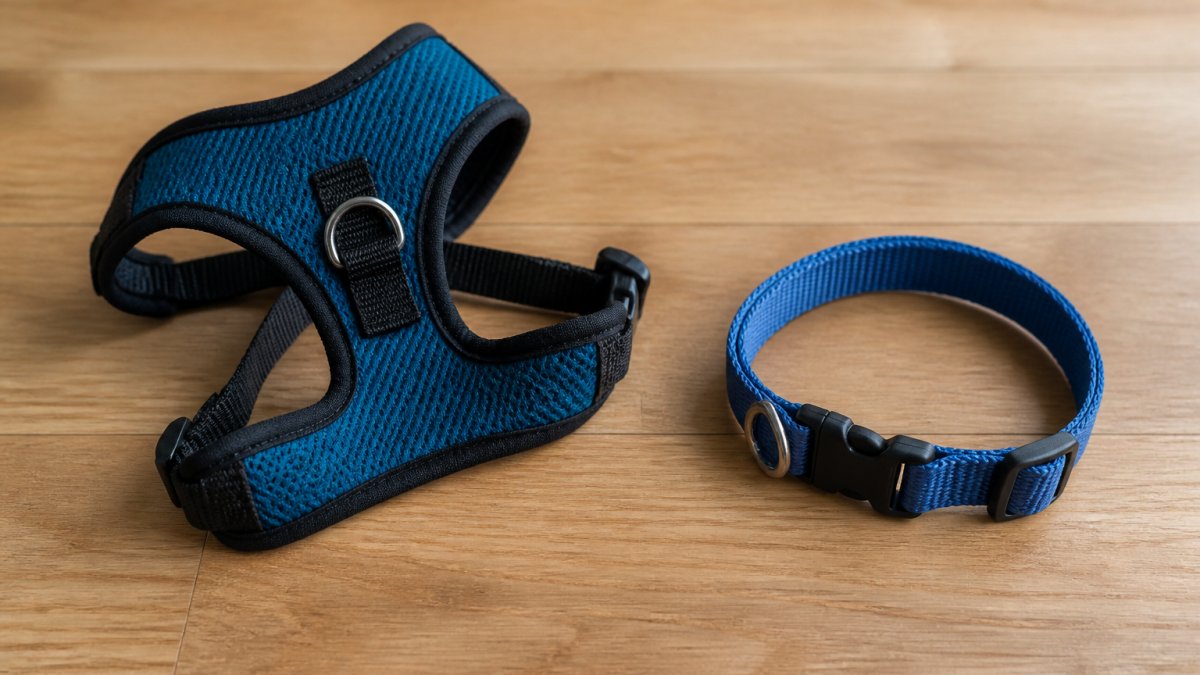
Choosing between a puppy harness vs collar for leash training is one of the first decisions new dog owners face. The right choice depends on your puppy's size, breed, temperament, and training goals. Both tools work, but they distribute force and control differently, and those differences matter.
We help owners find the right equipment for their puppy's stage of development. The core distinction is simple: collars apply pressure to the neck, while harnesses distribute pressure across the chest and body. This fundamental difference shapes how your puppy responds to leash training and how safe the experience is for your growing dog.
How Collars Work and What They Control
A collar sits around your puppy's neck and connects directly to the leash. When your puppy pulls, the collar tightens around the throat area. This creates immediate feedback, your puppy feels the pressure and often stops pulling because the sensation is uncomfortable.
Collars offer direct control. A quick, gentle tug communicates your intention clearly. Many puppies respond quickly to collar feedback because the sensation is noticeable. For puppies with calm temperaments and moderate pulling, a collar can be effective during walks.
The trade-off is that all the force concentrates on a small area: the neck and throat. This matters more than many owners realize.
How Harnesses Work and What They Distribute
A harness wraps around your puppy's chest and body, typically with straps across the back or front. When your puppy pulls, pressure distributes across a much larger surface area. Instead of concentrated neck pressure, your puppy feels the force spread across the chest and sides.
Harnesses give you control without the direct throat pressure. Many puppies find harnesses more comfortable because the sensation is gentler and distributed. The larger contact area makes harnesses especially useful for puppies that pull hard or have strong prey drive.
The attachment point matters. Front-clip harnesses pull your puppy's chest toward you when they lunge, naturally turning their body and slowing forward momentum. Back-clip harnesses attach at the shoulder blades and don't redirect pulling as effectively, they're better for puppies that walk calmly beside you.
Safety Considerations: Neck Pressure and Injury Risk
Neck pressure during leash training carries real risks, especially for puppies. A puppy's throat and airway are still developing. Repeated pressure or sudden jerks can cause discomfort and, in worst cases, injury.
Certain breeds face higher risk. Short-nosed dogs like Bulldogs, Pugs, and Boston Terriers have narrower airways already. Adding collar pressure makes breathing harder during walks. Even gentle pulling can restrict airflow in these breeds.
Puppies with existing health concerns, collapsing trachea, heart conditions, or respiratory issues, should avoid collars entirely. Talk to your veterinarian if your puppy has any breathing difficulties or health concerns before choosing leash equipment.
A harness eliminates direct neck pressure completely. This makes harnesses the safer choice for most puppies, especially during the critical growth phase from 8 weeks to 12 months. Your puppy's bones, ligaments, and airways are still developing.
Best Harness for Puppy Leash Training
A good puppy harness balances control, comfort, and durability. Look for adjustable straps so the harness grows with your puppy. Padded chest panels prevent rubbing and chafing during training sessions. Quality stitching and sturdy attachment points matter because puppies pull hard during the learning phase.
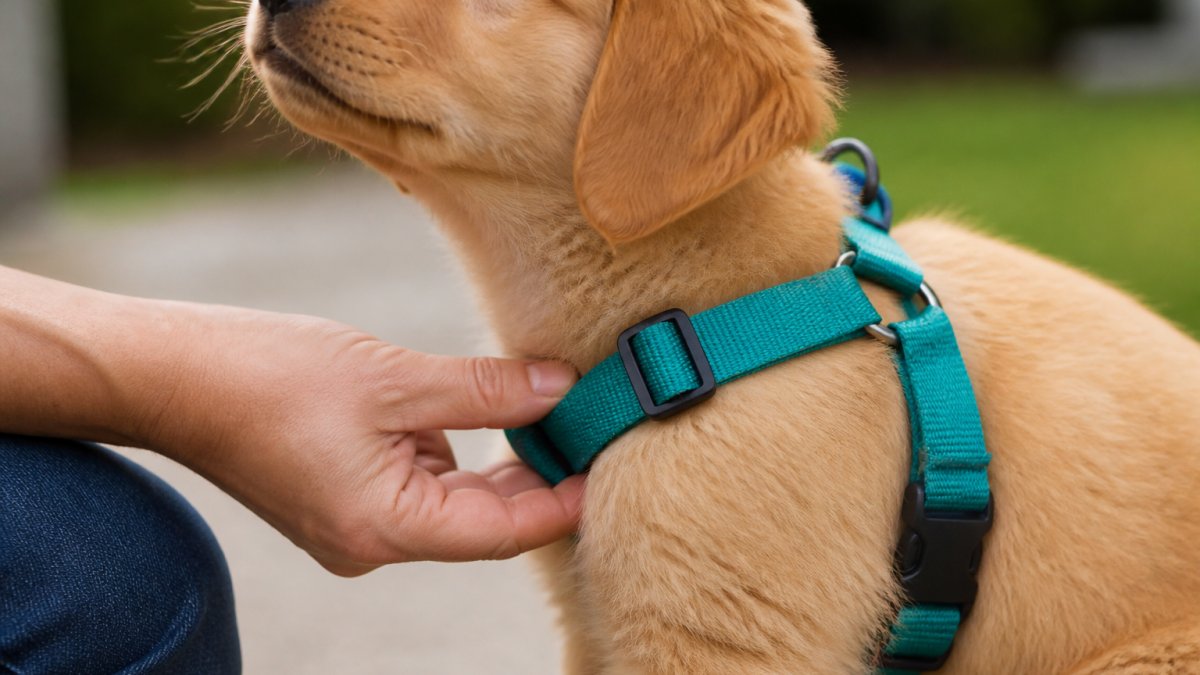
The best harnesses for puppy training have these features:
- Adjustable straps that fit snugly without restricting movement
- Padded areas where straps contact the body
- Sturdy D-ring attachment points that won't tear
- Easy on/off design for quick leash attachment
- Lightweight construction so puppies don't feel weighted down
Dog Products and More carries a curated selection of puppy harnesses designed for training. We focus on harnesses that combine comfort with control, and that gives owners the use they need during leash training.
Front-Clip, Back-Clip, and Dual-Clip Options
Front-clip harnesses attach the leash to a D-ring on the chest. When your puppy pulls forward, the attachment point pulls their chest toward you, naturally turning their body.
The downside: some puppies find the chest attachment annoying and try to bite or chew at the strap. You may need to redirect this behavior during training.
Back-clip harnesses attach the leash at the shoulder blades. They offer freedom of movement and comfort but provide less control over pulling.
Dual-clip harnesses have attachment points on both the chest and back. You can switch between front and back clips depending on your puppy's behavior that day.
For leash training, start with a front-clip harness. The redirecting action teaches your puppy that pulling doesn't get them forward, a key lesson in loose-leash walking.
Best Collar for Puppy Training
If you choose a collar, pick one designed for puppies. Puppy collars are lighter, adjustable, and made from softer materials.
A flat collar with an adjustable strap works for puppies with calm temperaments.
Breakaway collars are safer for puppies that spend time unsupervised. If your puppy gets caught on something, the collar releases instead of choking them. This is especially important for puppies that explore and get into tight spaces.
Identification tags are essential on any collar. A puppy without ID tags is at risk if they escape during a walk. Make sure the tag is secure and includes your current phone number.
Collars work best for identification and supervised walking with calm puppies. For active leash training, a harness gives you better control and eliminates neck pressure.
Puppy Harness Fit and Sizing as Your Dog Grows
Puppies grow fast. A harness that fits perfectly at 10 weeks will be too small at 16 weeks. Checking fit regularly and adjusting straps keeps your puppy comfortable and prevents rubbing or escape.
A properly fitted harness should:
- Sit snugly against the body without restricting movement
- Allow two fingers to fit between the harness and your puppy's chest
- Not slide or shift when your puppy moves
- Have no gaps where your puppy could slip out
Checking Fit and Adjusting for Growth
Check the fit every 2-3 weeks during the first year. Puppies grow unpredictably, some weeks they seem to get bigger overnight. Adjusting straps takes 30 seconds and prevents discomfort.
Run your fingers under each strap. You should feel gentle tension, not tightness. If the strap digs into the skin or leaves marks after wearing, loosen it.
Watch for chafing. Puppies with sensitive skin or thick coats sometimes develop irritation where straps rub. If you notice redness or your puppy seems uncomfortable, the fit needs adjustment. Padded harnesses reduce chafing risk, especially during long training sessions.
Many harnesses max out at certain sizes. As your puppy approaches adult size, you may need to transition to an adult harness. This usually happens around 9-12 months, depending on the breed.
How to Leash Train a Puppy with Either Setup
Leash training works with either a harness or collar, but the approach differs slightly. The goal is the same: teach your puppy to walk beside you without pulling.
Step-by-Step Training Plan
Week 1-2: Acclimation
Let your puppy wear the harness or collar indoors for short periods. Five to ten minutes at a time.
Week 2-3: Indoor leash introduction
Attach the leash indoors and let your puppy drag it around while you supervise. This removes the surprise of leash tension. Your puppy learns the leash is normal.
Week 3-4: First outdoor walks
Start with short walks in a quiet area. Five to ten minutes is plenty. Your puppy will be distracted and excited. This is normal.
Week 4-8: Building loose-leash walking
Gradually increase walk duration and difficulty. Practice in busier areas as your puppy improves. Reward any moment your puppy walks beside you without pulling. Consistency matters more than perfection.
Month 2-3: Reinforcement and distraction training
Practice loose-leash walking in different environments. Work near other dogs, on busier streets, and in new places. Your puppy's leash manners will improve with repetition. Reward frequently.
Common Mistakes to Avoid
Don't jerk the leash hard. Sudden yanks scare puppies and create negative associations with walks. Your puppy learns to fear the leash, not to walk calmly. Use gentle pressure instead.
Don't walk during peak excitement. A puppy that's overstimulated won't learn anything. If your puppy is jumping, lunging, and pulling uncontrollably, the training session isn't working.
Don't reward pulling by moving forward. This is the biggest mistake owners make. If your puppy pulls and you keep walking, your puppy learns that pulling works. Stop moving. Wait for your puppy to relax. Then move forward.
Don't train for too long. Puppies have short attention spans. Ten to fifteen minutes is the maximum for focused training. Longer sessions frustrate both you and your puppy. Multiple short sessions work better than one long one.
Breed and Health Considerations
Some breeds need specific equipment choices. Short-nosed breeds like Bulldogs, Pugs, and Shih Tzus should always use harnesses. Their airways are already compromised. A collar adds unnecessary pressure and makes breathing harder.
Large breed puppies that will grow into big dogs benefit from harnesses. Giant breeds like Great Danes and German Shepherds pull hard as adults.
Puppies with existing health issues need veterinary input. If your puppy has a collapsing trachea, heart condition, or respiratory problem, ask your veterinarian which equipment is safe. Many health conditions contraindicate collars entirely.
Temperament matters too. Anxious puppies sometimes respond better to harnesses because the distributed pressure feels less threatening. Bold, energetic puppies often need front-clip harnesses for better control. Watch your puppy's response and adjust accordingly.
Transitioning Between Harness and Collar
Many owners use a harness during training and switch to a collar once the puppy has learned loose-leash walking. This transition works if your puppy has solid leash manners.
Start the transition gradually. Use both the harness and collar on the same walk for a few weeks. Attach the leash to the collar while your puppy wears the harness.
Once your puppy walks calmly on collar and leash alone, the harness can come off.
You can also use both permanently. Many owners keep a harness for training and active walks, and a collar for casual neighborhood strolls.
The transition works best after six months of age. By then, your puppy's neck and airway are more developed. Leash manners are usually solid. The risk of injury from collar pressure is lower.
Frequently Asked Questions
Are dog harnesses safer than collars?
Harnesses distribute pressure across the chest and shoulders, reducing neck strain and injury risk, especially for puppies still learning leash manners. Collars apply force to the neck and throat, which can cause tracheal damage if your puppy pulls hard. For young dogs, harnesses are generally the safer choice during leash training, though collars work well once loose-leash walking is established and your puppy has outgrown the pulling phase.
Can a puppy wear a collar and harness at the same time?
Yes. Many owners use both during the transition phase: attach the leash to the harness for training and pulling control, and keep an ID tag on a lightweight collar for identification. This approach gives you flexibility and ensures your puppy remains identifiable if the harness is removed. Just ensure both fit properly and don't rub or chafe, and supervise to prevent tangling.
How do I know if my puppy's harness fits correctly?
A properly fitted harness should allow one or two fingers to slip between the harness and your puppy's body. The straps should sit flat without twisting, the chest panel should rest on the front of the chest (not the neck), and there should be no rubbing or chafing. Check the fit weekly as your puppy grows, and adjust straps as needed. If your puppy escapes the harness or shows signs of discomfort, it's time to resize.
What's the best way to leash train a puppy?
Start indoors or in a quiet yard with short sessions (5-10 minutes). Let your puppy wear the harness or collar for a few days before attaching the leash so they acclimate. Use positive reinforcement: reward loose-leash walking with treats and praise, and redirect pulling with gentle guidance rather than jerking. Practice in low-distraction environments first, then gradually introduce busier settings. Consistency and patience are key, most puppies learn loose-leash walking within 4-6 weeks of regular practice.
Choosing between a harness and collar shapes your puppy's first leash training experience. A harness distributes pressure safely and gives you control without neck strain. A collar works for calm puppies but carries more risk. At Dog Products and More, we carry harnesses and collars designed for puppies, adjustable equipment that grows with your dog and supports positive leash training. Shop our puppy training collection and find the right fit for your puppy's needs.