 How-to
How to Clean a Memory Foam Dog Bed Step by Step
Quick Summary
To clean a memory foam dog bed, first gather mild pet-safe detergent, a handheld vacuum, and a spray bottle, then remove and wash the outer cover separately from the foam. Vacuum the insert, spot-treat stains using the right method, and let the foam air dry fully. Learning how to clean a memory foam dog bed step by step prevents mold and foam damage.
- Wash the outer cover on a gentle cycle in cold water with mild detergent.
- Never put the memory foam insert in the washing machine, since it can tear the foam.
- Blot urine with a dry towel and use an enzymatic pet cleaner, letting it sit per the label.
- Dry foam on a rack, flipping it every few hours, and avoid dryers or direct heat.
- Foam still damp after 48 hours means keep drying before reassembling the bed.
Table of Contents
- What You'll Need Before You Start
- Step 1: Remove and Wash the Outer Cover
- Step 2: Vacuum Hair and Debris From the Foam Insert
- How to Clean Urine From Foam Dog Bed Insert
- Step 3: Spot-Clean Stains and Treat Odors
- How to Dry Memory Foam Dog Bed Completely
- How to Clean Dog Bed Without Removable Cover
- Keeping Your Dog Bed Fresh Between Deep Cleans
- Frequently Asked Questions
What You'll Need Before You Start
Last Updated: November 4, 2026
Learning how to clean a memory foam dog bed step by step is easier than most owners expect, but only if you gather the right supplies first. Most people who struggle with this job simply skip the prep. The right tools make the whole process faster and protect the foam from damage.
Here is what you'll need:
- A mild, pet-safe detergent or enzymatic cleaner
- A soft cloth or sponge
- A clean spray bottle with lukewarm water
- A handheld vacuum with an upholstery attachment
- A pet hair removal brush
- A large, clean towel or drying rack
- A washing machine for the outer cover
Check the care label on your bed before you start. Some covers can go in a washer on a gentle cycle. Others need hand washing only. The label is the final word on what your cover can handle.
Step 1: Remove and Wash the Outer Cover
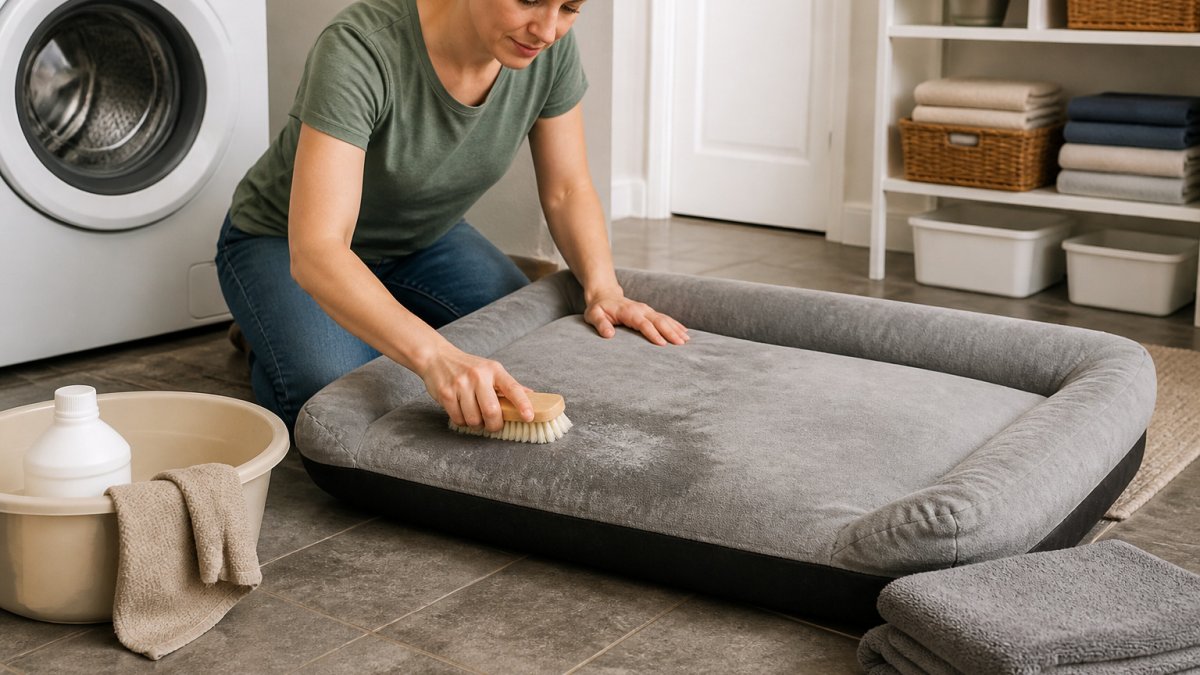
Start by unzipping the outer cover and pulling the foam insert out. Keep the cover and the foam separate. Washing them together can trap moisture inside the foam and cause mildew.
Wash the cover on a gentle cycle in cold water with a mild detergent. Skip fabric softeners, which can leave residue that attracts pet hair. Air dry the cover flat or hang it up. Do not put it in the dryer unless the care label allows it.
Watch out: putting a memory foam insert in the washing machine can tear the foam and ruin its support.
Step 2: Vacuum Hair and Debris From the Foam Insert
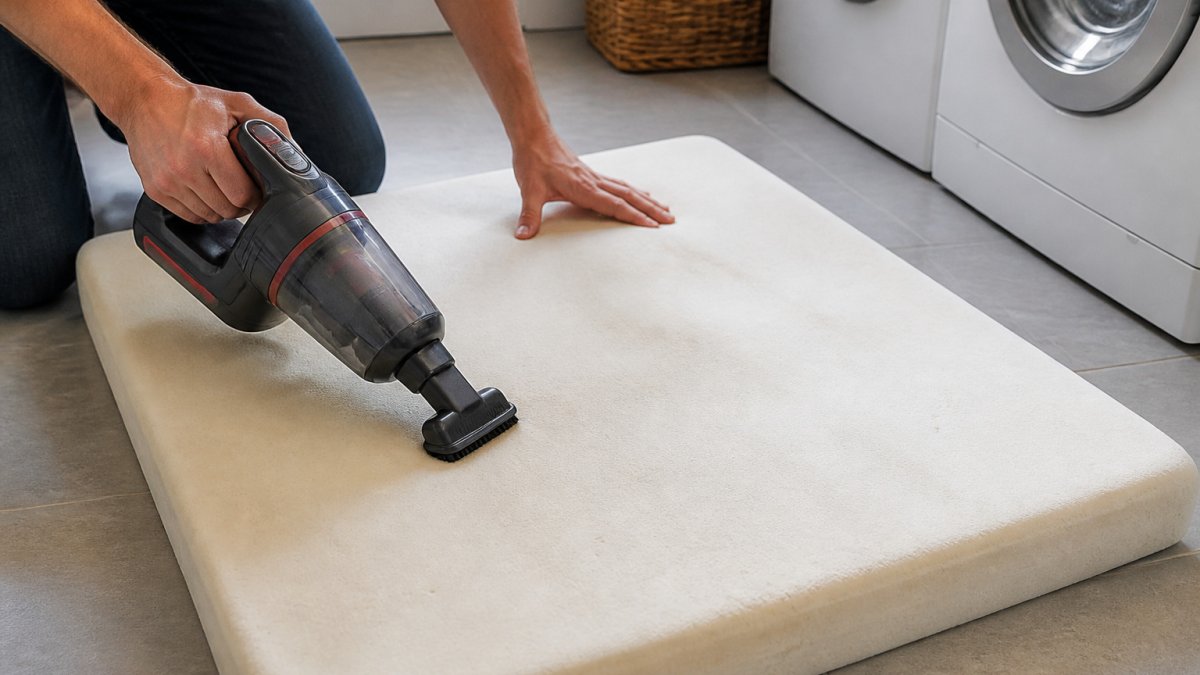
Before any liquid touches the foam, remove loose hair, dander, and dirt. Use a pet hair brush first to lift hair from the surface. A hair removal brush with a comfortable grip can pick up hair from fabric and surfaces before vacuuming. Then run a handheld vacuum with an upholstery attachment over the entire insert, including the edges.
Work slowly. Vacuuming removes the debris that would otherwise soak into the foam when you clean it.
How to Clean Urine From Foam Dog Bed Insert
Urine is the hardest mess to fix, and the odor can linger if you rush. Blot the spot first with a dry towel to soak up as much as you can. Do not rub, since rubbing pushes the urine deeper into the foam.
Next, apply an enzymatic cleaner made for pet urine. Enzymatic cleaners are designed to break down the compounds that cause odor. Our Instant Fresh Air Waypet cleaner is one option that lists odor removal from pet urine as its focus. Spray lightly, do not saturate the foam, and let it sit for the time listed on the product label. Then blot again and let the area air dry fully.
Step 3: Spot-Clean Stains and Treat Odors
Not all messes are alike, and using the wrong method can set a stain or push it deeper into the foam. Use this decision guide to match the approach to the problem. After handling the bed, you may also want a gentle shampoo bar for itchy skin to use on your dog's own coat. Always test any cleaner on a hidden area of the insert first, and never saturate the foam.
| Problem | First move | Cleaning method | When to use enzymatic cleaner |
|---|---|---|---|
| Urine | Blot with a dry towel; do not rub | Light spray of enzymatic pet cleaner; let sit per label; blot | Yes, enzymes break down uric acid crystals that cause lingering odor |
| Vomit | Scoop up solids with a paper towel or spoon | Damp cloth with mild detergent; blot; then enzymatic cleaner if odor remains | Yes, if the smell persists after detergent |
| Mud or dirt | Let it dry completely, then vacuum | Damp cloth with mild detergent; work from edge to center | No, detergent is sufficient |
| Drool or saliva | Blot with a damp cloth | Mild detergent solution; rinse with a clean damp cloth | No, unless odor develops |
| General odor | Sprinkle baking soda; let sit several hours or overnight; vacuum | Light spray of diluted white vinegar (1 part vinegar to 3 parts water); air dry | Consider an enzymatic cleaner if odor returns |
For urine, the key is patience: enzymatic cleaners need contact time to work, often 10-15 minutes or as directed on the label. Do not rinse immediately. For vomit, act quickly to prevent staining, and avoid scrubbing, which can fray the foam surface. For mud, resist the urge to wipe while wet, drying first lets you vacuum away most of the debris without driving it into the foam.
For general odor, baking soda is a safe, dry option that absorbs odors without adding moisture. If odor persists after one or two treatments, an enzymatic cleaner designed for pet odors is the next step. Avoid bleach, ammonia, and other harsh chemicals, which can damage foam.
Watch out: mixing cleaners (for example, vinegar and enzymatic products) can neutralize the enzymes or create irritating fumes, use one product at a time and let the surface dry between treatments.
How to Dry Memory Foam Dog Bed Completely
Drying is where many owners go wrong. Foam that stays damp can grow mold and mildew, which can cause odors and affect the foam. Drying time depends on room conditions and how wet the foam became, so allow a full day or more in a warm, dry room with good airflow.
Start by pressing a dry towel firmly against the foam to pull out extra moisture. Then set the insert on a drying rack or lean it against a wall in a room with a fan or open window. Flip it every few hours so air reaches all sides. Avoid direct sunlight for extended periods, which can degrade the foam over time.
To confirm the foam is fully dry, use these checks:
- Press a dry paper towel firmly against the thickest part of the foam; if the towel feels even slightly damp, keep drying.
- Feel for cool spots, damp foam often feels cooler than dry foam.
- Smell the insert near the center; a musty odor means moisture is still trapped.
- Check seams and edges, which dry last.
Do not put the foam in a dryer or near a heater. High heat can break down the foam's cell structure, reducing support and lifespan. If you must speed drying, use a fan on low, not heat.
Watch out: if the foam still feels damp after 48 hours, move it to a smaller, warmer room with a dehumidifier if available, and continue flipping, do not put the bed back together until it passes the paper-towel test.
How to Clean Dog Bed Without Removable Cover
Some beds have a sewn-in cover that cannot be unzipped. Start by checking the manufacturer's instructions, since some allow spot cleaning only. Use a cloth dampened with mild detergent and water, and work carefully so you don't soak through to the foam.
Vacuum the surface thoroughly first. Then spot-clean as described above, and let the bed air dry in a well-ventilated room. If the bed has a strong odor that won't leave, a professional cleaner may be worth considering.
Keeping Your Dog Bed Fresh Between Deep Cleans
Regular upkeep means you deep-clean less often. Shake out the bed weekly, vacuum the surface every week or two, and wash the cover monthly. A simple cover makes this easier, and many owners find that a protective liner helps keep messes off the foam.
Explore our memory foam dog bed collection to see choices that fit different needs.
Frequently Asked Questions
Can you wash a memory foam dog bed?
Not in a washing machine. Machine agitation and heavy spinning can break down the foam's structure and cause it to lose its shape. Wash the outer cover separately according to its care label, and clean the foam insert by hand with a spot-clean method using mild detergent and cold water. Avoid soaking the foam, because trapped water is slow to dry and can lead to mold or mildew.
How do you wash a foam dog bed insert?
Vacuum the insert first to remove hair and loose dirt. Then spot-clean with a few drops of mild, pet-safe detergent mixed into cool water, applied with a cloth and blotted rather than soaked. Rinse the area with a cloth dampened with plain water, press out excess moisture, and let the insert air dry fully before you put the cover back on. Check the manufacturer's care label first, since some foam inserts have specific instructions.
How do you dry a memory foam dog bed?
Air dry the foam in a warm, well-ventilated room, away from direct heat sources such as radiators or dryers. Lay it flat and flip it every few hours so moisture escapes from all sides. Drying can take 24 hours or longer for a thick insert. To confirm it is dry, press firmly into the center and check for any cool or damp feel, and smell for any musty odor. Do not reinsert it into the cover until it is completely dry.
How do you clean a dog bed without a removable cover?
Vacuum the entire bed with an upholstery attachment, then spot-clean stains with a pet-safe cleaner applied to a cloth, not poured directly onto the bed. Blot gently and avoid saturating the fabric or foam. For odors, a light mist of a vinegar and water solution can help, but test it on a hidden area first. Let the bed air dry completely in a ventilated space, and keep a regular cleaning schedule to prevent buildup.