 How-to
7 Steps to Choose Durable Dog Beds That Last
Last Updated: November 7, 2026
Quick Summary
Choose durable dog beds by measuring your dog and buying a bed rated at least 10 to 15 pounds above their weight, then matching heavy-duty materials and reinforced construction to their sleeping and digging habits. Run the eight-point checklist on weight capacity, fabric, seams, zipper, washability, moisture barrier, frame, and warranty before you buy.
- Measure your dog from nose to tail base while standing, then add 6 to 12 inches of buffer on each side.
- Ballistic nylon and ripstop covers resist tearing and scratching better than standard cotton or fleece.
- Nesters need reinforced seams and supportive fill, diggers need tight-weave covers, and stretchers need a firm surface.
- Press the center of the sleep surface and release; fill that stays compressed will flatten quickly.
- Replace any bed with a hole large enough for a dog to pull fill through, since ingested fill can cause obstruction.
Table of Contents
- Measure Your Dog and Match the Bed Size
- The Most Durable Dog Bed Materials and What They Resist
- Match Bed Construction to Your Dog's Sleeping and Digging Habits
- Durable Dog Beds for Large Breeds: Support, Frame, and Fill
- How to Tell If a Dog Bed Is Durable Before You Buy
- Chew-Proof Dog Bed Options and What They Actually Survive
- Safety, Cleaning, and Long-Term Repairability
- Pick Your Bed and Order It From Dog Products and More
- Frequently Asked Questions
Measure Your Dog and Match the Bed Size
Getting the size right is the first step in how to choose durable dog beds that actually hold up. A bed that's too small gets compressed at the edges, and that stress breaks down fill and stitching fast.
Weight capacity matters more than length, though. A long, narrow bed rated for a lighter dog will sag under a heavy one, even if the dimensions look right on paper.
Why Weight Capacity Matters More Than Length
Length tells you if your dog fits. Weight capacity tells you if the bed survives. A 90-pound dog concentrates force on the frame and fill every time it flops down, so a bed rated well above your dog's weight resists sagging and seam stress far longer. Always buy a bed rated at least 10 to 15 pounds above your dog's current weight, since dogs fill out and the frame takes more punishment over time.
The Most Durable Dog Bed Materials and What They Resist
Material choice separates a bed that lasts years from one that's flat in months. Heavy-duty fabric and ripstop weaves resist tearing when claws catch an edge. Ballistic-grade fabric handles scratching and light chewing better than standard cotton or fleece.
The frame matters just as much as the cover. If you want a concrete example of that build, see our aluminum-frame elevated dog cot with breathable, waterproof Textilene mesh.
Match Bed Construction to Your Dog's Sleeping and Digging Habits
How your dog sleeps should drive which bed you buy. Watch them for a week before you shop. The patterns fall into three clear types, and each one punishes a different part of the bed.
Nesters, Diggers, and Stretchers: Three Different Beds
- Nesters paw and circle before lying down. They need a bolster or cushion with supportive fill that springs back, plus reinforced seams that survive constant pawing.
- Diggers scratch at the surface to flatten it. Give them a tight-weave, abrasion-resistant cover and skip loose, pillowy tops that shred quickly.
- Stretchers sprawl out flat. They need a large, firm surface and a sturdy frame, so a raised cot or a flat orthopedic bed works better than a deep bolster.
If your dog loves the yard, a raised cot with a removable canopy suits that lounging style. Our outdoor cot with UV-protection canopy is built for exactly that habit.
Durable Dog Beds for Large Breeds: Support, Frame, and Fill
Big dogs break beds through weight and force, not bad luck. Support comes down to the frame and the fill working together.
Look for reinforced seams, sturdy stitching, and a quality zipper on any removable cover. For a large-breed option built around frame strength and weight support, our heavy-duty steel-frame elevated bed is rated for big dogs and keeps airflow moving underneath.
How to Tell If a Dog Bed Is Durable Before You Buy
You can judge durability before a bed ever reaches your door. The trick is to stop reading marketing adjectives and start looking for observable evidence.
- Weight capacity is listed and at least 10-15 lbs above your dog's weight. Pass: a specific number in pounds appears in the specs. Fail: only "large" or "for big dogs" is stated.
- Cover fabric is named with a measurable spec. Pass: the listing says ballistic nylon, ripstop, or a denier count (e.g., 1680D). Fail: vague terms like "premium fabric" or "heavy-duty" with no material name.
- Seams are reinforced and stitching is described. Pass: double-stitched edges, bar-tacked stress points, or bound seams are called out. Fail: no seam detail at all.
- Zipper is specified. Pass: a metal or heavy-duty nylon zipper with a covered or recessed pull. Fail: zipper not mentioned, or a hidden cheap coil.

What Each Check Actually Tells You
Weight capacity is the single best proxy for frame and fill strength, because a manufacturer that publishes a number has usually tested the bed to it.
Seam construction is where most beds fail first. Double-stitching and bar tacks at corners and zipper ends distribute stress, while single-stitched seams pull apart under a dog that paws or flops.
Watch out: a product page that lists a weight capacity but no fabric or seam detail is often hiding a weak cover behind a strong frame, so treat missing specs as a fail rather than a neutral.
How to Inspect a Bed in Person
If you can handle the bed before buying, do four things. Press the center of the sleep surface with your palm and release; a bed that stays compressed has fill that will flatten quickly. Pull gently on a seam at a corner; visible gaps or loose threads signal weak stitching. Run your thumbnail across the cover; a tight weave resists, while a loose knit snags. Zip and unzip the cover fully; a zipper that catches or feels light is a future failure point.
A bed that passes all eight checklist points and survives these four physical tests is a safe bet. One that skips the weight rating or the seam details is a gamble.
Run each of these eight checks as a pass/fail test before you buy.
| Check | Pass | Fail |
|---|---|---|
| Weight capacity | Specific number in pounds, 10-15 lbs above dog's weight | Only "large" or "for big dogs" stated |
| Cover fabric | Ballistic nylon, ripstop, or a denier count such as 1680D | Vague terms like "premium fabric" with no material name |
| Seams and stitching | Double-stitched edges, bar-tacked stress points, bound seams | No seam detail at all |
| Zipper | Metal or heavy-duty nylon with covered or recessed pull | Zipper not mentioned, or a hidden cheap coil |
| Cover care | Removable and machine-washable with explicit instructions | "Spot clean only" on a bed marketed as durable |
| Moisture barrier | Named water-resistant or waterproof liner or coating | No moisture barrier mentioned |
| Frame or structure | Steel, aluminum, or high-density foam with stated thickness or gauge | "Soft-sided" with no internal support described |
| Warranty and covers | Stated warranty period and covers sold separately | No warranty terms and no replacement parts |
Chew-Proof Dog Bed Options and What They Actually Survive
No fabric is truly chew-proof, and any product claiming otherwise deserves suspicion. What you can buy is chew-resistant construction, and what you can do is match that construction to the specific behavior your dog performs. Chewing, digging, nesting, scratching, and accident-prone dogs each damage a bed differently, so a single "indestructible" label is the wrong way to shop.
Match the Bed to the Behavior
- Chewers target corners, zippers, and loose edges. Look for ballistic nylon or ripstop covers, recessed zippers with covered pulls, and beds with no dangling straps or tags. A raised cot with a taut, replaceable mesh surface gives a chewer less fabric to grab than a stuffed bolster.
- Diggers scratch to flatten a surface before lying down. They need a tight-weave, abrasion-resistant cover and a firm fill that does not bunch. Skip loose, pillowy tops and any bed with a removable inner cushion the dog can pull out.
- Nesters paw and circle, which stresses seams and compresses fill at the edges. Reinforced, double-stitched seams and a supportive foam or fiber fill that springs back matter more than chew resistance.
- Scratchers rake the surface with front claws as they settle. A high-denier woven cover and a bed with a replaceable cover extend life far more than a plush fabric.
Safety Around Damaged Beds
A damaged bed is a safety issue, not just a cosmetic one. Torn covers release fill that a dog can ingest, and ingested foam or fiber can cause an obstruction.
Watch out: a dog that ingests stuffing or fabric fragments should be seen by a veterinarian, because obstruction symptoms can be delayed.
Supervise a strong chewer with any new bed until you know how it behaves, and redirect chewing to a dedicated chew toy rather than relying on the bed alone. Our durable chew toy for aggressive chewers is designed for exactly that job.
When to Replace Rather Than Repair
A bed with a failed seam or a small cover tear can often be repaired with a patch or a replacement cover, which is far cheaper than a new bed. A bed with a collapsed frame, exposed fill, or a chewed-through zipper should be replaced. Check whether replacement covers are sold separately before you buy, because a fresh cover extends a bed's usable life and is the quiet durability factor most buyers ignore until a seam fails.
Safety, Cleaning, and Long-Term Repairability
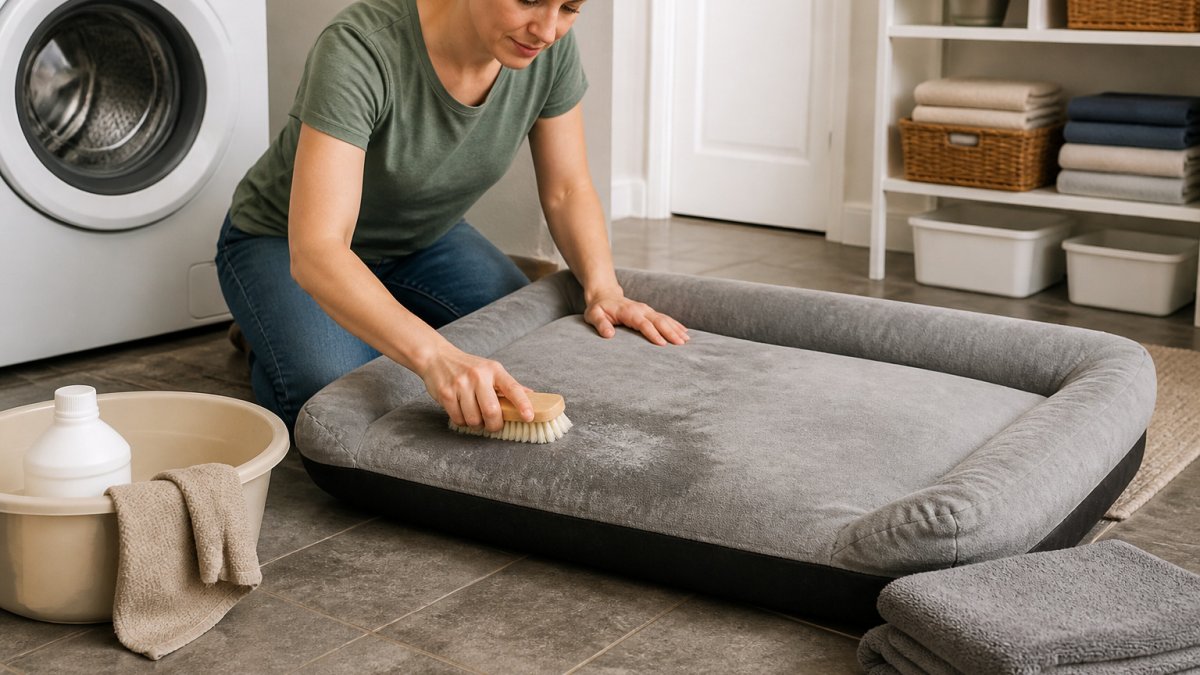
Long-term value comes down to upkeep. A removable, machine-washable cover makes easy cleaning possible and protects the fill from odor and accidents.
On safety, confirm the fill and fabric are free of harsh chemical treatments, and check that zippers and seams can't be chewed open. For a bed built around washability, our raised cot with a washable pillow keeps cleaning simple.
Pick Your Bed and Order It From Dog Products and More
Choosing a bed that lasts comes down to four checks: the right size and weight rating, a material matched to your dog's habits, reinforced construction, and a cover you can wash and replace. Get those right and you skip the cycle of replacing a flattened bed every few months.
At Dog Products and More, we offer a curated selection of beds, grooming tools, toys, and accessories for dogs. For current product details, specifications, and availability, please visit our website.
Frequently Asked Questions
Which dog bed is the most durable?
Beds built with ballistic-grade or ripstop fabric, reinforced seams, and a sturdy frame hold up best. Raised cots with metal edges and heavy-duty fabric resist chewing and moisture, while foam-filled beds with removable, machine-washable covers last longer than pillow-style beds with thin stitching. Match the construction to your dog's behavior: a digger needs tight seams and tough fabric, a chewer needs chew-resistant edges, and a large breed needs a frame rated for its weight.
What is the most durable material for a dog bed?
Ballistic-grade fabric and ripstop fabric offer the strongest abrasion and tear resistance, which is why they appear in chew-resistant and heavy-duty beds. Water-resistant or waterproof covers add accident protection and odor resistance. For fill, supportive foam holds shape longer than loose fiberfill and provides orthopedic support for older dogs or joint concerns. Look for reinforced seams, sturdy stitching, and a quality zipper so the cover can be removed and washed without fraying.
Are chew-proof dog beds really indestructible?
No bed is truly indestructible. Chew-proof dog beds use chew-resistant fabric and reinforced edges to survive normal mouthing and digging, but a determined chewer can still damage any bed over time. Choose a bed matched to your dog's behavior, supervise early use, and check seams and zippers regularly. If your dog destroys beds repeatedly, a raised cot with a metal frame and no loose fill is often the safer choice than a plush bed.
How do you tell if a dog bed is durable before you buy it?
Check four things: fabric weight and weave (ballistic or ripstop over thin cotton), seam construction (double-stitched and reinforced at stress points), zipper quality (metal over plastic), and whether the cover is removable and machine-washable. Confirm the weight capacity matches your dog, and look for a warranty that signals the maker stands behind the construction. A bed that lists these details is easier to trust than one that only shows a photo.