 how-to
The 7-7-7 Rule for Puppies: A Complete Guide
Table of Contents
- What Is the 7-7-7 Rule for Puppies?
- Puppy Socialization Timeline: Age-by-Age Breakdown
- How to Socialize a Puppy: The Seven Core Exposures
- Puppy Socialization Before Vaccinations: Safety First
- Puppy Socialization Checklist: Track Your Progress
- Common Mistakes to Avoid During Puppy Socialization
- What to Do If Your Puppy Is Older Than Seven Weeks
- Common Mistakes to Avoid During Puppy Socialization
- Conclusion
- Puppy Socialization Checklist: Track Your Progress
- Additional Resources and Support
- Frequently Asked Questions
Last Updated: October 14, 2026
What Is the 7-7-7 Rule for Puppies?
Early socialization, particularly between three weeks and four months old, shapes how your puppy responds to the world for years.
This guide covers what the 7-7-7 rule means, how to implement it safely, and what to do if your puppy doesn't fit the typical timeline.
How the Rule Works
Phase 1 (Weeks 3-5): Foundation exposure. Your puppy learns that new things aren't scary.
Phase 2 (Weeks 5-8): Rapid learning. Your puppy actively seeks out new experiences and builds confidence.
Phase 3 (Weeks 8-16): Critical refinement.
Versions and Variations You'll Encounter
Trainers and breeders present slightly different versions. Some focus strictly on the three seven-week phases; others extend the timeline to four months or use it as a general checklist.
The core principle stays the same: early, positive exposure prevents fear and builds confidence. Consistency matters more than perfection.
Puppy Socialization Timeline: Age-by-Age Breakdown
Timing shapes how your puppy processes new experiences. Match activities to your puppy's developmental capacity.
Weeks 3 to 5: Foundation Phase
Your puppy is learning the world is safe. This gentlest phase may happen with the breeder or foster, but socialization begins now.
Focus on low-stress exposure: one or two new things per day in a calm environment, letting your puppy approach at their own pace. Examples:
- Different surfaces indoors: tile, carpet, wood flooring
- Household sounds: vacuum, dishwasher, doorbell (at low volume)
- Handling: gentle touching of paws, ears, mouth
Keep sessions to five to ten minutes; tired puppies learn better than overstimulated ones.
Weeks 5 to 8: Rapid Learning Phase
Your puppy's confidence grows and socialization accelerates. They're likely home now, so continue indoor exposures and begin controlled outdoor time, avoiding high-risk areas (dog parks, pet stores, heavy foot traffic) until vaccinations progress. Examples:
- Different outdoor surfaces: grass, gravel, concrete, wood chips
- Car rides and car sounds
- Meeting calm, vaccinated people one at a time
Sessions of ten to fifteen minutes work well. Watch for stress and pause if your puppy seems overwhelmed.
Weeks 8 to 16: Critical Window Phase
This is your most important socialization window. Your puppy learns social cues, boundaries, and how to handle mild stress; missed exposures are harder to recover from later. By week eight, your puppy has received at least two rounds of vaccinations, so you can expand outdoor activities while still being cautious about disease risk. Examples:
- Busier outdoor locations: parks with people, quiet shopping areas
- Meeting diverse people: different ages, appearances, voices
- Supervised puppy playdates with vaccinated puppies
This phase sets the tone for your adult dog's confidence. Consistent, positive exposure now prevents many behavioral issues later.
How to Socialize a Puppy: The Seven Core Exposures
The 7-7-7 rule focuses on seven categories of exposure, each building a different type of confidence. You don't need to check off every item; the goal is variety within each category.
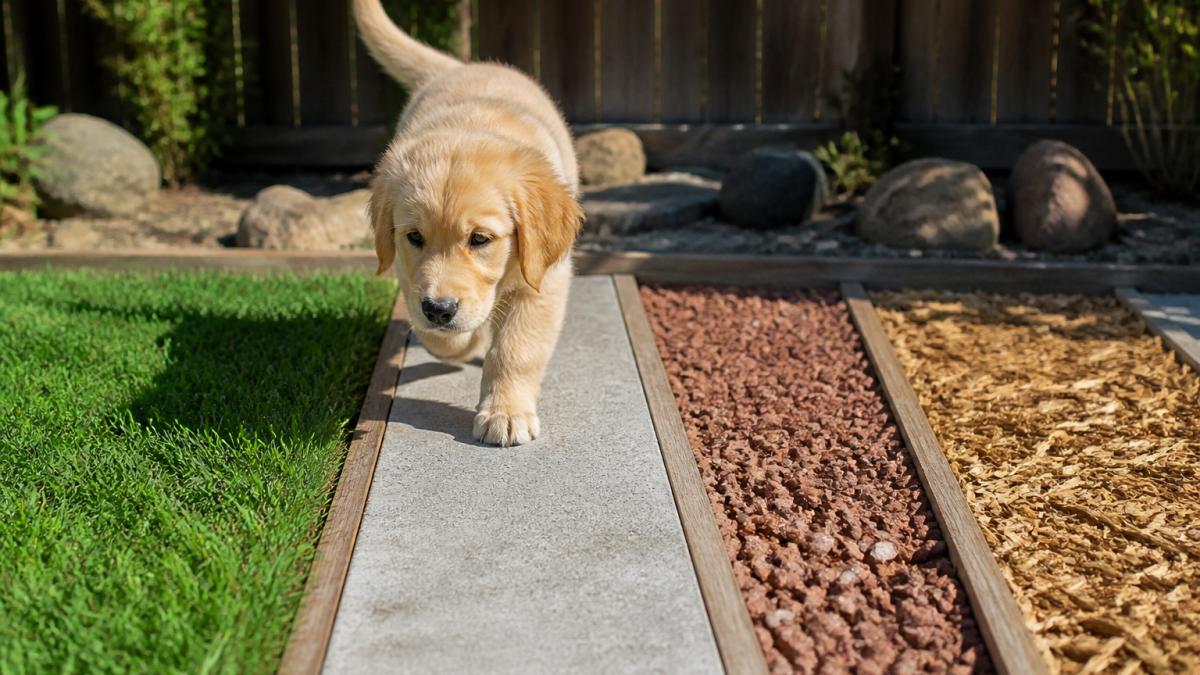
1. Seven Different Surfaces
Your puppy needs to walk confidently on different textures; many adult dogs develop surface anxiety because they didn't explore enough as puppies.
Target surfaces:
- Grass (soft, natural)
- Concrete or asphalt (hard, urban)
- Gravel or pebbles (unstable, crunchy)
Let your puppy explore each surface at their own pace and praise calm behavior.
2. Seven Different Locations
A puppy confident at home may freeze in a new place. Varied locations teach your puppy that new environments are normal.
Target locations:
- Friend's house or family member's home
- Quiet park or green space
- Busier park with more people
Keep early visits to five to ten minutes and leave on a positive note. Repeat visits build confidence faster than single exposures.
3. Seven Different People
Puppies need to meet people of different ages, appearances, and voices. This prevents fear of unfamiliar humans later.
Target people:
- Children (calm, supervised)
- Teenagers
- Adults of various ages
Keep introductions calm and brief: let the person offer a hand to sniff, reward calm behavior with treats, and avoid too many new people in one day.
4. Seven Different Sounds
Puppies exposed to varied sounds early handle unexpected noises better as adults.
Target sounds:
- Household appliances: vacuum, blender, dishwasher
- Traffic sounds: cars, trucks, motorcycles
- Sirens or alarms
Start at low volume and increase gradually over weeks, pairing sounds with treats, play, or praise. Never punish your puppy for reacting to a scary sound.
5. Seven Different Animals
Early exposure to other animals teaches social cues and appropriate play behavior.
Target animals:
- Vaccinated adult dogs (calm temperament)
- Other vaccinated puppies (similar age)
- Cats (calm, in a safe space)
Supervise all interactions and stop play if it gets too rough. Puppies learn bite inhibition and social boundaries through appropriate play, and impulse control through cats and small animals.
6. Seven Different Objects and Toys
Varied toys and objects prevent fixation and build curiosity.
Target objects:
- Soft toys and plush toys
- Hard toys and rubber toys
- Balls of different sizes
Let your puppy explore safely, remove anything swallowable, and rotate toys to maintain interest and prevent fixation.
7. Seven Different Experiences
Experiences include novel situations and mild challenges.
Target experiences:
- Climbing stairs or navigating obstacles
- Riding in an elevator or being in a confined space
- Being bathed or groomed
These experiences teach your puppy that change is manageable. Pair them with positive reinforcement; a puppy who learns to handle grooming, vet visits, and basic care becomes a cooperative adult.
Puppy Socialization Before Vaccinations: Safety First
Socialization and vaccination timing create real tension: your puppy needs exposure during the critical window, but incomplete vaccinations leave them vulnerable to disease.
The key is low-risk socialization, safe exposure without high-disease environments.
Vaccination Timeline and Protection Levels
Puppies receive vaccinations starting at six to eight weeks old, with boosters every three to four weeks until sixteen weeks.
- After first vaccination (week 6-8): Limited protection. Avoid dog parks, pet stores, and areas where unknown dogs gather.
- After second vaccination (week 9-11): Moderate protection. You can expand outdoor activities but remain cautious.
- After third vaccination (week 12-14): Strong protection. Most puppies can safely visit busier areas.
Your veterinarian can advise on your specific puppy's timeline. Vaccination schedules vary by region and health status.
Low-Risk Socialization Strategies
You don't need to wait until sixteen weeks to socialize. Use these low-risk approaches during early vaccination:
- Home visits: Invite calm, vaccinated dogs and people to your home. This is controlled and safe.
- Outdoor exploration: Visit quiet parks, backyards, and streets where you control who your puppy meets.
- Puppy classes: Enroll in classes that screen puppies for health and vaccination status. Many trainers require proof of vaccination.
These strategies provide socialization without high disease risk.
When to Pause Socialization Activities
Pause socialization if your puppy shows illness signs, lethargy, vomiting, diarrhea, or appetite loss, until your veterinarian clears them for activity.
Also pause for extreme stress: hiding, trembling, refusing food, or aggression. Forcing exposure can create lasting fear.
Puppy Socialization Checklist: Track Your Progress
A checklist keeps you organized and ensures you're hitting all seven categories. Tracking progress also helps you notice patterns, which experiences your puppy loves and which need more gentle exposure.
Printable Checklist Format
Use this checklist to track your puppy's socialization. Check off each exposure as you complete it.
| Exposure Category | Example 1 | Example 2 | Example 3 | Example 4 | Example 5 | Example 6 | Example 7 |
|---|---|---|---|---|---|---|---|
| Surfaces | Grass | Concrete | Gravel | Wood chips | Carpet | Tile | Sand |
| Locations | Home | Friend's house | Park | Parking lot | Vet clinic | Car | Neighborhood |
| People | Children | Teenagers | Adults | Elderly | Bearded person | Person in uniform | Different appearance |
| Sounds | Vacuum | Traffic | Siren | Loud bang | Children | Barking dogs | Construction |
| Animals | Adult dog | Puppy | Cat | Rabbit | Bird | Horse | Farm animal |
| Objects | Soft toy | Hard toy | Ball | Noisy toy | Moving toy | Dishes | Household item |
| Experiences | Stairs | Elevator | Bathing | Grooming | Collar/leash | Separation | Vet handling |
Print this checklist and keep it visible. Date each check-off. This creates a record of your puppy's socialization progress and helps you spot gaps.
Recognizing Stress and Adjusting Your Approach
Not every puppy reacts the same way to new experiences. Some puppies are naturally bold. Others are cautious.
Signs your puppy is handling exposure well:
- Curiosity: sniffing, exploring, moving toward the stimulus
- Calm body: relaxed ears, soft eyes, wagging tail
- Engagement: playing, eating treats, interacting with people or objects
Signs your puppy is stressed:
- Freezing or hiding
- Trembling or panting heavily
- Refusing food or treats
If your puppy shows stress, you've pushed too fast. Back off. Return to a safer version of that exposure.
Common Mistakes to Avoid During Puppy Socialization
New dog owners often make well-intentioned mistakes that undermine socialization.
Mistake 5: Punishing fear responses. Your puppy doesn't choose to be afraid.
Mistake 6: Socializing only with one type of person or dog. Your puppy needs variety.
What to Do If Your Puppy Is Older Than Seven Weeks
Not all puppies start socialization at three weeks. Some arrive from breeders later.
If your puppy is 8-12 weeks old: You're still in the critical window.
If your puppy is a rescue with unknown history: Start from scratch and go slowly.
Common Mistakes to Avoid During Puppy Socialization
New dog owners often make well-intentioned mistakes that undermine socialization.
Mistake 5: Punishing fear responses. Your puppy doesn't choose to be afraid.
Mistake 6: Socializing only with one type of person or dog. Your puppy needs variety.
Conclusion
The 7-7-7 rule for puppies is a practical framework for early socialization: three phases, seven categories, seven exposures each.
Your puppy's confidence, adaptability, and social skills are shaped during the first sixteen weeks.
Start early, go slow, watch for stress, and adjust as needed. You don't need to be perfect, just consistent.
Puppy Socialization Checklist: Track Your Progress
A checklist keeps you organized and ensures you're hitting all seven categories. Tracking progress also helps you notice patterns, which experiences your puppy loves and which need more gentle exposure.
Printable Checklist Format
Use this checklist to track your puppy's socialization. Check off each exposure as you complete it.
| Exposure Category | Example 1 | Example 2 | Example 3 | Example 4 | Example 5 | Example 6 | Example 7 |
|---|---|---|---|---|---|---|---|
| Surfaces | Grass | Concrete | Gravel | Wood chips | Carpet | Tile | Sand |
| Locations | Home | Friend's house | Park | Parking lot | Vet clinic | Car | Neighborhood |
| People | Children | Teenagers | Adults | Elderly | Bearded person | Person in uniform | Different appearance |
| Sounds | Vacuum | Traffic | Siren | Loud bang | Children | Barking dogs | Construction |
| Animals | Adult dog | Puppy | Cat | Rabbit | Bird | Horse | Farm animal |
| Objects | Soft toy | Hard toy | Ball | Noisy toy | Moving toy | Dishes | Household item |
| Experiences | Stairs | Elevator | Bathing | Grooming | Collar/leash | Separation | Vet handling |
Print this checklist and keep it visible. Date each check-off. This creates a record of your puppy's socialization progress and helps you spot gaps.
Recognizing Stress and Adjusting Your Approach
Not every puppy reacts the same way to new experiences. Some puppies are naturally bold. Others are cautious.
Signs your puppy is handling exposure well:
- Curiosity: sniffing, exploring, moving toward the stimulus
- Calm body: relaxed ears, soft eyes, wagging tail
- Engagement: playing, eating treats, interacting with people or objects
Signs your puppy is stressed:
- Freezing or hiding
- Trembling or panting heavily
- Refusing food or treats
If your puppy shows stress, you've pushed too fast. Back off. Return to a safer version of that exposure.
Additional Resources and Support
Puppy socialization is a journey, not a checklist. Many resources can help along the way.
Consider enrolling in a puppy socialization class certified by the Association of Professional Dog Trainers.
Your veterinarian is also a resource. Ask about socialization guidelines from the American Veterinary Medical Association during your puppy's vaccination visits.
Every puppy is different, so trust your instincts, watch your puppy's responses, and adjust as needed.
Frequently Asked Questions
What is the 7-7-7 rule for puppies?
The 7-7-7 rule is a puppy socialization guideline recommending that puppies experience seven different surfaces, seven different locations, seven different people, seven different sounds, seven different animals, seven different objects or toys, and seven different experiences by 16 weeks of age. This framework helps puppies develop confidence, adaptability, and positive social cues. The rule originated from breeders and trainers seeking a simple checklist to ensure comprehensive early socialization during the critical window when puppies form lasting impressions about their environment.
When should you start socializing a puppy?
Start puppy socialization as early as three weeks of age, ideally while the puppy is still with the breeder or foster. Most puppies arrive at their new home around seven to eight weeks old, and socialization should continue through at least 16 weeks. The period from three weeks to four months is considered the critical socialization window, exposures during this time have the strongest long-term impact on the puppy's confidence, curiosity, and adaptability to new people, places, and experiences.
How do you socialize a puppy safely before vaccinations are complete?
Before full vaccination protection, focus on controlled, low-risk environments: invite friends to your home rather than visiting public spaces, attend puppy socialization classes with other vaccinated puppies, explore quiet neighborhoods on leash, and avoid areas where unvaccinated dogs congregate. Consult your veterinarian about your puppy's vaccination schedule and risk level in your area. Handle your puppy gently, expose them to household sounds and surfaces indoors, and prioritize positive experiences. Avoid dog parks, pet stores, and high-traffic areas until your vet confirms immunity is established.
What should you do if your puppy seems scared during socialization?
If your puppy shows fear, stress, or avoidance during socialization, pause the activity and move to a safer distance or quieter environment. Never force exposure, this can increase fear and create lasting negative associations. Watch for stress signals: trembling, tucked tail, pinned ears, whining, or freezing. Introduce new experiences gradually, reward curiosity with treats and praise, and let your puppy set the pace. If fear persists across multiple exposures or worsens, consult a certified professional dog trainer or veterinary behaviorist to rule out underlying anxiety or to develop a customized socialization plan.