 How-to
7 Benefits of Using a Puppy Playpen at Home
Last Updated: October 30, 2026
Quick Summary
A puppy playpen gives your puppy a safe, defined space to stretch, play, and explore without getting into trouble. It keeps cords, shoes, and small objects out of reach while you cook, work, or take a call.
- Puppies settle faster when they have room to move inside a pen.
- A playpen keeps your puppy contained when you cannot watch every move.
- Use the crate for naps and the playpen for daytime play and enrichment.
- Test the pen for gaps by pushing on it from every side before leaving your puppy inside.
- Introduce the pen gradually over about two weeks, rewarding calm behavior with treats.
Table of Contents
- Why a Puppy Playpen Gives Your Puppy Room to Move
- Safety and Supervision Benefits of a Puppy Playpen
- Puppy Playpen vs Crate: Which Gives Your Puppy More Freedom
- Puppy Playpen Setup: Building a Secure, Puppy-Proof Area
- How Long Can a Puppy Stay in a Playpen by Age
- Puppy Playpen Training: Introducing Your Puppy Step by Step
- Using Your Playpen for House-Training, Chewing, and Your Next Steps
- Frequently Asked Questions
Why a Puppy Playpen Gives Your Puppy Room to Move
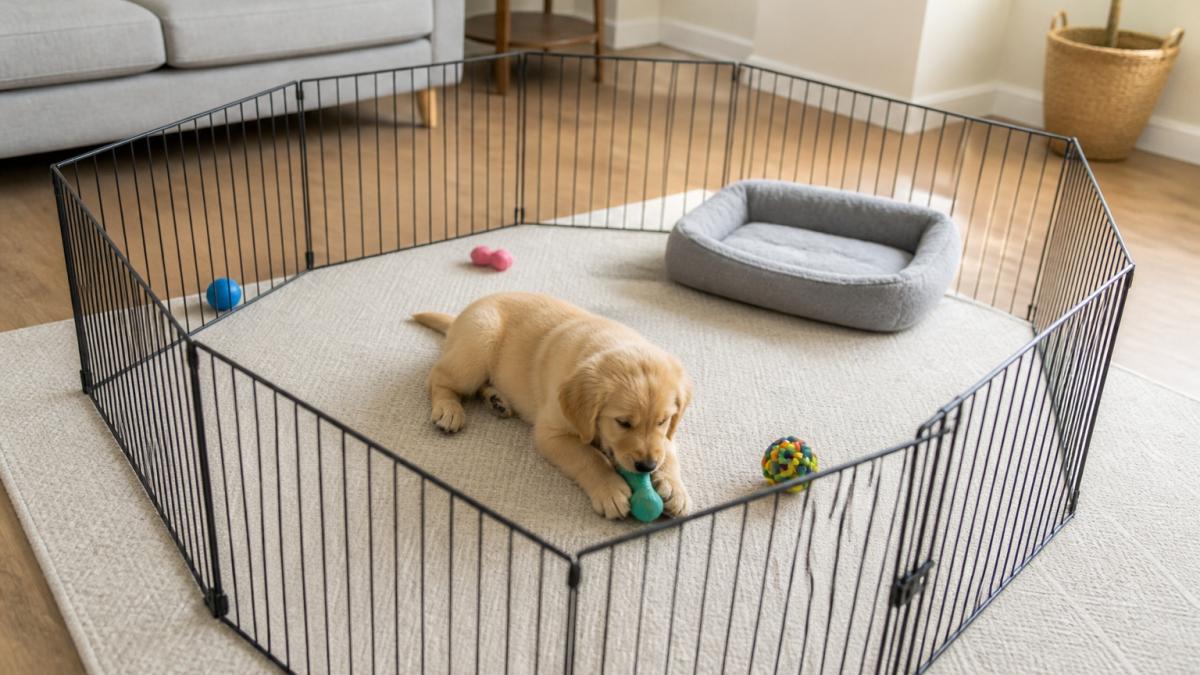
A puppy playpen gives your puppy a safe, defined space to stretch, play, and explore without getting into trouble. For many new owners, it becomes the simplest way to balance freedom with supervision. American Kennel Club puppy care guide
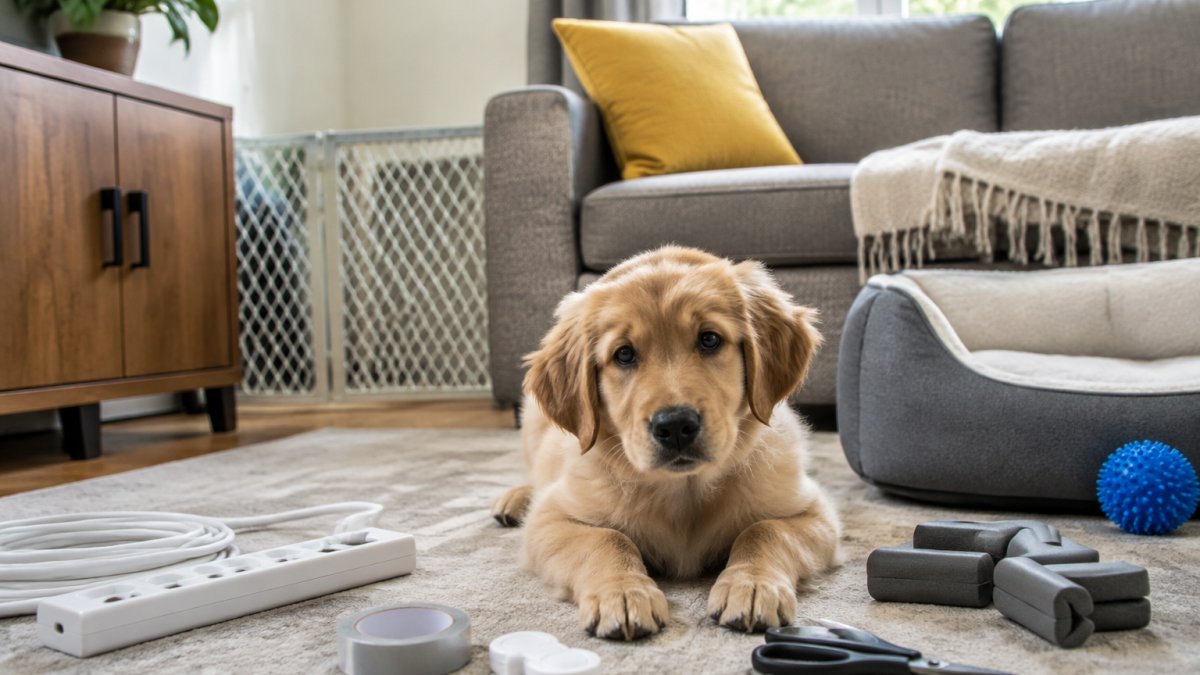
Most puppies have more energy than a small room can handle. A playpen lets them run a few steps, chase a toy, and wander without cords, shoes, or furniture legs in reach.
Here is what most owners notice first:
- Puppies settle faster when they have room to move
- Toys stay in one place instead of scattered across the house
- You can cook, work, or take a call while your puppy stays busy
Safety and Supervision Benefits of a Puppy Playpen
A playpen keeps your puppy contained when you cannot watch every move. It cuts down on the risk of chewed wires, swallowed objects, and escapes through open doors.
Safety gains include:
- Fewer hazards within reach, like cords and small objects
- A clear, known space that is easy to check
- A calm spot when visitors or noise make the puppy overexcited
Supervision still matters. A playpen is not a babysitter. Check it often, and keep the pen away from heaters, stairs, and hanging blinds.
Puppy Playpen vs Crate: Which Gives Your Puppy More Freedom
A crate offers a den-like space for sleeping, while a playpen offers more room to move and play. Many owners use both, but the difference matters when your puppy is awake and active.
| Feature | Puppy Playpen | Crate |
|---|---|---|
| Space to move | Larger, room to walk and play | Small, mostly for lying down |
| Best use | Daytime play and enrichment | Sleep and short rest |
| Ventilation | Open sides | Enclosed |
Crates work well for rest, but a playpen gives more freedom during waking hours. Use the crate for naps and the playpen for play.
Puppy Playpen Setup: Building a Secure, Puppy-Proof Area
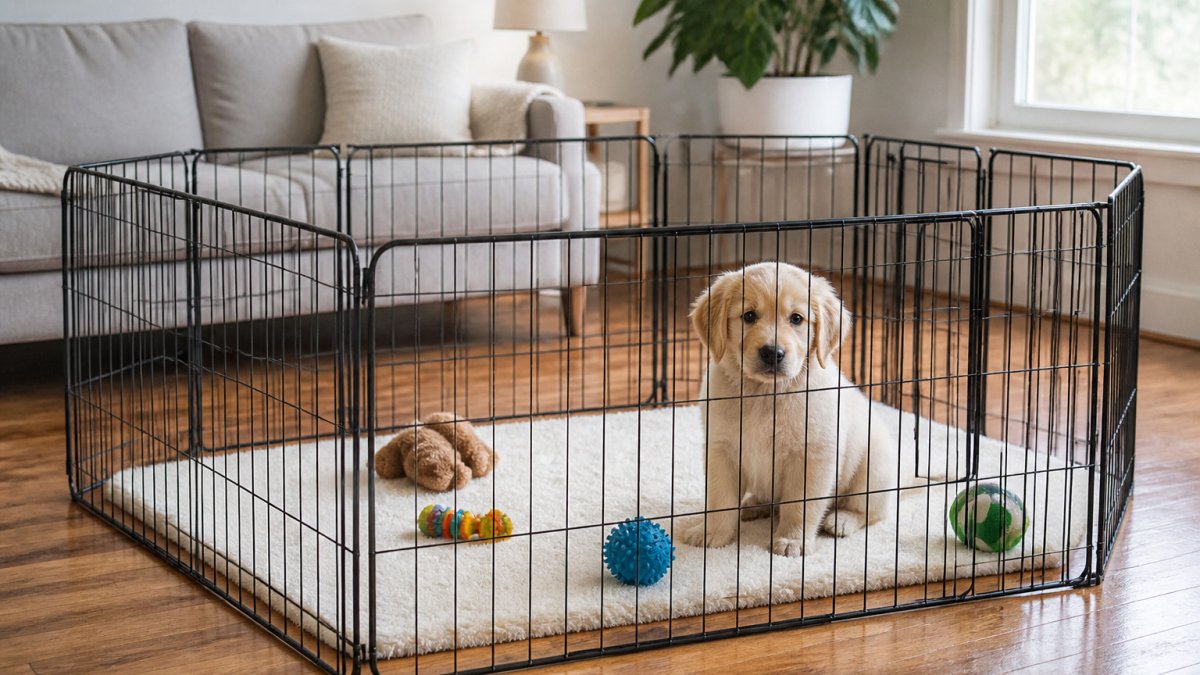
A good setup starts with a safe floor, a clear boundary, and a few essentials inside. You can find a ready-made folding indoor and outdoor playpen with rounded corners and easy-clean panels. Pick a spot near where your family spends time so your puppy feels included.
Setup checklist:
- Choose a flat, non-slip floor, or add a rug underneath
- Keep the pen away from stairs, heaters, and cords
- Add water, a bed, and two or three chew toys
- Check for gaps or sharp corners where your puppy could get stuck
Watch out: Gaps between panels can trap a puppy's head. Test the pen by pushing on it from every side before you leave your puppy inside.
How Long Can a Puppy Stay in a Playpen by Age
There is no single correct duration. Pen time should track your puppy's age, bladder capacity, sleep needs, and activity level, and it should change as the puppy grows. A common pattern among trainers and veterinary behavior resources is to think in short, frequent blocks rather than one long stay, because a puppy's ability to hold urine and self-settle is still developing.
A practical age-based starting point:
- Under 8 weeks: Puppies this young are typically still with the litter. If you have one, expect to offer a potty break roughly every 30 to 60 minutes while awake, and keep pen sessions to a few minutes at a time with you right beside the pen.
- 8 to 12 weeks: Bladder control is limited. Plan a potty trip every 45 to 60 minutes during waking hours, and keep pen sessions in the 10 to 20 minute range, building gradually. Most of this age is sleep, puppies often sleep 16 to 20 hours a day, so the pen should be a place to settle, not a place to stay awake and wait.
- 3 to 4 months: Many puppies can stretch to roughly one potty break per hour while awake. Pen sessions of 20 to 30 minutes with a toy or chew are reasonable, followed by a potty trip and a nap.
- 4 to 6 months: Bladder capacity improves, and many puppies can handle 30 to 45 minute pen sessions during active periods, with a potty break before and after.
- 6 months and older: Duration becomes more about temperament and training than bladder capacity. Some adolescent puppies do well with 45 to 60 minutes of pen time; high-energy or easily bored puppies may do better with shorter sessions plus a walk or training game.
The rule of thumb that matters more than any chart: match pen time to the puppy's awake window, not the clock. A puppy who has just eaten, played hard, or woken up needs a potty trip first. A puppy who is winding down can rest in the pen for a nap, but a pen is not a substitute for a crate as a sleeping den, and it is not a place to leave a puppy for hours unattended.
What to watch for at each age:
- Potty signals: Sniffing, circling, whining at the pen edge, or sudden restlessness usually mean "take me out now."
- Over-tired signals: Biting, zoomies, and frantic chewing often mean the puppy needs a nap, not more pen time.
- Under-stimulated signals: Digging at the floor, barking at the bars, or repeatedly jumping up suggest the pen is too small, too empty, or the session has run too long.
A simple daily rhythm works better than a stopwatch: potty, play or training, pen time with a chew, potty, nap. Repeat. As your puppy matures, lengthen the pen block and shorten the supervision ratio, but keep potty breaks frequent until house-training is solid.
Puppy Playpen Training: Introducing Your Puppy Step by Step
A playpen only works if your puppy chooses to settle in it. That happens through a gradual, reward-based introduction, not by putting the puppy in and closing the door. The goal is for the pen to predict good things: treats, chews, meals, and calm praise.
A two-week introduction plan:
Days 1-2: Make the pen boring and safe. Set the pen up in a common area with the door open. Put a bed, water, and one or two chew toys inside. Toss a treat in and let the puppy wander in and out on their own. Do not close the door yet.
Days 3-4: Close the door for seconds. With you sitting right beside the pen, close the door for 5 to 10 seconds while the puppy chews or eats, then open it before any whining starts. Repeat several times. The lesson is "door closed = treat," not "door closed = you leave."
Days 5-7: Build to a few minutes. Close the door for 30 seconds to 2 minutes while you stay in the room. Reward calm behavior with a treat dropped through the bars or a calm verbal marker. If the puppy whines, wait for a pause, even a second, before opening the door, so whining is not what ends the session.
Days 8-10: Add distance. Step a few feet away, then into the next room for 10 to 30 seconds, returning before the puppy gets upset. Alternate short absences with longer calm sessions.
Days 11-14: Extend duration and distance together. Work up to 10 to 15 minute sessions with you nearby but not directly engaged, then short absences of a few minutes. Keep sessions ending on a calm note, not a frantic one.
What to reward:
- Going in on their own
- Settling onto the bed
- Chewing a toy instead of the bars
- Quiet pauses after a whine
- Calm behavior when you step away
What not to do:
- Do not use the pen as punishment or a time-out for bad behavior
- Do not open the door while the puppy is actively whining or barking, if you can avoid it, wait for a brief pause
- Do not rush the timeline; a puppy who is struggling at day 5 needs more days at day 3, not a push to day 8
Normal protest vs. real distress:
Some whining in the first few sessions is normal, it is a puppy testing whether whining opens the door. Normal protest tends to be intermittent, stops when a chew is offered, and fades over days.
Avoiding overreliance:
A pen is a management tool, not a substitute for exercise, training, or companionship. A common pattern is to use the pen for short, structured calm periods and a crate for naps and nighttime, while walks, play, and training happen outside both.
Using Your Playpen for House-Training, Chewing, and Your Next Steps
A playpen can support house-training by keeping your puppy close to a potty area and away from accidents. Pair it with an indoor potty tray with synthetic turf if you need a backup spot. Pair it with an indoor potty tray if you need a backup spot.
For chewing, add puzzle toys and rotate them to keep your puppy busy. A treat-dispensing puzzle toy can keep a puppy occupied inside the pen.
Ready to set up your space? Browse our selection at Dog Products and More to find gear for your puppy's next stage.
Frequently Asked Questions
How long can a puppy stay in a playpen?
Puppies should not be left in a playpen for long stretches. A common guideline is to match the time to your puppy's age, with younger puppies needing more frequent breaks for toilet trips, meals, and rest. Puppies also need regular supervised play and social time outside the pen. Watch your puppy for signs of boredom, distress, or accidents, and adjust the schedule if you notice them. Always provide water and a comfortable bed inside the pen, and plan to check on your puppy regularly throughout the day.
Is a puppy playpen better than a crate?
A playpen generally gives a puppy more room to stretch, move around, play with toys, and rest in a separate area from the bed. A crate is smaller and is often used for sleep or short confinement when you cannot supervise. Many owners use both, choosing the playpen for daytime play and enrichment and the crate for overnight rest or travel. The right choice depends on your puppy's temperament, your home layout, and how much supervision you can provide.
Can a puppy playpen help with potty training?
A playpen can support house-training when it is set up with a clear toilet zone at one end, away from the bed and food. Puppies tend to avoid soiling where they sleep and eat, so a well-sized pen can encourage them to hold it until they are taken outside. Take your puppy out after naps, meals, and play sessions, and reward success right away. Keep the pen large enough to separate a potty area from a resting area, and avoid making it so big that your puppy can easily soil one corner and lie in another.
Can a puppy sleep in a playpen?
Some puppies sleep well in a playpen, especially when it has a soft bed, is placed in a quiet room, and includes a sheltered corner. Many owners prefer a crate for overnight rest because it feels more den-like and limits space for accidents. If you use a playpen for sleep, keep the bed away from the toilet area, remove loose bedding that could be chewed, and check that the pen has no gaps where your puppy could get stuck or escape.