 blog
Are Orthopedic Dog Beds Worth It for Puppies?
Quick Summary
Orthopedic dog beds are worth it for puppies mainly when they are large or fast-growing breeds, or when a puppy seems stiff after activity. Healthy small puppies usually sleep well on a basic, correctly sized bed, and an orthopedic bed is a comfort product rather than a way to prevent joint problems.
- Orthopedic beds spread body weight evenly, relieving pressure on hips, elbows and spine.
- Small breeds under about 20 lb usually do fine on a basic padded bed.
- Medium breeds may suit a mid-density foam bed around 6 to 12 months old.
- Large and giant breeds benefit most from firmer, denser foam support.
- Measure the puppy lying down, add a few inches, and expect to size up.
Table of Contents
- What an Orthopedic Dog Bed Is and How It Supports the Body
- Do Puppies Actually Need an Orthopedic Bed?
- Best Dog Bed for a Puppy: Orthopedic Options Compared
- Orthopedic vs. Memory Foam Dog Bed: Which Holds Up Better?
- Downsides of Orthopedic Dog Beds to Weigh Before Buying
- How to Choose a Dog Bed for a Growing Puppy
- Deciding Whether an Orthopedic Bed Is Worth It for Your Puppy
- Frequently Asked Questions
What an Orthopedic Dog Bed Is and How It Supports the Body
Last Updated: November 5, 2026
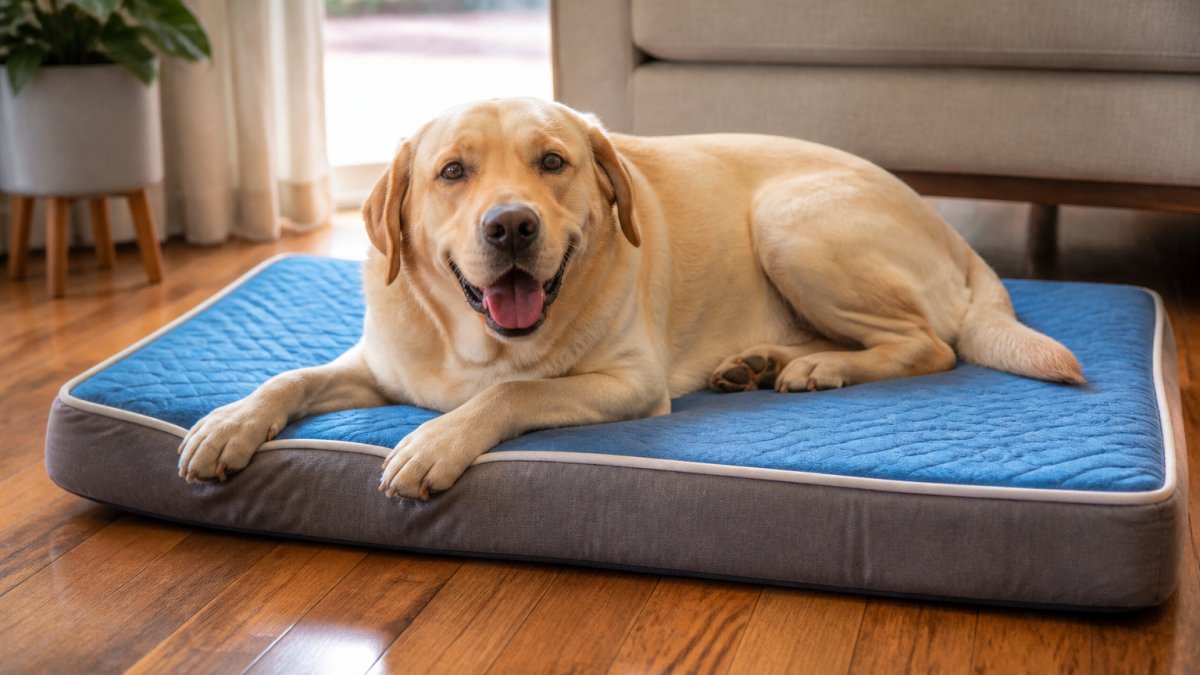
An orthopedic dog bed is a bed built around a firm, supportive base, usually memory foam or high-density orthopedic foam, designed to spread a dog's body weight evenly rather than letting it sink. Are orthopedic dog beds worth it for puppies? The answer depends on what the bed actually does for a young dog's developing body, and that is worth separating from the marketing.
The core idea is pressure relief. When a dog lies on a thin, flat bed, the hips, elbows and spine take the full weight against a hard floor. A thicker, denser base shifts that load across a wider surface. That is the mechanism behind the "orthopedic" label, and it is simple physics rather than a medical treatment.
Here is what matters when you read a product description:
- Foam density: Higher-density foam holds its shape under load. Low-density foam compresses quickly and loses support.
- Thickness: A base of several inches gives more cushioning than a thin pad.
- Cover: A removable, washable cover makes hygiene easier, which matters for puppies.
Support is not the same as a cure. An orthopedic bed can make a resting surface more comfortable, but it does not prevent or treat joint disease. Anyone with a concern about a dog's mobility should speak with a veterinarian.
Do Puppies Actually Need an Orthopedic Bed?
Most healthy puppies do not need an orthopedic bed to grow normally. The honest answer is that an orthopedic bed is a comfort product rather than a developmental requirement, and it should not be expected to prevent joint conditions. That distinction matters because product descriptions often blur comfort with medical benefit.

What is known about healthy puppies is fairly limited. Veterinary guidance on puppy sleep focuses on a clean, dry, draft-free surface that fits the puppy's current size, with enough room to stretch out. A supportive conventional bed or a washable crate mat can meet that need for a small, healthy puppy. The case for extra support is stronger when a puppy is large-breed, fast-growing, or already showing stiffness after activity, and even then the bed is one part of a plan that includes appropriate exercise, healthy weight, and veterinary input.
Age and breed change the decision more than most owners expect:
- Small breeds (under about 20 lb adult weight): A basic padded bed or crate mat is usually sufficient. The upgrade is hard to justify on comfort grounds alone.
- Medium breeds (about 20-60 lb): A mid-density foam bed becomes reasonable once the puppy is past the heaviest chewing phase, often around 6-12 months.
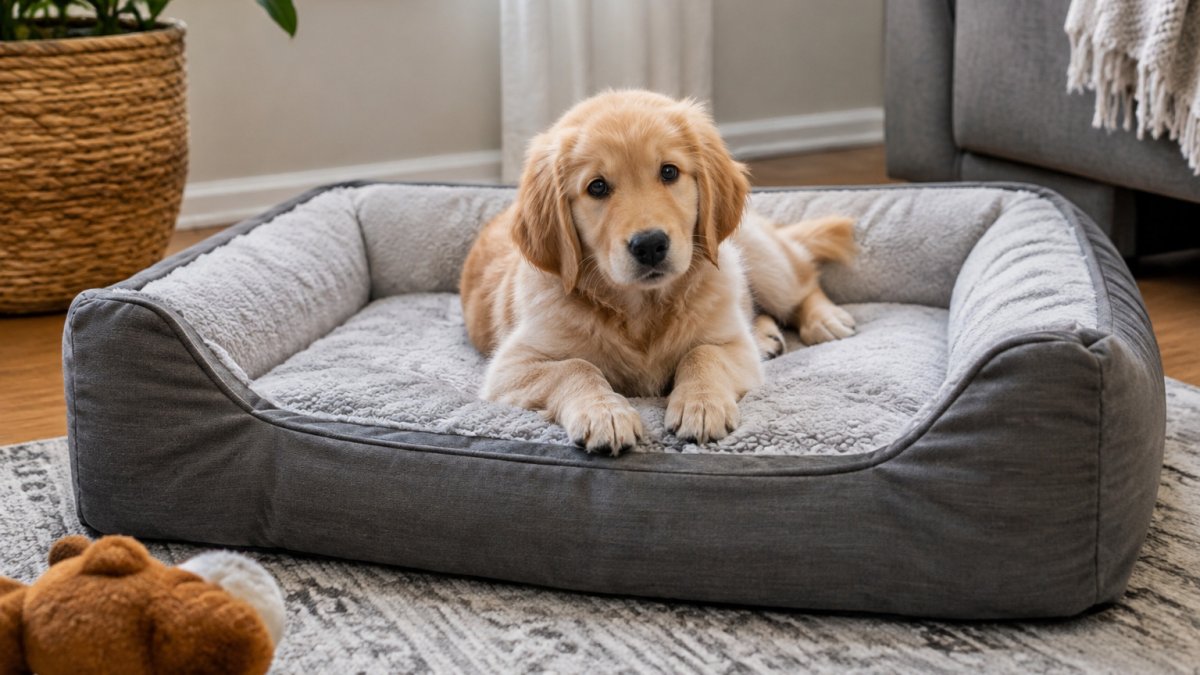
- Large and giant breeds (over about 60 lb): These puppies carry more weight per joint and grow fastest. A firmer, denser foam bed is more likely to hold up and provide even support, but sizing is the bigger issue because the puppy may outgrow a bed within months.
A common pattern is that owners buy an orthopedic bed for a young puppy, then replace it once or twice as the dog grows. That is not a failure of the bed; it is a sizing problem. Measure the puppy lying down, add a few inches for stretch, and expect to size up rather than buy the adult bed on day one.
When to ask a veterinarian: if a puppy seems stiff after rest, avoids stairs, limps intermittently, or has a breed predisposition to joint conditions, raise it at a wellness visit. A bed can make rest more comfortable, but it cannot diagnose or treat a problem, and a veterinarian is the right first stop before spending on a premium product.
Best Dog Bed for a Puppy: Orthopedic Options Compared
Orthopedic beds cover a wide price range, and the differences show up mostly in foam quality and cover design. Compare the options on the features that affect a puppy's daily use.
| Bed type | Main support | Best for | Watch for |
|---|---|---|---|
| Memory foam bolster | Contouring, pressure relief | Calm, older puppies | Can retain heat, slower to recover |
| High-density orthopedic foam | Firm, even support | Large or active puppies | Less plush feel at first |
| Basic padded bed | Light cushioning | Small puppies, short-term use | Flattens quickly |
Pros of orthopedic beds for puppies
- Spread weight evenly across the hips and elbows
- Hold shape longer than basic padded beds
- Easier to clean with a removable cover
Cons of orthopedic beds for puppies
- Higher cost than standard beds
- Puppies may chew or soil the cover
- Size can be wrong as the puppy grows
Orthopedic vs. Memory Foam Dog Bed: Which Holds Up Better?
Memory foam and orthopedic foam are often used interchangeably, but they behave differently under a puppy's weight and chewing. Memory foam is viscoelastic: it conforms closely to the body, then returns slowly to shape. Orthopedic foam is typically a high-density polyurethane that is firmer and resists flattening. Because these labels are not standardised, comparing beds on measurable criteria is more useful than relying on marketing terms.
Criteria that let you compare beds consistently:
- Foam density: Higher-density foam holds its shape under load; low-density foam compresses and loses support. Density is the single best durability signal, and it is often listed in the product specs.
- Thickness: A base of several inches gives more cushioning than a thin pad, but thickness without density is just softness.
- Support under load: Press a knee or hand into the center. A bed that bottoms out immediately will bottom out under a puppy too.
- Recovery: After compression, does the foam spring back or stay dented? Slow recovery is normal for memory foam; permanent dents are not.
- Cover washability: A removable, machine-washable cover matters more for puppies than for adult dogs because of accidents and chewing.
- Durability: Check for a waterproof liner, reinforced seams, and a foam core you can replace separately.
When judging durability, foam density is a useful factor to check, since denser foam generally holds its support longer than softer, low-density foam. Memory foam's close contour appeals to many owners, though some dogs prefer a firmer surface, and dense memory foam can retain heat, which some puppies dislike in warm weather.
Puppies test beds. Chewing, digging, and frequent position changes wear foam down faster than an adult dog's calm sleeping. Replacement cost matters here: a sturdier bed may cost less over time than several cheaper ones, provided the cover holds up and the foam core can be replaced.
Watch out: foam exposed by a torn cover can be swallowed, so supervise a new puppy around any bed and replace a damaged bed promptly rather than patching it.
Downsides of Orthopedic Dog Beds to Weigh Before Buying
Orthopedic beds are not the right choice for every puppy or household, and it is worth knowing the drawbacks before you pay more.
- Chewing damage: Foam exposed by a torn cover can be swallowed. Supervise a new puppy around any bed and replace a damaged bed promptly.
- Price: The premium over a basic bed does not always translate into a noticeable benefit for a healthy young dog.
- Heat: Dense memory foam can feel warm, which some dogs dislike in summer.
- Outgrowing it: A puppy bed may be too small within a year, and a large adult bed may be wasted on a small dog.
A practical rule: if your puppy is small, healthy and sleeps well on a basic bed, the upgrade may not be worth it yet.
How to Choose a Dog Bed for a Growing Puppy
Choosing a bed for a growing puppy is mostly about fit and flexibility. Follow these steps.
- Measure your puppy. Measure from nose to tail base when the puppy is lying on its side, and add a few inches so the puppy can stretch.
- Estimate adult size. Look up the expected adult weight for the breed, or ask your veterinarian. A bed for a large breed may need to be larger than it looks now.
- Check the cover. Choose a removable, washable cover that is easy to unzip and wash.
- Check the foam. Prefer denser foam over plush, low-density foam.
- Plan the replacement. Expect to replace the bed as the puppy grows or as the foam wears down.
Deciding Whether an Orthopedic Bed Is Worth It for Your Puppy
An orthopedic bed is worth buying when it solves a real need: a large or fast-growing breed, a puppy that seems stiff after exercise, or a dog with a veterinarian's advice to rest on a supportive surface. For a healthy, small puppy that already sleeps well, a clean, correctly sized basic bed may do the job.
Weigh the cost against the dog's size, breed and comfort, then choose a bed you can clean and replace. If you have questions about your puppy's joints or sleep, your veterinarian is the right first stop. When you are ready to compare options, you can shop our selection at Dog Products and More and pick a size that will still fit your puppy next year.
Frequently Asked Questions
What type of dog bed is best for a puppy?
For most puppies, a bed with a washable or removable cover, a firm base and enough room to stretch works well. Chewing is the main concern at this age, so look for durable fabric and a cover you can machine wash. An orthopedic bed is a reasonable choice if the foam is dense enough to hold its shape under your puppy's weight, but a well-made standard bed suits many young dogs just as well. Choose a size that fits your puppy's expected adult size so you are not replacing it in a few months.
Do dogs really need orthopedic beds?
Not every dog needs one. Orthopedic beds are designed to cushion pressure points and provide even support, which many owners find helpful for older dogs, large breeds, and dogs with diagnosed joint problems such as arthritis or hip dysplasia. There is limited independent research proving that these beds prevent or treat joint disease, so treat any health benefit as a possibility rather than a guarantee. If your dog sleeps comfortably on a standard bed, an orthopedic upgrade may not add much.
Is memory foam or a standard bed better for a puppy?
Memory foam and standard polyfill beds both have trade-offs. Memory foam conforms closely to the body, which can feel supportive, but it may lose shape faster with chewing and heavy use. Standard beds are usually cheaper and easier to replace, though they can flatten over time. For a growing puppy that chews and changes size quickly, a durable, dense foam or a simple fiber bed is often the more practical choice. Check the foam density rating and the cover material before buying.
When should a puppy start using an orthopedic bed?
There is no established age at which a puppy must switch to an orthopedic bed. Many owners start with a simple, easy-to-clean bed during the chewing and growth phase, then move to a supportive bed once the puppy has settled into its adult size and activity level. Large breed puppies may benefit from supportive bedding as they grow, but check with your veterinarian if you have concerns about your puppy's joints or development.