 Listicle
9 Essential Puppy Grooming Tools for Beginners
Quick Summary
Essential puppy grooming tools for beginners include a dual-sided brush, a wide-tooth comb, puppy-sized nail clippers, styptic powder and a pet-safe shampoo. Start with these basics for brushing, nail trims and bathing, then add ear and dental supplies as your puppy settles in.
- Identify your puppy's coat type first, since it determines which brush to buy.
- Use puppy-sized clippers, because full-size blades can crush thin puppy nails.
- Keep styptic powder ready in case you cut into the quick.
- Brush two to three times a week and trim nails every two to three weeks.
- Build the kit in tiers so you do not overspend before knowing your puppy's adult coat.
Table of Contents
- Why Puppy Grooming Tools Matter From Day One
- Best Brushes for Puppy Coats by Coat Type
- Combs, Dematting Tools and Detangling Basics
- Nail Clippers, Nail Grinders and Puppy-Sized Trimming Tools
- Bathing, Ear Cleaning and Dental Care Supplies
- How to Groom a Puppy at Home Safely
- Building a Puppy Grooming Schedule and Starter Kit
- Building Your Starter Kit Next
- Frequently Asked Questions
9 Essential Puppy Grooming Tools for Beginners
Last Updated: November 10, 2026
Why Puppy Grooming Tools Matter From Day One
Starting grooming early sets the pattern for the next decade of your dog's care. New owners often make the same mistake: they wait until a coat is matted or a nail is overgrown before they buy anything. A small starter kit, used a few minutes at a time, prevents most of those emergencies.
Puppy grooming tools do three jobs. They keep the coat free of tangles, they keep nails at a healthy length, and they help you check the skin, ears and teeth for problems early. Each of those habits makes veterinary visits calmer and cheaper later on.
Puppies also learn quickly. A pup who is handled gently with a brush and a clipper at eight weeks often accepts grooming as routine. A pup who meets the same tools for the first time at six months may fight every session. Your first purchases matter less than how you introduce them.
Watch out: buying a full professional kit before you know your puppy's coat type leads to wasted money. Start with the basics below and add tools as your dog's needs become clear.
Best Brushes for Puppy Coats by Coat Type
The right brush depends on coat type, so identify that before you shop. Short, smooth coats need a rubber curry or bristle brush to pick up loose hair. Medium and long coats need a slicker brush to reach the undercoat. Double coats, such as those on many shepherd and retriever mixes, need an undercoat rake during seasonal shedding.
Puppy coats are softer and finer than adult coats, so choose a brush with fewer or softer pins. A standard slicker brush can scratch sensitive skin on a young pup. Look for a brush with rounded pin tips and a flexible head.
Our starting recommendation is a dual-sided tool with a slicker side and a bristle side. It covers most coat types for under the price of two single-purpose brushes. Shop our brushes and grooming tools to compare options by coat type.
Combs, Dematting Tools and Detangling Basics
A comb tells you what a brush cannot. Run a wide-tooth comb through the coat and listen for resistance. If the comb snags, you have a tangle developing near the skin, and a brush alone will not fix it.
A flea comb with fine teeth is useful for checking skin and removing debris. A face comb with rounded teeth suits the sensitive area around the eyes and muzzle. Keep both on hand because they cost little and handle jobs the brush cannot.
Dematting tools cut through mats that have already formed. Use them carefully. Never cut close to the skin, because a pup's skin folds easily. Work the mat apart with your fingers first and use a dematting tool only where needed. If a mat is tight against the skin, stop and book a professional groomer.
Nail Clippers, Nail Grinders and Puppy-Sized Trimming Tools
Nails grow faster on a puppy than most new owners expect, and long nails change how a dog stands and moves.
Puppy nails are thin and the quick, the pink vein running through the nail, sits close to the tip. That is why puppy-sized tools matter. Full-size clippers have thick blades that can crush a thin nail instead of cutting it cleanly.
Grinders are the gentler alternative for many puppies. A quiet two-speed rechargeable grinder lets you start on the lower speed, which reduces noise and vibration, and it files the nail down in small increments rather than taking one bite.
How much to take off is the part beginners get wrong. On a clear or light nail you can see the quick as a pink core. On dark nails you cannot, so take thin slivers from the tip and look at the cut surface after each pass.
Watch out: if you cut into the quick, the nail bleeds freely and the puppy remembers the pain. Keep styptic powder within reach and press a pinch onto the tip with light pressure until bleeding stops. If bleeding does not stop within a few minutes, call your veterinarian.
For a nervous puppy, a two-person approach helps: one person holds and rewards, the other trims one or two nails and stops. Doing one paw per session is fine. You can compare small clippers, quiet grinders, and styptic powder in our claw care range; the 2-speed rechargeable pet nail grinder is a reasonable first grinder for a puppy that tolerates handling.
Bathing, Ear Cleaning and Dental Care Supplies
Bathing a puppy needs only a few items: a pet-safe shampoo, a cup for rinsing, and towels. Human shampoo can dry out skin and irritate the eyes, so use a formula made for dogs. Puppies need a bath only when they are dirty, because frequent bathing strips natural oils.
Ear cleaning is a routine check more than a deep clean. Use a veterinarian-approved ear cleanser and cotton balls, never cotton swabs pushed into the canal. Check the ears weekly for redness, odor or dark discharge, and call your vet if you see any of these.
Dental care should start early. A soft pet toothbrush and enzymatic toothpaste made for dogs make brushing easier for a young pup to accept. A twist-dispensing pet toothbrush pen is one option to explore for brushing routines.
How to Groom a Puppy at Home Safely
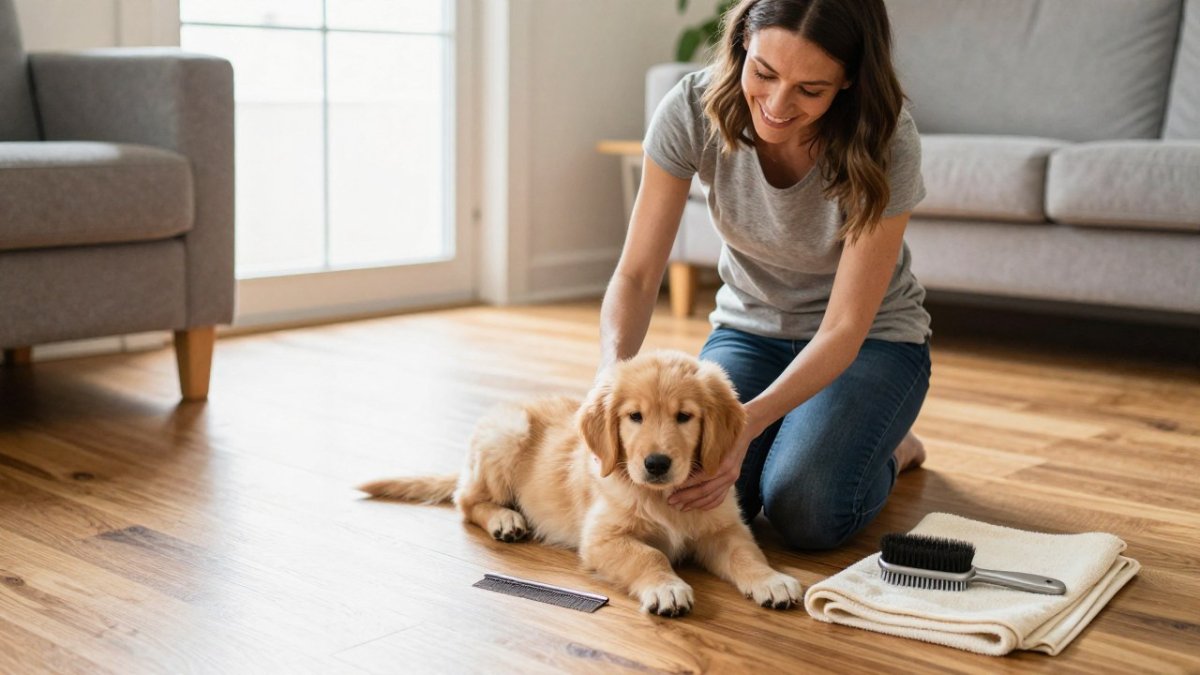
Short, calm sessions work better than long ones. Aim for five to ten minutes at a time. Use a non-slip mat, keep the room quiet, and have treats ready. Work from the head to the tail, and stop before your puppy gets tired or restless.
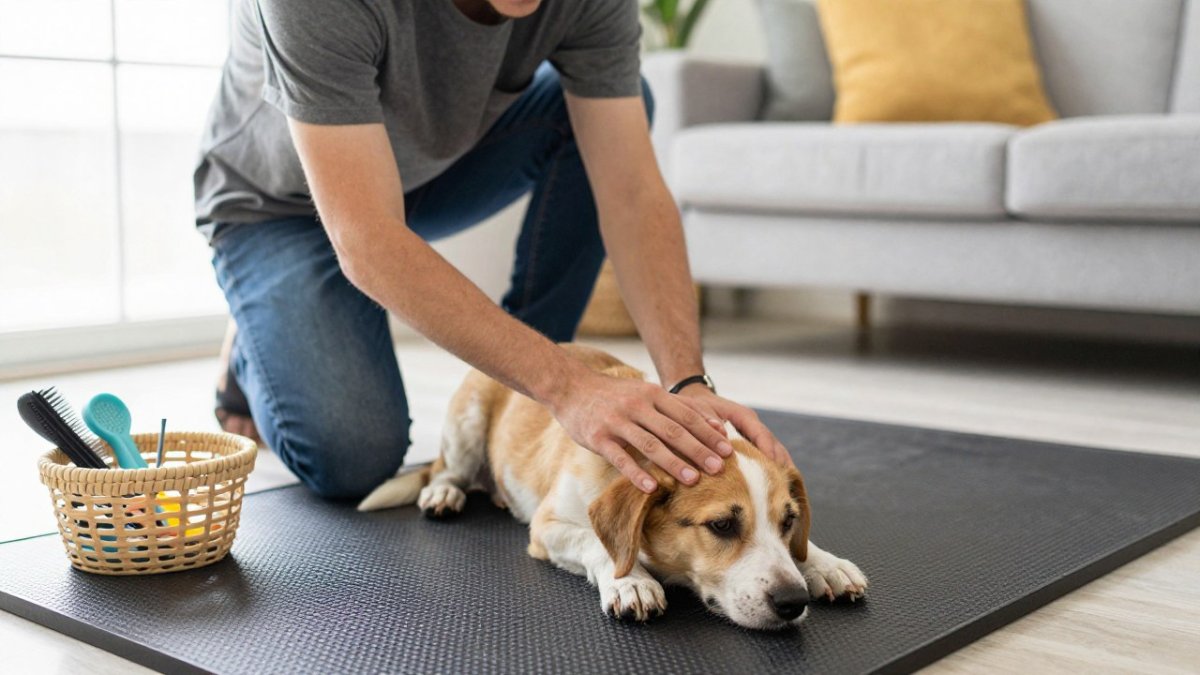
Begin with handling. Touch the paws, ears, mouth and tail while the pup relaxes. Then add one tool at a time. Brush first, then comb, then nail care. Trying all the tools in one session overwhelms a young dog.
Always support the body. A puppy who feels unsteady will squirm, and a squirming pup can get hurt. Keep one hand under the chest or hindquarters during nail trims and brushing.
A common mistake is ending a session on a bad moment. If your puppy panics during the last nail, the next session will begin with fear. Finish on something easy, then give a reward.
Desensitizing Your Puppy to Grooming Step by Step
Desensitization means introducing each sensation slowly so the puppy learns it is safe. Follow these steps over several days:
- Let your puppy sniff each tool without using it.
- Touch the tool to the body for a second, then reward.
- Run the brush or grinder briefly on a calm area, such as the shoulder.
- Extend time gradually as your puppy stays relaxed.
- Repeat each step until your puppy shows no stress signs.
Stress signs include lip licking, yawning, turning away, or tucking the tail. If you see these, go back a step.
When to Stop and Call a Professional
Stop a session if your puppy shows aggression, cannot stand still, or the skin looks irritated or wounded. Stop immediately if you cause bleeding. Also book a professional groomer for matted coats that are tight against the skin, because cutting them yourself can injure the pup.
A professional can also help a puppy with a difficult first experience. Many owners find that one session with a groomer, watched closely, teaches them technique they can repeat at home.
Building a Puppy Grooming Schedule and Starter Kit
A schedule keeps grooming from becoming an emergency.
The bigger decision is what to buy first. Most beginners overspend on a full kit before they know their puppy's coat. A prioritized approach works better, and it is the angle most grooming lists skip.
Tier 1: the minimum viable kit. This covers the three jobs you cannot postpone: coat, nails, and bathing. It includes a dual-sided brush with a slicker side and a bristle side, a wide-tooth comb, puppy-sized nail clippers, styptic powder, and a pet-safe shampoo. That set handles a short- or medium-coated puppy for the first few months. Pricing depends on brand, quantity and delivery, so check Dog Products and More's website for current prices.
Tier 2: the practical upgrade. Add a quiet two-speed nail grinder, a veterinarian-approved ear cleanser with cotton balls, and a soft pet toothbrush with enzymatic toothpaste.
Tier 3: coat-specific additions. Only add these once you know your puppy's adult coat. Long or double coats may need an undercoat rake, a dematting tool, and a face comb.
A few items are optional at the start: a grooming table, a high-velocity dryer, and a full clipper set. Skip them until you have a reason to buy.
Watch out: buying a clipper set before your puppy's adult coat comes in often means buying twice. Puppy coat and adult coat can differ in texture and thickness, so wait until the coat change is underway before investing in blades.
Dog Products and More offers the categories covered in this guide, so you can build the kit in stages rather than all at once.
The article breaks the starter kit into three tiers, so a reader can see what to buy first.
| Tier | Items | Approximate cost |
|---|---|---|
| 1: Minimum viable kit | Dual-sided brush, wide-tooth comb, puppy-sized clippers, styptic powder, pet-safe shampoo | Check current prices |
| 2: Practical upgrade | Quiet two-speed grinder, ear cleanser with cotton balls, soft toothbrush and enzymatic toothpaste | $60 to $110 on top of Tier 1 |
| 3: Coat-specific additions | Undercoat rake, dematting tool, face comb, clipper set sized for coat type | Varies widely by item |
Building Your Starter Kit Next
Grooming becomes routine when you start early, stay gentle and use the right tools for your puppy's coat. Build your kit around brushing, nails and bathing first, then add dental and ear care as your puppy settles in. If you want help choosing, shop the full range at Dog Products and More and compare tools by coat type and budget.
Frequently Asked Questions
What are the essential items needed for dog grooming?
A beginner puppy kit usually starts with a slicker brush, a comb (a flea or face comb works well for small areas), a detangling comb, puppy-safe shampoo, a pair of blunt-tipped safety scissors, nail clippers or a nail grinder, and ear cleaner formulated for dogs. Start with the brush and comb, since they handle most daily coat care. Add nail and ear tools once your puppy is comfortable being handled. You can build the rest of the kit over time, so you don't need to buy everything at once.
At what age should a puppy get its first grooming?
Many owners begin brushing and handling their puppy as early as eight weeks, long before a full bath or haircut. The goal of the first sessions is positive association, not a finished groom. Keep sessions short, reward calm behavior, and stop before your puppy gets fussy. A professional groomer can handle a full first appointment once your puppy has settled into short home sessions, often around 12 weeks.
What are the most common mistakes beginners make when grooming a puppy?
The most frequent mistakes are skipping regular brushing, which lets mats form, and using clippers or scissors too close to the skin. Beginners also tend to make sessions too long, which leads to a puppy that dreads grooming. Using human shampoo or a too-hot dryer can irritate skin, so stick with puppy-safe products. If your puppy seems painful, stressed or bleeds, stop and consult a veterinarian or professional groomer.
How do I choose the right brush for my puppy's coat type?
Match the brush to the coat. Short, smooth coats do well with a rubber curry or soft bristle brush. Medium and long coats benefit from a slicker brush to remove loose hair and tangles. Double coats need an undercoat rake or deshedding tool, used gently. When in doubt, a slicker brush and a comb together cover most puppy coats, and a groomer can recommend the right option for your breed.